
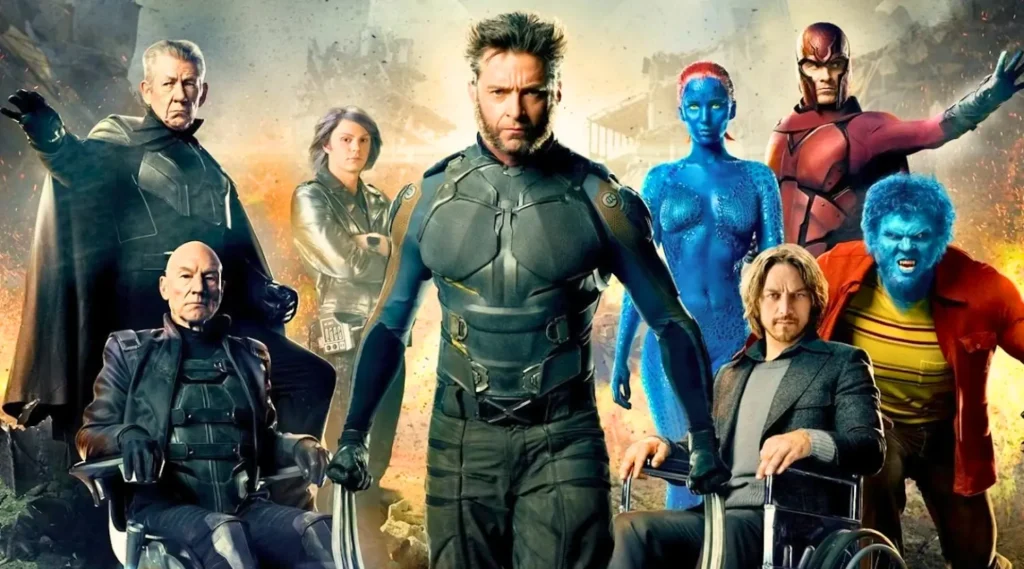
The screen went dark. Then these words appeared: “The X-Men Will Return In Avengers: Doomsday.”
The Avengers: Doomsday teaser didn’t show much—just Patrick Stewart back as Professor X, Ian McKellen as Magneto, James Marsden as Cyclops. A devastated X-Mansion. Sentinel robots in the background. But that text? That was everything. After 63 years of comic book history and two decades of Fox movies existing outside the Marvel Cinematic Universe, the X-Men are finally coming home.
If you’ve ever felt like an outsider, this is your story too.
Kevin Feige has promised a 10-year X-Men plan. The next MCU saga is expected to focus on mutants—Phases 7, 8, and 9 could be the “Mutant Saga,” similar to how Phases 1-3 were the Infinity Saga. After Avengers: Secret War, the X-Men won’t just be guest stars. They’ll be foundational.
But to understand this moment, we need to go back to where it almost died—permanently.
How did the X-Men survive five years of reprints, multiple cancellations, and near-total obscurity to become one of the most valuable franchises in entertainment? How did they go from selling so poorly Marvel wouldn’t even publish new stories to breaking the Guinness World Record with 8.1 million copies of a single issue? How did mutants become the metaphor that mattered most?
This is the story of 63 years of evolution, reinvention, and survival. It’s the story of how the X-Men became the X-Men—and why their arrival in the MCU isn’t just fan service. It’s a homecoming.
THE ACCIDENTAL GENIUS: CREATING X-MEN (1963)
Stan Lee has called it his “laziest” creative decision. By 1963, he’d invented origin stories for Spider-Man (radioactive spider), the Fantastic Four (cosmic rays), and the Hulk (gamma bomb). When publisher Martin Goodman wanted another superhero team, Lee was tired of explaining how people got powers. So he took a shortcut: they were born with them. Mutants.
Goodman hated the name “The Mutants.” He worried readers wouldn’t know what it meant. So Lee pivoted to “X-Men”—named after their mentor, Professor Charles Xavier. X-Men #1 hit stands in September 1963, introducing five teenage mutants: Cyclops, Iceman, Beast, Angel, and Marvel Girl (Jean Grey). Xavier’s dream was simple: teach young mutants to control their powers and prove that humans and mutants could coexist peacefully.
The villain? Magneto, a mutant supremacist who believed mutants were superior and humans would never accept them. This conflict—Xavier’s hopeful integration vs. Magneto’s militant separatism—became the series’ moral foundation. Artist Jack Kirby designed iconic looks for each character, but the book struggled to find an audience.
The civil rights metaphor wasn’t explicit in issue #1. That wouldn’t crystallize until issue #8, when the X-Men first faced widespread human prejudice. Lee’s “lazy approach” had accidentally created the perfect allegory for any marginalized group: people born different, feared for something they couldn’t control, fighting for acceptance in a world that hated them.
The problem? Nobody seemed to care.
THE LEAN YEARS: NEARLY DYING (1966-1975)
Stan Lee and Jack Kirby both left the book after issue #20 in 1966. Lee later admitted the X-Men were the hardest Marvel book to write and draw—the team dynamics, the powers, the philosophical conflicts all required more effort than his other titles. Sales reflected the struggle. The X-Men consistently underperformed compared to Fantastic Four, Spider-Man, and even Sgt. Fury and His Howling Commandos.
In 1969, writer Roy Thomas and artist Neal Adams took over and briefly revived reader interest. Adams’ stunning artwork introduced Havok (Cyclops’s brother) and Polaris, creating some of the series’ most visually striking issues. Sales improved. The problem? Comics sales reporting had a three-month delay. By the time Marvel’s data showed the Adams boost, publisher Martin Goodman had already decided to cancel new stories.
Issue #66 (March 1970) was the last new X-Men story for five years. From December 1970 to April 1975, issues #67-93 were nothing but reprints of older adventures. Marvel kept the title alive, but barely—publishing bimonthly with no original content. Five years of reprints. For a franchise that would eventually dominate comics, this was near-death.
Roy Thomas later reflected that if he and Neal Adams—two of Marvel’s best talents at the time—couldn’t make the X-Men sell, what hope did anyone else have?
What happened next would change everything.
THE REVIVAL THAT CHANGED EVERYTHING: GIANT-SIZE X-MEN #1 (1975)
In February 1975, Marvel published Giant-Size X-Men #1—the first new X-Men story in five years, with a May 1975 cover date. Written by Len Wein and illustrated by Dave Cockrum, the 68-page special was titled “Second Genesis.” And genesis it was.
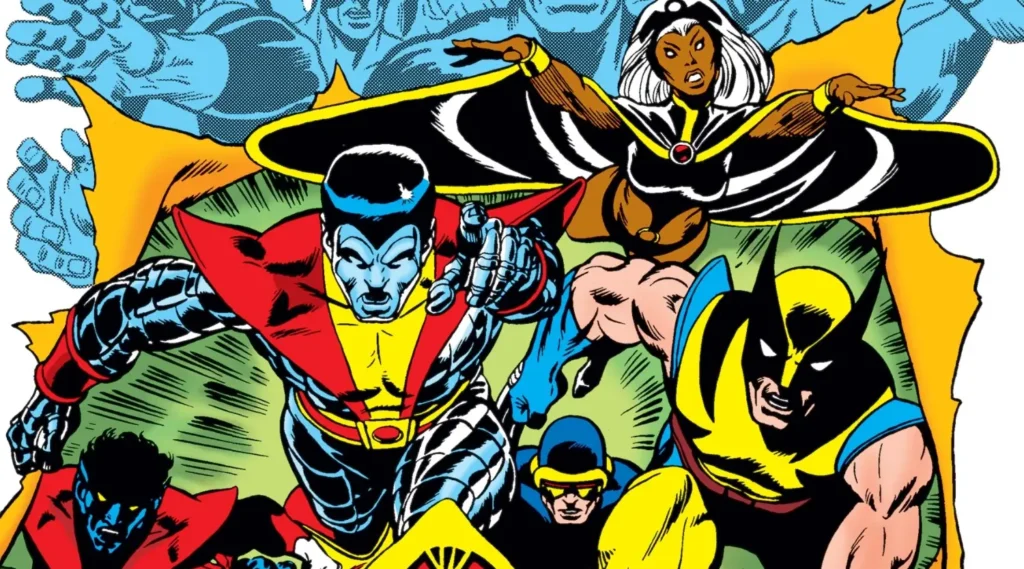
The premise was simple but genius: the original X-Men had vanished on a mission to a living island called Krakoa, with only Cyclops escaping. Professor Xavier needed a rescue team—fast. So he assembled something Marvel had never really attempted before: an international roster designed to attract readers from outside the US.
The new team brought together Cyclops (the sole original member retained) alongside Storm from Kenya, Nightcrawler from Germany, Colossus from the Soviet Union, Wolverine from Canada, Thunderbird from Apache land, Banshee from Ireland, and Sunfire from Japan. Each character represented not just a different nationality, but different philosophies, powers, and perspectives on what it meant to be a mutant.
The original plan had been even more ambitious—Roy Thomas envisioned the X-Men traveling the globe and teaming up with mutants from different nations. Though editorial shuffling changed some details, the core concept remained: diversity wasn’t window dressing. It was the point.
Why 1975? Because America was ready for it. The civil rights movement had reshaped the cultural conversation. Post-Vietnam disillusionment demanded more complex heroes. And comics readers—especially the college-age audience Marvel was increasingly courting—wanted substance with their spectacle.
But the new roster had casualties almost immediately. Thunderbird died in their second mission (issue #95), and Sunfire quit early on. What seemed like setbacks actually proved the stakes were real. Jean Grey would return to the team with her Phoenix persona, setting up events that would define the X-Men for decades.
The success of Giant-Size X-Men #1 led Marvel to resume regular publication with X-Men #94 in August 1975. Len Wein co-plotted those first issues with a young writer named Chris Claremont, who would take over full writing duties almost immediately.
That transition? Changed everything.
THE GOLDEN AGE: CLAREMONT, BYRNE, AND LEGENDARY STORIES (1977-1991)
Chris Claremont would write Uncanny X-Men for 16 years, from 1975 to 1991—longer than any other writer in the title’s history. That’s not just a tenure. That’s an era.
Artist John Byrne joined Claremont with issue #108 in October 1977, beginning one of comics’ greatest creative partnerships. Together they elevated the X-Men from mid-tier Marvel property to the company’s flagship franchise. How? By treating superhero comics like literature.
If you grew up in the ’80s, THIS was your X-Men. Not the movies. Not the cartoons. This.
Claremont brought soap opera melodrama, endless subplots, and character development that made readers genuinely care whether Scott and Jean would work things out. Byrne delivered clean, dynamic art that made every action sequence feel cinematic. Comics historians Roy Thomas and Peter Sanderson would later observe that “The Dark Phoenix Saga is to Claremont and Byrne what the Galactus Trilogy is to Stan Lee and Jack Kirby—a landmark in Marvel history, showcasing its creators’ work at the height of their abilities.”
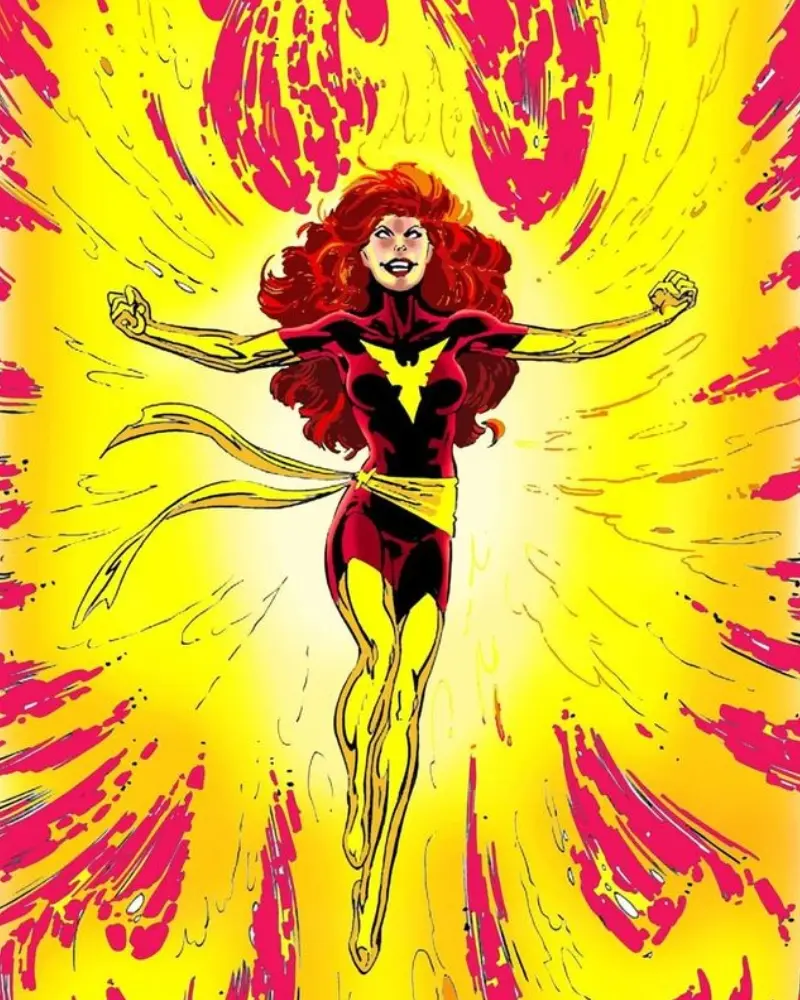
The Dark Phoenix Saga (Uncanny X-Men #129-138, 1980) remains the most famous X-Men story ever told. Jean Grey, corrupted by cosmic power, becomes Dark Phoenix and ultimately sacrifices herself to save the universe. Comics historian Les Daniels noted it “created a sensation and The X-Men became the comic book to watch.” It’s been adapted twice into live-action movies and memorably in the 90s animated series—testament to its enduring power as a tragic hero arc.
Days of Future Past (issues #141-142, 1981) followed—a dystopian time-travel story where Sentinels rule a future America and a desperate Kitty Pryde travels back to prevent the assassination that triggers the apocalypse. Claremont and Byrne had created another genre-defining story in just two issues. The 2014 film adaptation proved the concept still resonated decades later.
Then there was God Loves, Man Kills—the graphic novel that explored religious persecution and became the basis for X2: X-Men United, still widely considered one of the best superhero films ever made.
These weren’t just action stories. They tackled prejudice, power, identity, and what it costs to be different. Claremont developed strong female characters and introduced complex literary themes into superhero narratives, turning the once-underachieving comic into Marvel’s bestselling title.
The franchise expanded beyond the main title for the first time. Young mutants got The New Mutants (1983). Canadian heroes got Alpha Flight. Cyclops’s brother led X-Factor (1986). Wolverine earned his own series (1988). British mutants formed Excalibur (1988). Each book found its audience, proving the X-Men weren’t just a team—they were a universe.
But the X-Men hadn’t peaked yet. Not even close.
THE 90S PHENOMENON: JIM LEE’S X-MEN AND RECORD-BREAKING SUCCESS
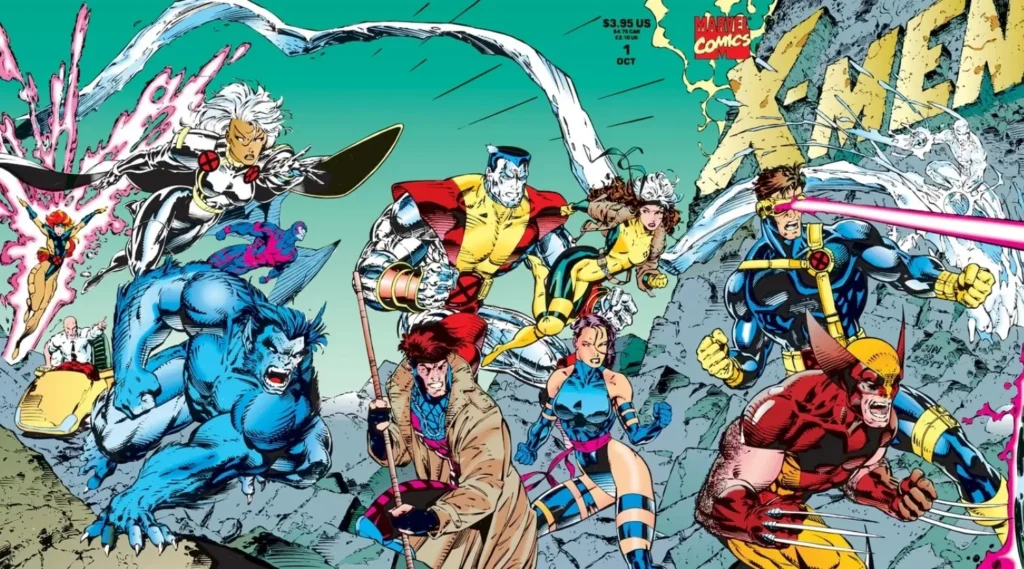
In October 1991, Chris Claremont and artist Jim Lee launched X-Men Vol. 2 #1, which sold 8.1 million copies and earned a Guinness World Record as the best-selling single comic book of all time. Read that again. 8.1 million copies of one comic.
Claremont spent 16 years building the X-Men into Marvel’s best. The 90s turned them into the biggest.
The X-Men roster had grown unwieldy—14 active members—so Cyclops and Storm split them into two strike teams. The Blue Team (Cyclops, Wolverine, Beast, Gambit, Psylocke, Rogue, and Jubilee) headlined the new X-Men series, while the Gold Team (Storm, Jean Grey, Archangel, Colossus, Iceman, and Bishop) continued in Uncanny X-Men.
Jim Lee drew five variant covers for issue #1—four that connected to form a larger image, plus a gatefold edition released a month later. This wasn’t just smart marketing. It was the epicenter of the early 90s comic speculation boom, when fans believed every #1 issue would fund their retirement.
Lee had joined Uncanny X-Men with issue #268 in 1989, and his artwork quickly gained popularity, allowing him greater creative control. His character designs—especially the now-iconic blue-and-gold uniforms with the bold yellow X emblems—defined how an entire generation visualized the X-Men. When the X-Men animated series debuted in 1992, it used Lee’s designs and essentially the Blue Team roster (swapping in Storm and Jean Grey), cementing these versions in pop culture consciousness.
The 90s aesthetic was muscles, pouches, and more muscles. In 1992, Lee and several other artists founded Image Comics to publish creator-owned work, leaving Marvel mid-story. But the foundation was set. The X-Men had evolved from canceled failure to the biggest franchise in comics, spawning multiple titles: X-Force (the black ops team), X-Factor, Excalibur, Generation X, and solo series for Wolverine, Cable, and others.
This era also gave us Deadpool, who debuted in New Mutants #98 (1991) and would eventually become one of Marvel’s most profitable characters.
The X-Men were everywhere. But the comics landscape was about to change again.
EVOLUTION AND MODERN ERA (2000-2026)
Then came 2019. And everything changed again.
The 2000 X-Men movie changed everything—again. In 2001, writer Grant Morrison and artist Frank Quitely launched New X-Men, ditching colorful costumes for black leather uniforms with yellow X logos, directly inspired by the film’s aesthetic. Morrison streamlined storytelling for modern audiences, made Professor X publicly reveal his mutant identity, and killed Jean Grey—moves that felt radical but kept the franchise evolving.
Multiple creative teams tried different approaches over the next decade. Some worked. Some didn’t. Joss Whedon’s Astonishing X-Men brought back classic superhero storytelling. The “Messiah Complex” trilogy explored mutant extinction. Marvel NOW! in 2012 brought time-displaced versions of the original five X-Men into the present—a premise that somehow worked for years.
Then came the reinvention nobody saw coming.
Jonathan Hickman’s House of X and Powers of X didn’t just reboot the X-Men—it reimagined what mutant stories could be. Professor Xavier and Magneto established Krakoa, a sovereign mutant nation-state with resurrection protocols that conquered death itself. The “Krakoan Age” ran from October 2019 through June 2024, spanning over 500 issues across more than 80 different series. It was ambitious. It was weird. It was brilliant.
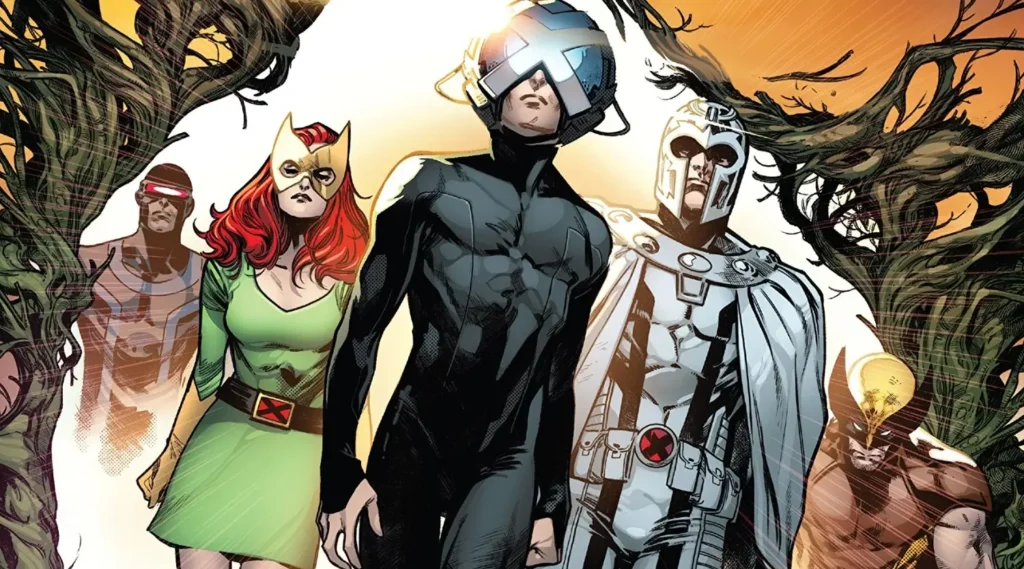
The era ended this past June with Fall of the House of X and Rise of the Powers of X, bringing five years of radical reinvention to a close. As of July 2024, the X-Men entered the “From the Ashes” era with multiple new ongoing series returning to more traditional superhero team dynamics.
And now? The Avengers: Doomsday teaser in January 2026 showed Patrick Stewart, Ian McKellen, and James Marsden reprising their roles as Professor X, Magneto, and Cyclops, with text confirming “The X-Men Will Return In Avengers: Doomsday” this December. After 63 years of comic book evolution, Marvel’s mutants are finally coming home to the MCU.
The X-Men have survived cancellation, speculation bubbles, multiple movie franchises, and countless reboots. Through it all, one thing remained constant:
CONCLUSION
Through 63 years of cancellations, reboots, and reinventions, one truth remained constant: the X-Men have always been about what it means to be different in a world that fears difference.
That’s why they survived five years as reprints. Why Giant-Size X-Men #1 worked when the original team didn’t. Why Claremont’s 16-year run resonated so deeply. Why 8.1 million people bought that 1991 comic. Why Morrison stripped them down to black leather. Why Hickman built them a nation.
The outsider metaphor wasn’t a creative choice. It was the foundation. Every reinvention—every new team, every bold direction—worked because it explored that core truth in fresh ways. Mutants protecting a world that hates them isn’t just a mission statement. It’s the human experience of anyone who’s ever felt like they didn’t belong.
You’ve felt like an outsider. You’ve wanted acceptance while refusing to hide who you are. You’ve protected people who feared you.
So when Patrick Stewart, Ian McKellen, and James Marsden appear in Avengers: Doomsday this December, it won’t just be fan service. It’ll be the X-Men finally joining the biggest superhero universe in history—outsiders welcomed home at last.
After 63 years of fighting for acceptance, that feels right.
The X-Men will return. They always do.