

Matt Murdock smiles in his prison cell. That’s the last image of Daredevil: Born Again Season 2, and if you read it as a dark cliffhanger, you’re reading it wrong.
Five seasons of this character — across Netflix and Disney+, from Hell’s Kitchen rooftops to Wilson Fisk’s kangaroo court — have been building toward one thing: a man who hides everything finally choosing to hide nothing. The arrest isn’t the story going wrong. It’s Matt Murdock’s story finally going right.
What “The Southern Cross” actually delivers is the logical, inevitable conclusion to an arc about truth and deception that started when Matt first lied to Karen Page about who he was. And if the Ed Brubaker and Michael Lark comic run that Season 3 is drawing from tells us anything, the cell is the beginning — not the end.
Here’s what the ending actually means, what the comics blueprint tells us about what’s coming, who Mr. Charles really is, and why the Defenders’ return is both overdue and completely necessary.
In the Daredevil: Born Again Season 2 finale, Matt Murdock reveals his identity in court to free Karen Page and expose Mayor Fisk, getting the case dismissed before being arrested for his vigilante crimes. Fisk accepts exile in exchange for no charges. The ending directly sets up Ed Brubaker and Michael Lark’s “The Devil in Cell Block D” comic arc — Daredevil vol. 2 #82–94 — as the blueprint for Season 3, with Luke Cage and the Defenders poised to fill the power vacuum left behind.
Why Matt Revealed Himself — and Why It Had to Be His Choice
Every time Matt Murdock’s secret came out before “The Southern Cross,” it happened to him. Elektra found out because she already knew him. Kingpin dug it up with money and resources. The government pieced it together. Even the moments that felt like choices — telling Karen in that hallway, telling Ray Nadeem as a last resort — were backed into, not chosen from a position of clarity.
So when Matt stands up in that courtroom and says “I am Daredevil,” what you’re watching is the first genuinely free decision he’s made about his identity in five seasons. And the show earns it, because it makes sure you feel the weight of every lie that came before it.
Foggy Nelson spent years arguing that the law was the only legitimate weapon against Fisk. Matt agreed in principle, then went out and committed felonies every night. That contradiction is the engine of this entire run. Matt can’t fully defeat Fisk through the legal system while simultaneously proving that the legal system doesn’t apply to him. The reveal collapses that contradiction in a single sentence.
There’s also a detail in the courtroom staging that most coverage skips past. When Fisk swears on the Bible to tell the truth, the words carved on the wall behind him read “Truth is Great and Shall Prevail” — a reference drawn from 1 Esdras 4:41 in the Hebrew Bible. Fisk swears on a book he’s about to lie through. Matt, who can hear every heartbeat in that room, makes those words true. The symbolism is precise. This wasn’t an accident of production design.
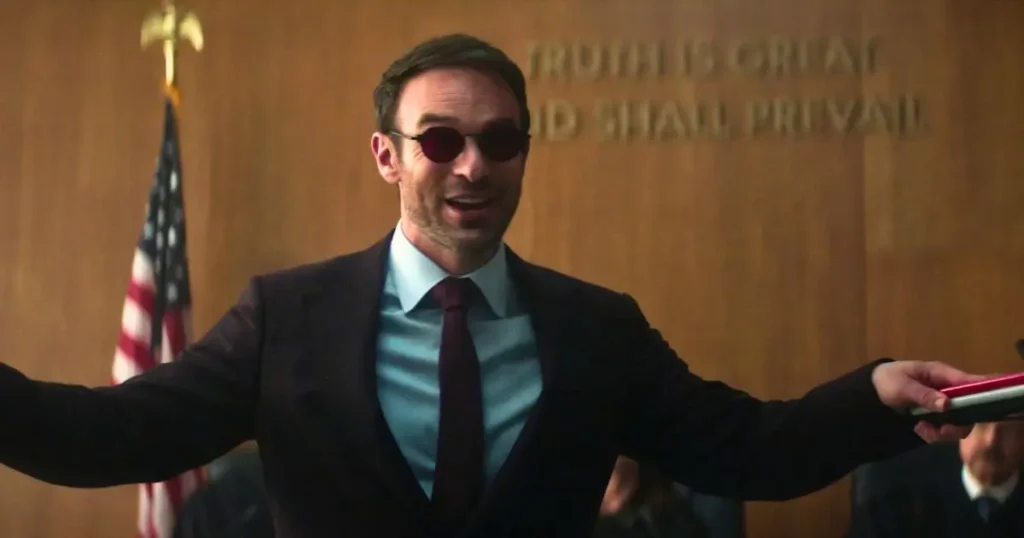
The Courtroom Is Matt’s Church — and That’s Why Fisk Had to Lose There
Born Again has spent two seasons establishing the specific places that matter to Matt Murdock. Fogwell’s Gym. Father Lantom’s church. Josie’s Bar. Fisk methodically corrupted or tarnished every one of them. The courtroom was the last one standing.
That’s the strategic logic behind the setting. Matt can’t beat Fisk in the street anymore — Fisk has the AVTF, he has the law, he has the city’s infrastructure behind him. But in a courtroom, Matt is simultaneously the defense attorney, the masked vigilante, and the key eyewitness. That triple identity creates a judicial paradox Fisk can’t survive. If Daredevil’s testimony is valid, then the trial is legitimate — and it destroys Fisk. If Daredevil’s testimony is inadmissible, then Fisk’s entire court, built to enforce his anti-vigilante laws, has just invalidated itself. Matt forces Fisk into a position where winning and losing look identical.
And then Bullseye — Fisk’s own weapon — turns the courthouse into a siege, trapping Fisk inside the one place he most wanted to control. The building becomes his prison before Matt ever enters one.
That’s not coincidence. It’s architecture.
The Ed Brubaker Blueprint — What the Comics Tell Us About Season 3
Here’s what executive producer Sana Amanat confirmed on the official Born Again podcast: Season 3 will continue drawing from “The Devil in Cell Block D” and the Mayor Fisk comic storylines. That’s not a vague gesture toward the source material. It’s a specific road map — and if you know the Brubaker run, you know exactly what’s coming.
“The Devil in Cell Block D” is Daredevil vol. 2 #82–94 (2006–2007), written by Ed Brubaker and drawn by Michael Lark. It picks up directly after Brian Michael Bendis and Alex Maleev’s defining run ended with Matt in custody, and it does something almost no superhero prison story does: it commits. Matt isn’t in a cell for an issue or two. He’s there, surrounded by enemies, stripped of his suit and his resources and most of his allies, fighting to survive in a system that he spent years trying to fix and that is now actively trying to destroy him.
His cellmates in the comic aren’t fellow heroes. They’re Hammerhead, Kingpin, and eventually Bullseye — every major figure Matt has fought for years, now in close quarters. The guards are corrupt. The system wants all of them to kill each other. And Foggy Nelson, defending Matt from the outside, is murdered by someone who doesn’t want the case heard.
Except Foggy isn’t actually dead.
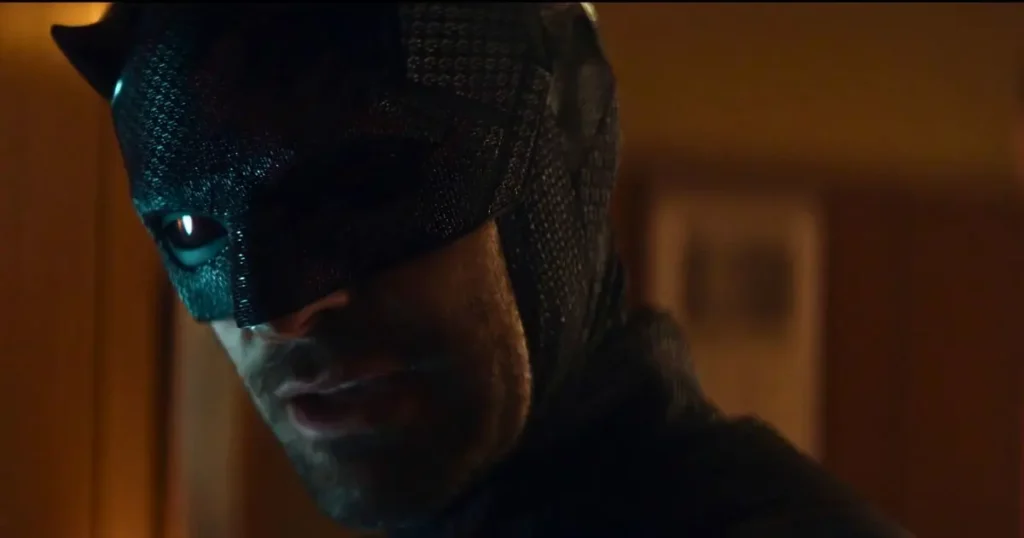
His death was faked — by the FBI, to protect him — and he spends the arc in witness protection while Matt tears through the prison looking for who put a knife in his best friend. It’s one of the great Daredevil misdirects, and the show has already been teasing a version of it. If Foggy’s death in Born Again follows the same logic, there’s a genuine path back for him.
On the outside, someone is running around Hell’s Kitchen dressed as Daredevil. Foggy knows who it is but refuses to let himself find out — he’s Matt’s lawyer, and he doesn’t want to be complicit in whatever Murdock has arranged. The decoy Daredevil turns out to be Danny Rand. Iron Fist, hired under false pretenses by the same lawyer who arranged Foggy’s “murder,” doing his best to hold Hell’s Kitchen together while Matt’s locked up.
Finn Jones is the only Defender not yet back in the MCU. Think about that for a second.
Marvel re-released the full arc as a paperback collection in 2025. That’s not a coincidence. These stories don’t get reprinted because they’re historically interesting — they get reprinted because someone’s about to adapt them.
That Smile in the Cell Isn’t Defeat — It’s the Point
Chip Zdarsky’s Daredevil run — the one that ran from 2019 to 2023 and that Born Again has been drawing from heavily alongside Brubaker — has a specific story buried in it that the show has been quietly adapting all season. Matt accidentally kills someone while fighting. He quits. He convinces himself that everything he’s done as Daredevil has made things worse, not better — that he’s been treating symptoms while the disease spreads, that his presence in Hell’s Kitchen is net negative for the people he claims to protect.
Born Again episodes 5 and 6 are essentially that crisis, transplanted. Matt nearly kills Dex. He’s tormented by Foggy’s death and his own culpability in it. He’s haunted by Frank Castle’s argument that self-loathing without action is just ego wearing a hair shirt. Karen’s argument — that Dex should die, that mercy is a luxury that gets people killed — represents the same pressure that pushed Zdarsky’s Matt to the edge.
But here’s what the show does that neither Karen nor Frank fully accounts for: mercy is how you actually stop the cycle.
Matt showing Dex mercy in episode 5 didn’t forgive him. It didn’t absolve him. It forced him to live with what he’d done — which is a harder sentence than death by a significant margin. Cole, spared last season despite killing the White Tiger, turned on Powell when it mattered. The mercy paid forward.
So when Matt sits in that cell and smiles, he’s not smiling because he won. He’s smiling because for the first time since Foggy died, he knows exactly what he is and what he’s there to do. He has nothing left to hide. Nothing left to justify. The lies are done.
That’s not a cliffhanger. That’s a man finally at peace — which, for Matt Murdock, might be the most devastating thing this show has ever given him.
Who Is Mr. Charles — and What Is He Actually Building?
Matthew Lillard’s Mr. Charles is the most interesting new piece on the Born Again board, and the show has been careful not to show his full hand. He’s a CIA operative working under Valentina Allegra de Fontaine — that much is confirmed. He goes by “Mr. Robertson” on at least one occasion. And by the end of “The Southern Cross,” Luke Cage is out and Bullseye is in, sitting beside him on a plane to wherever the next operation is.

The dominant theory — and the one that fits the MCU’s current trajectory best — is that Mr. Charles is the show’s version of Henry Peter Gyrich. Gyrich debuted in Avengers #165 (1977), created by Jim Shooter and John Byrne, as the National Security Agency’s official government liaison to the Avengers. He’s not a villain in the traditional sense. He doesn’t have a vendetta. He doesn’t want power for himself. He wants superhumans controlled, monitored, and useful to the state — and he’s perfectly willing to obstruct, manipulate, and weaponize them to make that happen.
The MCU has had personal antagonists in the government space before. General Ross operated from wounded pride. Valentina operates from ambition. Gyrich is different. Gyrich follows orders, which makes him more dangerous than either — because orders don’t have feelings you can appeal to.
Mr. Charles fits that template precisely. He doesn’t hate Fisk. He doesn’t particularly hate Daredevil. He needs the city destabilized enough that heroes look unreliable, which justifies government-approved replacements. Bullseye — morally unmoored, genuinely talented, and now confirmed for Season 3 with a clean slate — is exactly the kind of asset that operation requires.
If this is where Born Again is going, it’s setting up something that looks less like a street-level crime story and a lot more like the Dark Avengers. Which, frankly, is overdue.
Hell’s Kitchen Without a King — and What the Defenders Have to Fix
Fisk ran New York from a beach in the Bahamas during his first prison stint. His reach didn’t require presence — it required fear. That fear died with Vanessa, and now there’s no single figure with the authority or the reputation to hold the city’s criminal infrastructure together.
That’s a power vacuum, and the show knows exactly what those produce. Every crime family and gang that kept the peace under Fisk — not out of loyalty but out of survival instinct — now has no reason to hold back. New York is about to become a war zone, and the only people positioned to manage it are the people Matt left behind.
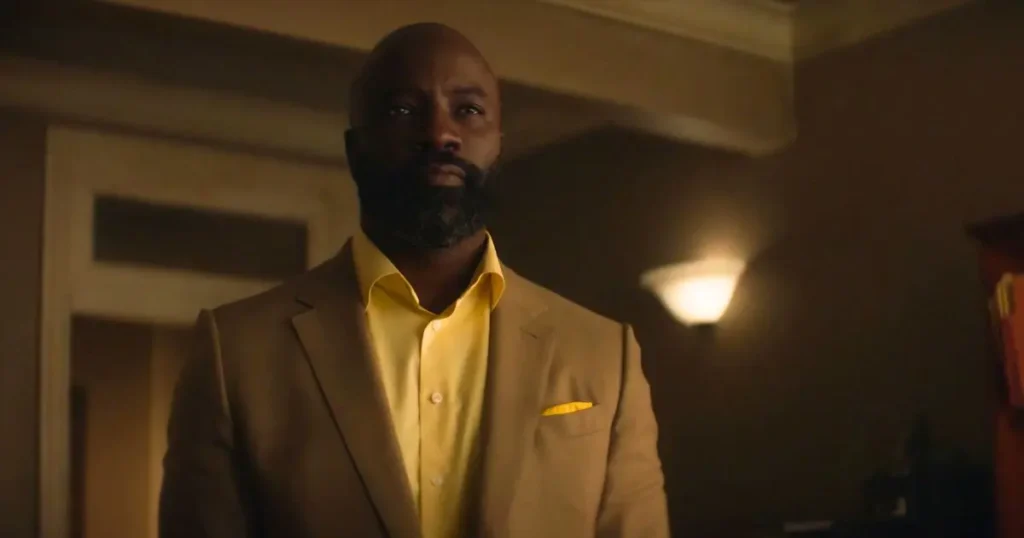
Luke Cage is the most important piece of this. In Brian Michael Bendis’s Devil’s Reign — the comic that gave Born Again its basic architecture of Fisk as mayor outlawing heroes — Luke Cage becomes mayor of New York after Fisk’s fall. The show has been building toward something similar. Luke running the criminal underworld through Harlem’s Paradise isn’t villainy — it’s the same logic Matt used as Daredevil, redirecting harm rather than eliminating it. A Cage mayoralty would be the street-level version of what Matt’s been trying to do all along, through completely different means.
And while Luke holds the city, Danny Rand is the only Defender not yet accounted for in the MCU’s current lineup — which, given what Brubaker wrote about Iron Fist putting on the Daredevil mask to cover Matt’s absence, feels like deliberate restraint rather than oversight.
Spider-Man: Brand New Day now has a very specific context for that prison sequence in the trailer. Matt’s in a cell. Spider-Man apparently fights ninja assassins in or around one. That’s not a coincidence — and Tombstone’s emergence as New York’s next power player in the wake of Fisk’s exile is exactly the kind of street-level escalation Brand New Day’s production timeline has been building toward.
Charlie Cox said he’s not in the movie. He also said it four times in a row, which is exactly what someone says when they’re contractually obligated to say it and not a single word more. The MCU has a long tradition of actors denying things that turn out to be true. I’d bet on him showing up. And for a broader look at which Netflix-era characters survive into the MCU’s future, the Defenders are in considerably better shape than most people expected two years ago.
The last shot of Born Again Season 2 is a deliberate mirror of Kingpin’s ending in Season 1. Both men end up separated from everyone they love, alone with the consequences of what they’ve done. Fisk on a beach, free but hollow. Matt in a cell, imprisoned but finally clear.
The show has spent five seasons asking whether one man, lying about who he is and fighting in the dark, can actually fix a broken system. The answer the finale gives is: not like that, no. But a man who tells the truth in a room full of people who needed to hear it — and then accepts what that costs — might be able to do something the masked vigilante never could.
Ed Brubaker figured that out in 2006. Born Again Season 3 is about to prove he was right.
Frequently Asked Questions
What happens to Bullseye at the end of Born Again Season 2?
Bullseye ends Season 2 on a plane beside Mr. Charles, the CIA operative played by Matthew Lillard, having taken the place of Luke Cage as his new operative. Wilson Bethel has confirmed he returns in Season 3, where Bullseye’s allegiance to Mr. Charles — and how long it lasts — will be a central thread.
Will Iron Fist appear in Daredevil Born Again Season 3?
Nothing is confirmed, but Finn Jones is the only original Defender not yet back in the MCU — a notable gap given that Season 3 is drawing from Ed Brubaker’s “The Devil in Cell Block D,” where Iron Fist impersonates Daredevil while Matt is in prison. The 2025 reprint of that arc suggests it’s very much on Marvel’s radar.
Is Daredevil in Spider-Man Brand New Day?
Charlie Cox has denied it, but the Born Again Season 2 ending — with Matt locked in a prison cell at the same time Spider-Man fights the Hand in what appears to be a prison — creates a specific connective tissue. Cox’s denial follows a pattern of MCU actors making similar statements before confirmed appearances. Nothing is official, but the narrative logic is strong.
Why did Fisk get away with his crimes in Born Again Season 2?
Fisk accepted a deal from the attorney general: exile from New York in exchange for no charges. The government chose not to prosecute because arresting Fisk would have required confronting his private militia — a war the city couldn’t afford. The deal also appears to have been influenced by Mr. Charles and the CIA, who wanted Fisk removed but not imprisoned, as he remained a useful asset they could potentially control.