
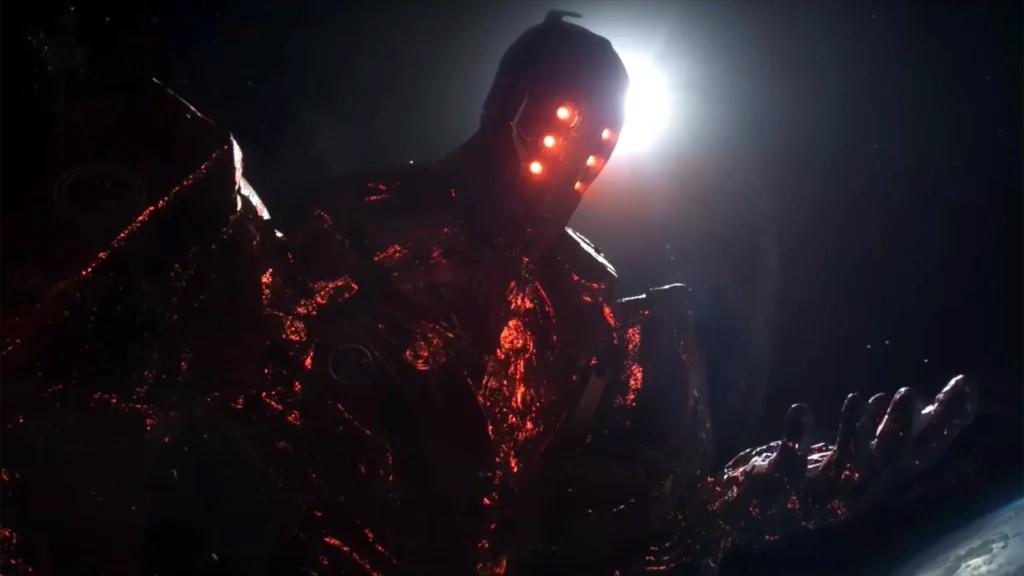
There’s a skull the size of a small moon drifting through the galaxy. Inside it, people live, work, mine, and run shady black market operations. Knowhere — one of the MCU’s most visually arresting locations — is the severed head of a dead Celestial. That detail should stop you cold. Not because a Celestial died, but because of what it implies: something out there was powerful enough to kill one.
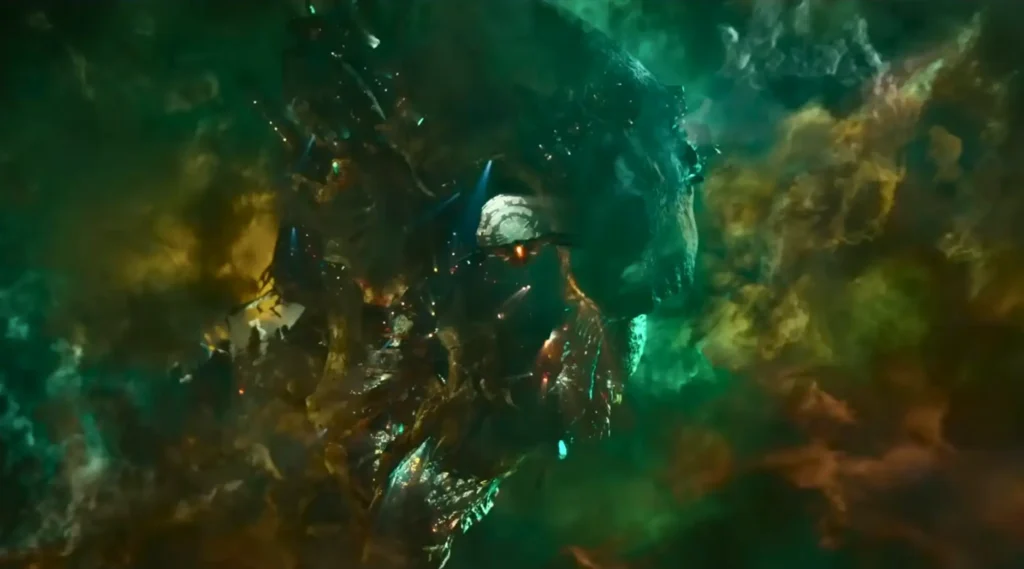
The Celestials are the MCU’s most important cosmic force, and the franchise has been building toward a full reckoning with them since 2014. Eternals (2021) brought them to center stage, but the questions it raised — about Arishem’s judgment of Earth, about Tiamut’s fossilized remains still jutting from the Indian Ocean, about what these beings actually want — remain almost entirely unanswered heading into Avengers: Doomsday (December 2026) and beyond. If you want to understand where the MCU is going cosmically, you need to understand the Celestials first.
Here’s everything you need to know.
What Are the Celestials? The Short Answer
The Celestials are among the oldest beings in existence — colossal, humanoid cosmic entities whose power operates at a scale that makes the Avengers look like a neighborhood watch program. They stand roughly 2,000 feet tall in standard form. They don’t speak, not in any conventional way. They arrive, they observe, and they judge.
Their core function in both the comics and the MCU is life management on a cosmic scale: seeding planets with intelligent life, nurturing that life over millions of years, and then deciding whether the result was worth the investment. Most of the time, the answer is no.
In the comics, Jack Kirby introduced the Celestials in The Eternals #1 (1976) — and they’ve been the backbone of Marvel’s cosmic mythology ever since. The MCU adapted their role faithfully: ancient architects of life who regard planets the way a scientist regards a petri dish.
Where the Celestials Come From: The Cosmic Origin
This is the part most guides skip, and it’s a mistake — because the Celestials’ origin explains everything about their behavior.
Before the current universe existed, there was only the First Firmament: the original, singular cosmos. It wasn’t empty. It was a conscious entity, and like any conscious entity left entirely alone, it eventually created company. It made two types of servants: the Aspirants, who were completely obedient, and the Celestials, who weren’t.
The Aspirants did whatever the First Firmament asked. The Celestials developed their own ideas about what the universe should be. Predictably, this led to war. The Celestials won. They didn’t just defeat the Aspirants — they essentially ended them. The First Firmament, watching its creation turn against itself, fled. But in its retreat, pieces of it broke off and scattered, and wherever those fragments landed, they seeded the foundation of what would become the Marvel multiverse.
This is the cosmological backstory Al Ewing developed in Ultimates 2 (2016–17), and it matters for understanding the Celestials’ mindset. They’re not invaders. They don’t conquer in any ordinary sense. They predate essentially everything that currently exists. When Arishem looks down at Earth and renders judgment, he does so from a vantage point that predates humanity by an almost incomprehensible margin. To him, Earth is a recent project.
How Celestials Work: The Seed, the Planet, the Emergence
This is the mechanism at the heart of Eternals, and it’s worth getting exactly right — because the MCU adapted it almost directly from the source material.
Celestials reproduce through planets. A Celestial selects a world with sufficient intelligent life and plants a seed deep within its core: an embryonic Celestial that will gestate for millions of years. The growing Celestial draws energy from the planet’s population. This is why Celestials need civilizations to thrive — not because they care about those civilizations, but because intelligent life generates the energy the seed requires. Every empire built, every war fought, every technological leap made on a seeded planet is, in part, fuel for a being that will eventually destroy it.
When the seed reaches maturity, the Emergence occurs. The newborn Celestial tears through the planet’s core and breaks the surface, destroying everything. This process has repeated across thousands of planets over billions of years.
In Eternals, this is exactly what’s happening to Earth. Tiamut the Communicator is the Celestial seeded within our planet, and his Emergence — triggered in part by the energy released when half of all life was restored after the Blip — is imminent throughout the film. When Sersi (Gemma Chan) transmutes Tiamut into stone, she doesn’t just stop one birth. She commits treason against the entire system. That’s why Arishem comes for her, Phastos, and Kingo. Stopping an Emergence is the equivalent of destroying a Celestial — the next generation, unborn.
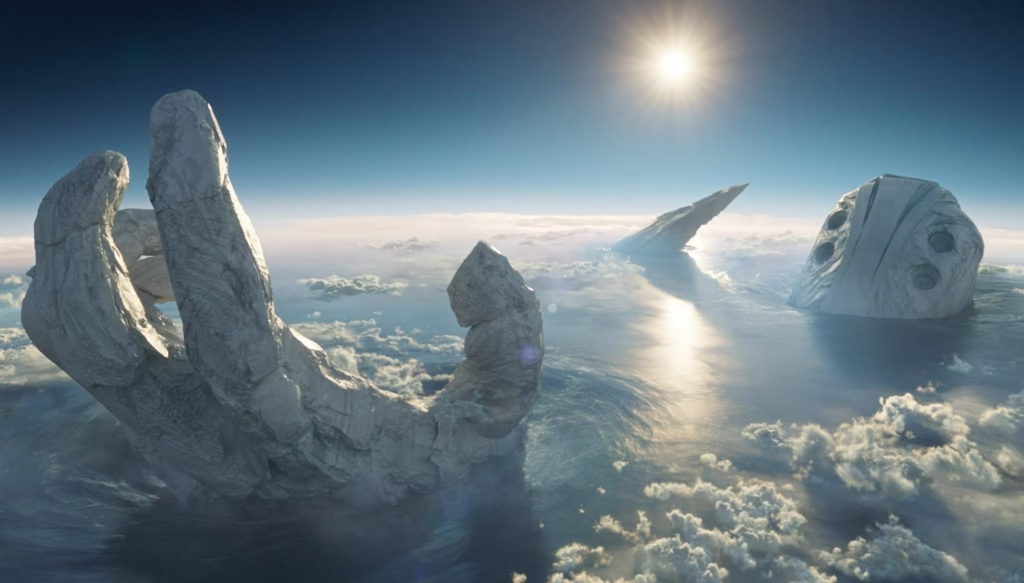
Tiamut’s fossilized hand is still there. It broke the surface of the Indian Ocean and stayed. Captain America: Brave New World (2025) acknowledged it — a land mass has formed around the exposed section, referred to as Tiamut Island, and the world is already fighting over what to do with it. It’s a permanent mark on the MCU’s map, and eventually someone is going to have to explain what a partially emerged Celestial actually is at rest.
The Four Hosts: Every Time the Celestials Visited Earth
Most planets in the Celestials’ system get visited once — seeded, assessed, then harvested or destroyed. Earth has been visited at least four times. Each visit is a formal cosmic audit called a Host. Understanding the Four Hosts is understanding why the Celestials are so invested in this specific corner of the galaxy.
The First Host — roughly one million years ago: The Celestials arrived and divided humanity’s genetic ancestors into three tracks. The first group was mutated into Deviants — beings with unstable, constantly shifting genetics. The second was engineered into Eternals — functionally immortal, powered by cosmic energy, designed to protect the Emergence process. The remaining population was left as baseline humans, but with a latent genetic factor that would eventually allow for random superhuman development — the dormant potential that, over millions of years, would gradually manifest. In the comics, this latent factor planted during the First Host is directly connected to the X-gene.
One other critical event belongs to this period. A Celestial called the Progenitor — already infected by a parasitic cosmic entity called the Horde — arrived on Earth and died here. Its enormous body decomposed over millions of years, and the biological matter seeped into Earth’s geology and biosphere. According to Jason Aaron’s Avengers run (beginning with issue #1, 2018), this infected Celestial essence fundamentally altered Earth’s evolutionary trajectory, potentially explaining why the planet produces so many superhumans. A team of proto-Avengers active around 1,000,000 BC attempted to fight off the dying Celestial. They failed.
The Second Host: The Celestials returned to find things had gone badly wrong. The Deviants — whose unstable genetics had made them aggressive and adaptive — had conquered. They’d enslaved both the Eternals and baseline humanity. The Celestials intervened with the kind of force that doesn’t leave much standing. Their actions during the Second Host included catastrophic geological events, among them the destruction of Deviant strongholds that caused Atlantis, then still a surface civilization, to sink beneath the ocean.
The Third Host: By now, Earth had developed something the Celestials apparently hadn’t accounted for: gods. Odin and the Asgardians, Vishnu and the Hindu pantheon, Zeus and the Olympians — all became aware of the Celestials and recognized the threat they posed. During the Third Host, these divine beings attempted to intervene. The Celestials ignored them almost entirely. When Odin and the assembled gods couldn’t make them flinch, it reset the cosmic power hierarchy. The gods retreated and agreed not to interfere with Celestial business again.
The Fourth Host: The final and most recent Earth audit. By this point, humanity itself tried to fight back. In South America, the assembled Eternals created a Uni-Mind — a collective consciousness merging their powers — and channeled it in an attempt to resist Celestial judgment. The Celestials received this, assessed it, and departed without destroying Earth. Why they spared humanity during the Fourth Host has never been definitively answered in the comics. It remains one of the great open questions in Marvel cosmic lore — and may be one the MCU is positioning itself to answer.
The Most Important Celestials in the MCU
Not all Celestials are equal, and several have already shaped the MCU in ways that haven’t been fully reckoned with.
Arishem the Judge
The red Celestial. The prime Celestial. The one who, if pressed, speaks — though “transmits” is closer to what he actually does. Arishem is the leader of the host and the being responsible for all four of Earth’s audits. In Eternals, he’s the one who delivers the truth to Sersi: the Eternals aren’t protectors. They’re caretakers of the Emergence process.
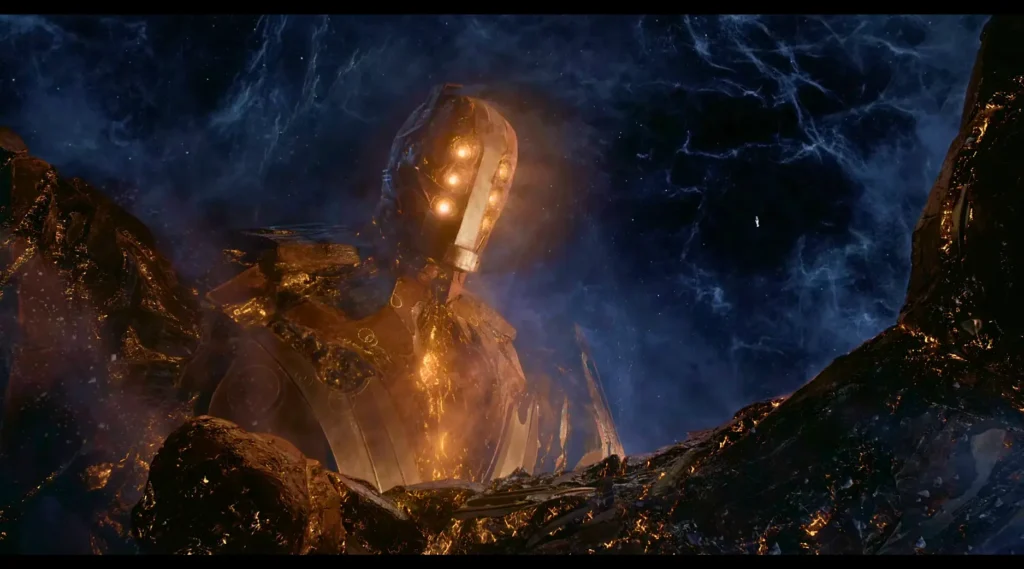
When Sersi stops Tiamut’s birth, Arishem arrives over London and takes her, Phastos, and Kingo into space. His message is clear: Earth’s survival is now contingent on his review of the Eternals’ memories. He’ll determine whether humanity is worth replacing the lost Celestial. That judgment remains unrendered. Kevin Feige confirmed as recently as 2024 that there are no immediate plans for Eternals 2 — but he also confirmed the events of Eternals won’t be abandoned. Tiamut Island has already surfaced in Brave New World. Arishem’s verdict is one of the most consequential dangling threads in the entire MCU.
Tiamut the Communicator
The Celestial seeded inside Earth, and the central crisis of Eternals. His Emergence would have destroyed the planet; Sersi stopped it by using the Uni-Mind’s power to turn him to stone. His partially emerged body now forms Tiamut Island in the Indian Ocean. He’s not dead in any conventional sense — a fossilized Celestial isn’t quite the same as a destroyed one — and his presence there demands explanation as the MCU’s cosmic storylines expand. In the comics, the Dreaming Celestial (a close analog) spent centuries dormant before eventually awakening with significant consequences. The MCU’s Tiamut may not be as permanently still as he looks.
The Progenitor
The Celestial who died on Earth in prehistoric times, whose decomposing remains altered the planet’s evolutionary path. In the comics, this dead Celestial was eventually raised from the Arctic Ocean floor by the other Celestials and gifted to Earth’s heroes as Avengers Mountain — their new headquarters — during Jason Aaron’s Avengers run.
Its MCU significance is almost entirely speculative but potentially enormous. If the MCU adopts the comics mechanism connecting Celestial biological matter to the X-gene, this dead Celestial is directly responsible for the existence of mutants. With the X-Men now integrated into the MCU — their Fox-era iterations confirmed for Avengers: Doomsday — the Progenitor’s role in Earth’s genetic history could become the canonical backstory for the entire mutant population. A single dead Celestial explaining both the Avengers’ powers and the X-gene would be elegant world-building on a scale the MCU rarely attempts.
Ego the Living Planet
The MCU’s most fully developed Celestial, and its most significant deviation from the standard template. Introduced in Guardians of the Galaxy Vol. 2 (2017) and played by Kurt Russell, Ego is a Celestial who developed consciousness and individual will in a way that led him entirely off-script. While other Celestials operate as a collective host following defined procedures, Ego went rogue. He built a humanoid avatar to interact with other species, seeded dozens of worlds with his biological matter, and fathered children across the galaxy — specifically to find one who’d inherited enough Celestial power to assist him.
His goal, the Expansion, was a corruption of the Celestial lifecycle: instead of one planet producing one new Celestial, Ego wanted to extend his consciousness across every living planet simultaneously, consuming the universe into himself. Peter Quill, as his half-human son with latent Celestial ability, was the key. The Guardians stopped him. Ego’s arc demonstrates something important about Celestial mythology: the system isn’t inevitable. Individual Celestials can deviate entirely from their programming, and when they do, the consequences are galactic.
Exitar the Exterminator
Not yet in the MCU, but the logic of the storyline makes him close to inevitable. Exitar is the cleanup Celestial — the one dispatched when a planet fails its audit and the Emergence doesn’t proceed as planned. He stands roughly 20,000 feet tall, ten times the height of a standard Celestial, and he functions less as an individual than as a cosmic role: if one Exitar is destroyed, another takes his place. He’s not a character with motivations. He’s the consequence of a failing grade.
If Arishem ultimately rules against Earth, Exitar is what follows.
Knowhere’s Celestial
Never named in the MCU, but you’ve been living with the evidence of its death since Guardians of the Galaxy (2014). Something killed it. Something removed its head. That detail has never been explained, but it establishes firmly that Celestials are not immortal — and that there are forces in the universe capable of ending them.
Are Celestials Stronger Than Galactus?
The MCU now has a partial answer.
Galactus — performed by Ralph Ineson in The Fantastic Four: First Steps (July 2025) — is established as a planet-devouring cosmic entity of genuine menace. He arrived at Earth-828, the retro-futuristic 1960s world of the Fantastic Four, and represented the most catastrophic threat the MCU had deployed in some time. The Fantastic Four defeated him — sent him through a portal — but the film was explicit: he isn’t dead. He’ll be back.
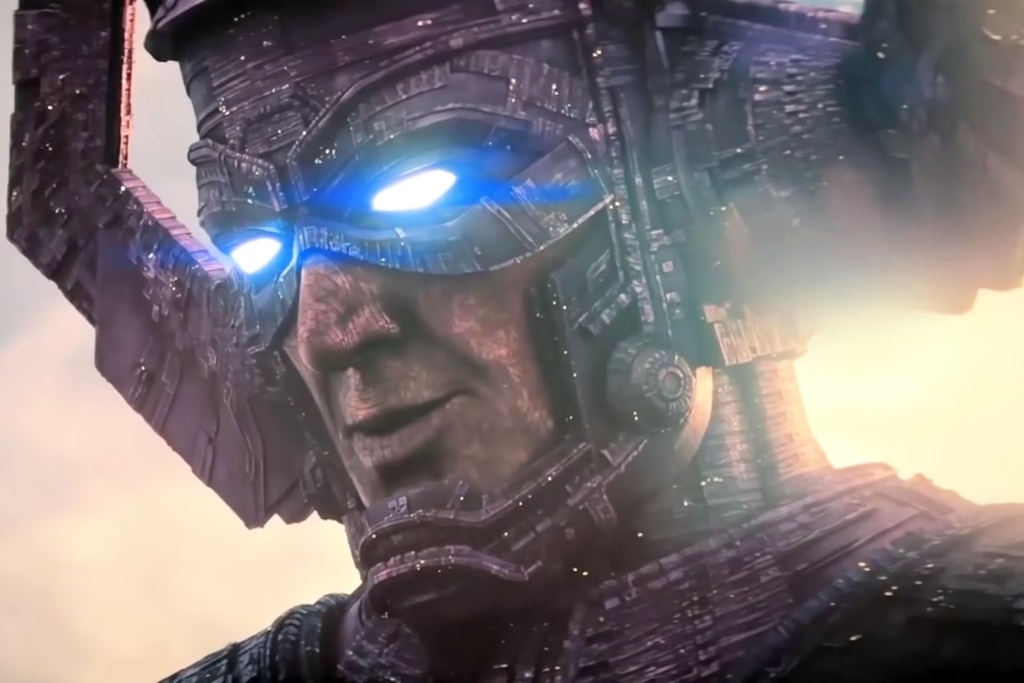
In the comics, the power comparison between Galactus and top-tier Celestials is deliberately contested. Tiamut specifically is established as a Celestial that Galactus feared — and Galactus doesn’t fear much. But the comparison misses the more important distinction: Galactus is singular, one entity driven by hunger. The Celestials are a system — thousands of beings operating across thousands of planets simultaneously, functioning as cosmic architects rather than destroyers. They don’t fight; they judge. When they do engage directly, as Knowhere’s skull evidences, the outcome is final.
The more interesting MCU question isn’t who wins a fight. It’s what happens when Galactus and the Celestial host eventually occupy the same space. Galactus has been destroying seeded planets for billions of years. That’s not a neutral action in the Celestials’ cosmology — those are their projects, their investments, their next generation. The MCU hasn’t touched that tension yet.
What the Celestials Mean for the MCU’s Future
Several threads are live, most of them building toward the two-film conclusion of the Multiverse Saga.
Arishem’s judgment is the most significant unresolved Celestial storyline in the MCU. Sersi, Phastos, and Kingo were taken at the end of Eternals and haven’t appeared since. Feige was clear in 2024: no immediate sequel plans. But the Celestial storyline won’t simply be abandoned — it’s too structurally important. The most likely resolution is that Arishem’s verdict on Earth becomes part of the stakes in Avengers: Doomsday (December 18, 2026) or Avengers: Secret Wars (December 17, 2027), both of which are operating at exactly the scale where Celestial consequences belong.
Tiamut Island is an ongoing provocation the MCU can’t ignore indefinitely. A continent-sized landmass has emerged from the Indian Ocean, built around the fossilized remains of a nearly born god. Brave New World acknowledged it; the larger MCU hasn’t reckoned with it. The resources it produces, the geopolitical crises it creates, and the fundamental question of what a mid-emergence Celestial actually is — none of that is resolved.
The Progenitor and mutants is the speculative thread with the most potential to retroactively reshape MCU history. With Fox-era X-Men returning in Doomsday alongside MCU-native mutants, Marvel needs an in-universe explanation for how the X-gene exists in this continuity. The Celestial Progenitor’s biological contamination of Earth — the most established comics mechanism connecting Celestials to mutant origins — is the most narratively complete answer available. If the MCU adopts it, the Celestials aren’t just responsible for the Eternals and Deviants. They’re responsible for the X-Men.
Galactus returning is effectively confirmed by First Steps’ ending. He was sent away through a portal, not killed. When a being defined by relentless hunger is denied a meal, he doesn’t forget the address. His eventual collision with the Celestials’ cosmic agenda is one of Marvel mythology’s defining tensions. The MCU hasn’t touched it yet. That won’t last.
The Celestials set all of this in motion billions of years before Tony Stark built his first suit. Every cosmic thread running through the MCU’s next two years — mutants, judgment, galactic consequences — traces back to them.
Celestials FAQ
Who created the Celestials in Marvel? Within Marvel’s fiction, the Celestials emerged from the First Firmament — the original singular universe — after defeating their counterparts the Aspirants in a primordial war. As characters, they were created by Jack Kirby, first appearing in The Eternals #1 in July 1976.
What is the Celestials’ purpose in the MCU? The Celestials seed planets with intelligent life, use that life as energy to gestate an embryonic Celestial within the planet’s core, then judge whether the civilization is worth preserving. Most civilizations aren’t. Earth has received four formal audits — an almost unheard-of number — and its latest judgment is still pending.
How many Celestials are there? Thousands, spread across the multiverse. Each reality has its own Celestial host managing its planets. The MCU has formally introduced Arishem and Tiamut; Ego is a confirmed rogue; the unnamed Celestial whose skull became Knowhere establishes a fourth, now dead.
Can Celestials be killed? Yes — Knowhere is the evidence. A dead Celestial’s skull, repurposed as a mining colony. What killed it remains one of the MCU’s unrevealed details. In the comics, Celestial deaths are rare and tend to have lasting consequences for everything around them.
What happened after Eternals? Arishem departed with Sersi, Phastos, and Kingo to review their memories and judge whether humanity is worth preserving in the absence of a born Celestial. That judgment hasn’t been delivered. Tiamut’s remains are still in the Indian Ocean, now forming Tiamut Island. No further Celestial appearances have occurred in the MCU since 2021.
What makes Ego different from other Celestials? Standard Celestials operate collectively, following defined procedures across thousands of planets. Ego developed individual consciousness and will, went rogue, built a humanoid avatar, and attempted to consume the entire universe into himself through his Expansion plan. He’s what happens when a Celestial decides the system isn’t the point — he is.
The thing about the Celestials is that they were never the main event in the MCU. They were always the context. Every cosmic threat, every galactic conflict, every superhero with inexplicable power traces back, in one way or another, to what these ancient beings set in motion billions of years ago.
Arishem’s verdict on Earth is still pending. Tiamut’s hand is still there. The Progenitor’s contamination of Earth’s biosphere may yet explain the X-Men’s very existence.
The Celestials don’t move on a human timeline. They’re patient.
The question isn’t whether they’ll be back. It’s whether Earth passes the next audit.