
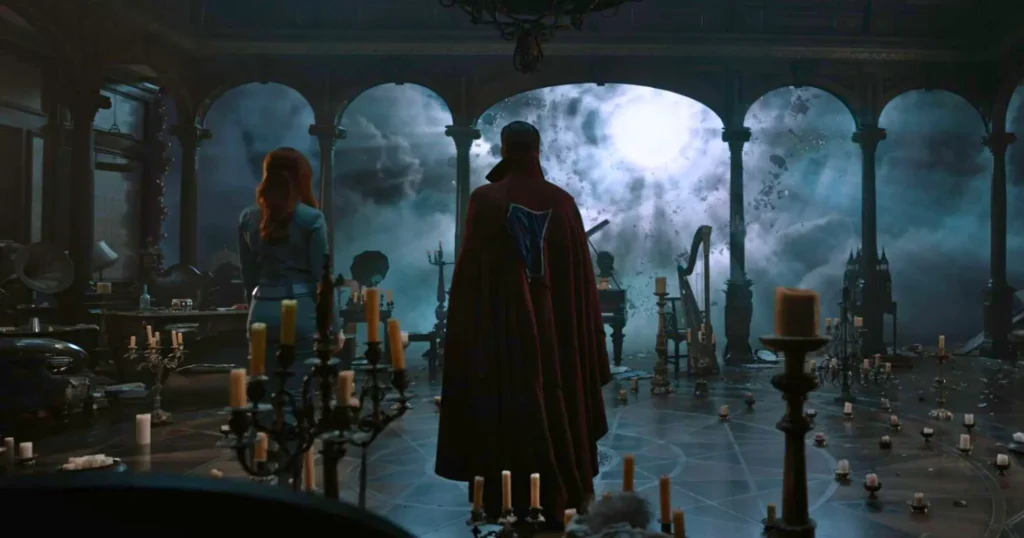
Marvel wants you to think the MCU’s multiverse is complicated. It isn’t. It’s broken — and has been since Avengers: Endgame.
Every concept the franchise has introduced since 2021 — nexus events, incursions, anchor beings, the Temporal Loom — is actually part of the same failing system. A system He Who Remains held together through sheer authoritarian will for centuries. A system that started fracturing the moment Sylvie put a blade in him in that room at the End of Time. A system that, according to leaked details about Avengers: Doomsday, one Victor von Doom has spent years studying for a specific purpose: not to fix it, but to inherit its wreckage.
If you want to understand what Doomsday is actually doing, you need to understand how the rules work. More importantly, you need to understand exactly where they don’t — because those cracks aren’t accidents. Jonathan Hickman figured that out in New Avengers #1 back in 2013 when T’Challa stepped through a portal in Wakanda and found a dead universe on the other side. The MCU is finally catching up.
Here’s everything you need to know — and why each piece matters more right now than it ever has before. For a glossary companion covering key terms like nexus beings, incursions, and anchor beings laid out side by side, we’ve covered that separately.
The MCU’s multiverse operates through eight interlocking mechanics: the Sacred Timeline, nexus events, absolute points, dream walking, incursions, nexus beings, anchor beings, and the Temporal Loom. Each one controls a different layer of reality — and each one has a documented exception that quietly breaks it. Those exceptions are exactly what Avengers: Doomsday is building toward.
The Sacred Timeline — And the Organisation That Murdered Infinite Futures to Protect It
Here’s what the TVA actually is, stripped of the bureaucratic branding: a kill switch for free will, built by a man who was terrified of himself.

He Who Remains — Nathaniel Richards, a scientist from the far future — discovered the multiverse the way you’d hope someone wouldn’t. Not through careful exploration. Through war. Different variants of himself found each other across realities, and some of those variants decided the logical response was conquest. The Multiversal War that followed made Thanos look like a noise complaint. To end it, Richards chose a single timeline he could control, wound the others back into nothing, and built the Time Variance Authority to make sure they stayed that way.
The mechanism he used was nexus event monitoring. Left to itself, time is chaotic — any decision, any deviation from the “intended” path, creates a branch. A new timeline forks off and begins growing. Small divergences, easily pruned. But let a branch extend far enough and it redlines: it becomes permanent, a new universe that can never be collapsed. The TVA’s job was to catch branches before they redlined and eliminate them with reset charges — erasing not just a moment but every person, place, and possibility that branched off with it. Those erased timelines didn’t vanish. They got sent to the Void, a wasteland at the end of time where Alioth — an enormous, mindless predator — consumed whatever arrived.
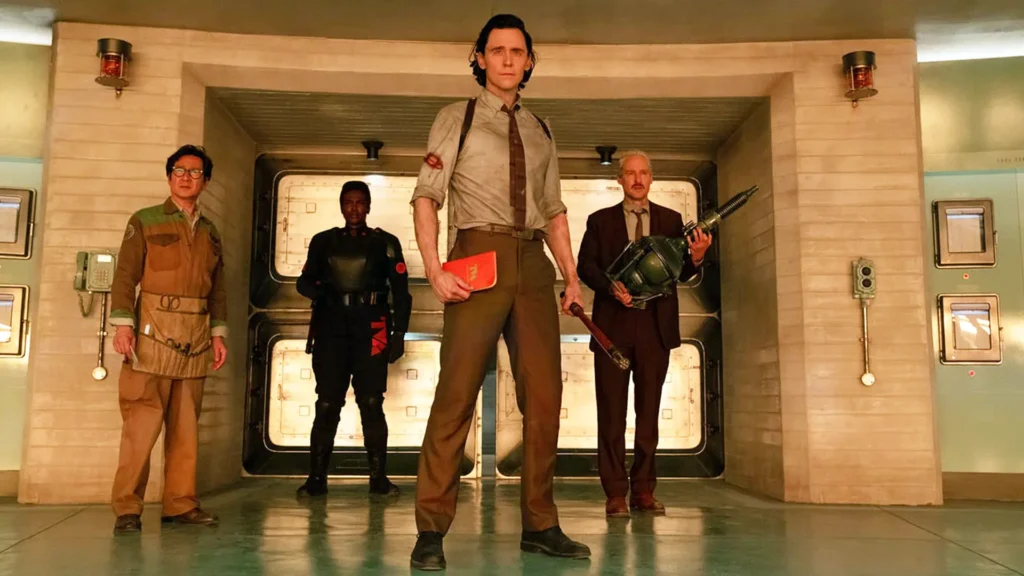
Think of the TVA less like a time police force and more like a gardener with nuclear-tipped pruning shears. The cost of keeping it beautiful was the death of an infinite number of other gardens.
It worked for centuries. Then Sylvie killed He Who Remains in the Loki Season 1 finale — the single largest nexus event the MCU has ever shown — and the branches began growing faster than anyone could stop them. Everything that follows in the Multiverse Saga is downstream of that one moment. Understanding the TVA isn’t just background knowledge. It’s the origin point for every other mechanic this article is about to cover.
Absolute Points — The Things Even Time Can’t Change
Nexus events are deviations that can happen — breaches in the plan that the TVA polices. Absolute points are something else entirely. They’re events so foundational that reality itself refuses to let them be undone.

The clearest example comes from What If…? Season 1, Episode 4. Doctor Strange, having watched Christine Palmer die in the car accident that eventually drove him to the mystic arts, uses the Eye of Agamotto to travel back and prevent it. He fails. He tries again — a different route, a different moment. She still dies. He tries seventeen times across multiple approaches, and every single time the universe engineers a new method: a heart attack, a stray bullet, a fire. The event isn’t protected by the TVA. There’s no agent with a reset charge. The timeline itself is correcting him.
That’s the distinction that matters. A nexus event is a branch you created by deviating. An absolute point is a wall the universe builds to stop you from deviating in the first place. Christine Palmer’s death in Strange’s timeline isn’t just sad — it’s cosmically load-bearing. Without her death, Strange never becomes Sorcerer Supreme, never defeats Dormammu, never guards the Eye of Agamotto. The entire protective architecture of Earth-616’s mystic infrastructure runs through that one terrible morning on a wet road.
The MCU hasn’t mapped out every absolute point — almost by definition, you only discover them by trying to change them. Which makes them the most quietly terrifying mechanic in the entire multiverse framework. Some things can’t be saved. The universe has already decided.
Dream Walking, the Darkhold, and How to Destroy a Universe Without Leaving Your Body
Dream walking sounds almost peaceful. It isn’t.
The mechanic works like this: a sorcerer with access to the Darkhold — the corrupted spellbook written by Chthon, the Elder God of chaos magic — can project their consciousness across the multiverse and take possession of a variant’s body in another reality. You stay physically in your universe. Your mind goes somewhere else entirely. Your variant in that reality loses control of their own body while you operate it like a borrowed car.
The problem is what you leave behind. Every action you take in that other universe — every choice, every footprint — increases your dimensional mass in a reality you don’t belong in. The more you do, the more the universe registers your presence as a foreign object that needs to be expelled. Push far enough and the boundary between your universe and that one begins to erode. Which brings us directly to the next mechanic — and why it’s the most catastrophic one on this list.
The MCU has shown dream walking go catastrophically wrong twice. Earth-838’s Doctor Strange — Strange Supreme — used the Darkhold to find a way to defeat Thanos and in doing so caused an incursion that consumed an entire universe. The Illuminati executed him for it. Sinister Strange, the variant who’d spent years dream walking to find a Christine Palmer he could keep, left his universe a smouldering ruin; when Earth-616’s Strange arrived, the destruction was already total.
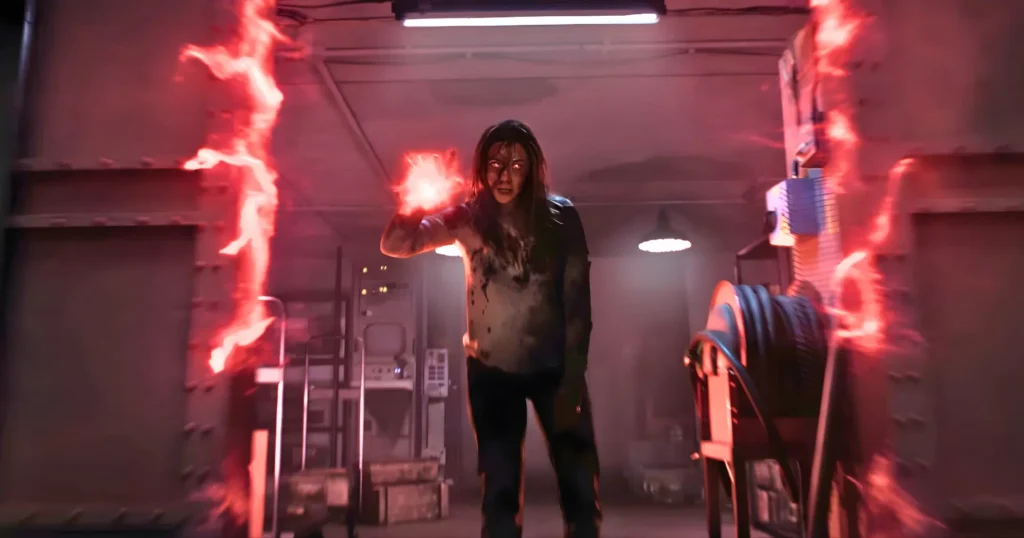
The Strange examples are disturbing. Wanda is categorically worse. Multiverse of Madness is essentially a sustained demonstration of what happens when a Nexus Being — someone whose power already warps probability on a cosmic scale — uses the Darkhold to dream walk repeatedly across multiple realities in pursuit of a personal obsession. The Illuminati’s Strange got executed. Wanda got a mountain dropped on her. The scale of what she was doing wasn’t just ethically monstrous. It was mechanically suicidal.
One thing I’ve always found telling: the MCU never clarified whether Earth-616’s Strange triggered an incursion through his own dream walking in Multiverse of Madness. Clea shows up in the post-credits scene and tells him he did. An Avenger caused an incursion, the universe registered it, and Marvel quietly moved on. Keep that pattern in mind — because it’s everywhere.
Incursions — When Two Universes Run Out of Room
An incursion is exactly what it sounds like: a collision between two universes. One reality’s boundary erodes until it physically intersects with another, and when that happens, one or both universes are destroyed.
The definition is clean. The reality is extinction-level.
Reed Richards lays out the mechanics in Doctor Strange in the Multiverse of Madness with the precision of someone who has spent a career studying the problem — because in the comics, he has. The larger the footprint a foreign entity leaves in a universe it doesn’t belong in, the greater the erosion. It’s not just presence that matters. It’s action. An incursion doesn’t happen because you walked through a portal. It happens because you stayed, made decisions, changed outcomes, and let the universe accumulate evidence that something wrong is there.
The two clearest MCU examples are both Doctor Strange variants. Strange Supreme’s incursion destroyed his universe entirely — collateral damage of using the Darkhold to find solutions to problems he should have accepted. Sinister Strange’s incursion left one survivor: Sinister Strange himself, in a dead reality, alone. In both cases, the pattern is identical: a brilliant sorcerer using forbidden knowledge to control things that shouldn’t be controlled, gradually destabilising the boundaries of their reality until those boundaries gave out.
Here’s where the comics matter — because the MCU didn’t invent this. Jonathan Hickman introduced incursions into Marvel continuity in New Avengers #1, published in January 2013. T’Challa investigates a disturbance in Wakanda, steps through an anomalous portal, and finds himself standing on the surface of a dead Earth in a destroyed universe. That was the first incursion the Illuminati encountered. What followed — across Hickman’s entire Avengers and New Avengers run through 2015 — was the slow, horrifying realisation that incursions weren’t random accidents. They were a systemic collapse. Every universe was eventually going to collide with another, and the only question was which ones survived.
That run ended with Secret Wars (2015), where Doctor Doom absorbed the power of the Beyonders — the omnipotent beings who had been engineering the incursions from outside the multiverse — and used it to build Battleworld from the fragments of destroyed realities. Kevin Feige has cited Hickman’s work directly as inspiration for where the MCU’s Multiverse Saga is going.
That destination has a name. It’s called Avengers: Doomsday. And Doctor Doom — reportedly motivated by what insiders describe as a “vendetta against the multiverse” — may not be trying to prevent incursions. He may be the one causing them. If you want to understand what that version of Doom looks like as a character, the breakdown of RDJ’s Victor von Doom is essential reading.
Nexus Beings — The People Who Break the Rules by Existing
A nexus event is something that happens. A Nexus Being is someone who is the event — permanently, involuntarily, just by being alive.
The MCU planted this concept earlier than most people realise. In WandaVision, there’s a fake pharmaceutical ad for a product called Nexus — an antidepressant promising to “anchor you back to your reality, or the reality of your choice.” It played as a surreal sitcom gag. It wasn’t. It was a direct tease of Wanda Maximoff’s true nature: a being whose connection to reality is so fundamental, and so unstable, that the very concept of choosing which reality to inhabit is available to her in ways it isn’t for anyone else.
Nexus Beings in the comics have existed since the 1970s. A Nexus Being is an entity powerful enough to affect probabilities and alter the future across multiple realities simultaneously. They’re not just powerful in one universe — they’re cosmically significant across all of them. Each universe typically has one. Wanda’s Chaos Magic isn’t just a power set. It’s a physical expression of her status as Earth-616’s Nexus Being: reality bending around her because she’s one of the fixed points the multiverse uses to organise itself.
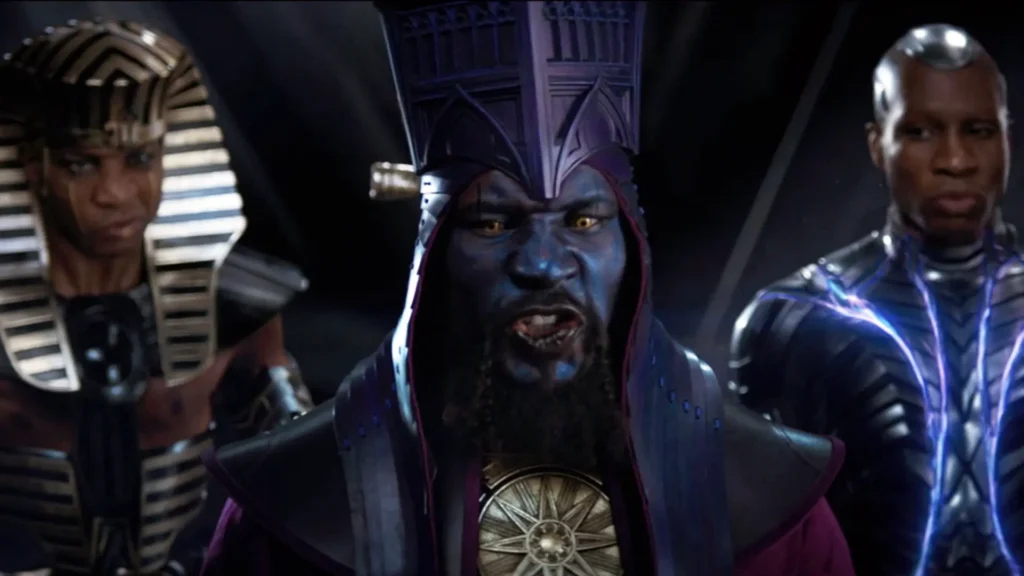
Kang the Conqueror — and by extension He Who Remains — represents another variety. A being who can navigate time and reality so fluently that his very existence creates divergence. It’s why He Who Remains had to die for the multiverse to truly open: he was using his Nexus Being status as a control mechanism, actively suppressing every other branching point.
Kevin Feige has suggested the MCU may treat Nexus Beings and anchor beings as related concepts — potentially two names for the same underlying phenomenon. I’m not sure I agree with that read. The distinction feels important. A Nexus Being warps the fabric of reality around them. An anchor being holds a specific reality together from within. One is a source of chaos. The other is a source of stability. They’re not the same thing — and conflating them is precisely the kind of misunderstanding that gets universes destroyed. Franklin Richards, for what it’s worth, may be the most interesting case of a being who could function as both — and what that means for Avengers: Doomsday is worth understanding before the film arrives.
Anchor Beings — The One Person Standing Between a Universe and Oblivion
Deadpool & Wolverine introduced the concept almost as a throwaway line. It wasn’t.
An anchor being, as the TVA’s Paradox explains to Wade Wilson, is an entity of such vital importance to their universe that their death causes the reality to destabilise and eventually die. Not metaphorically. Literally. Logan — James Howlett, the Wolverine of Earth-10005, the Fox Universe — was that universe’s anchor. When he died, the entire reality began withering. Not because he was the most powerful person in it. Because the universe had, in some way that the MCU doesn’t fully explain and probably can’t, organised itself around his existence. Remove him and the structure loses its load-bearing wall.
The mechanic raises an obvious question: how does a universe “choose” its anchor being? The MCU doesn’t answer this, and I think that’s deliberate. The anchor being concept works precisely because it resists explanation. Logan wasn’t chosen. He just was. Some presences are so cosmically significant that reality calcifies around them.
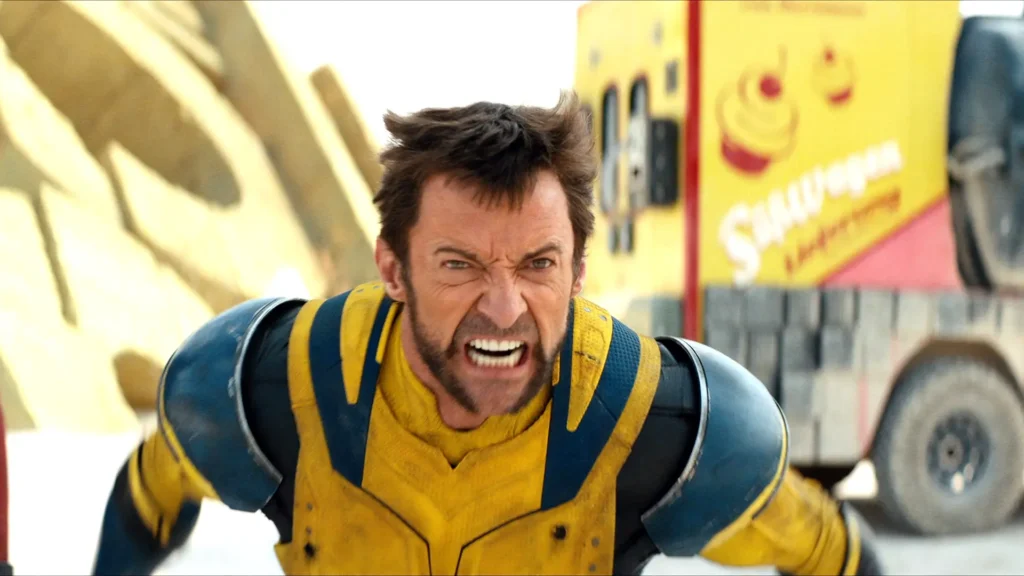
What Deadpool & Wolverine does explain — through Paradox, who turns out to be wrong about almost everything — is that an anchor being cannot be replaced. Dead is dead. The universe is dying and there’s no substitute. Except there obviously is, because the film ends with a variant Logan relocating to Earth-10005 and the universe stabilising around him. Paradox’s rule lasted approximately ninety minutes before it got disproved by its own movie.
That contradiction isn’t a plot hole. It’s the most important thing the film establishes: the MCU’s multiverse rules are not as fixed as the people enforcing them believe. Paradox was a TVA bureaucrat operating on received doctrine. The actual mechanics of reality turned out to be more flexible — or more desperate — than the manual said.
Which leads to the obvious Doomsday implication. If anchor beings can be replaced, they can also be systematically eliminated and replaced with something controllable. You want to destabilise a universe without triggering a full incursion? Kill its anchor being and install a variant that serves your purposes instead. That’s not a theory I’m floating. That’s the logical application of the mechanics the MCU has already established — and it maps precisely onto what Doctor Doom has been reported as planning. The full breakdown of how Earth-10005 and its X-Men factor into Doomsday’s multiversal conflict is worth reading before the film arrives.
The Temporal Loom — He Who Remains’ Nuclear Option
Every system needs a failsafe. He Who Remains built his into the architecture of the multiverse itself.
The Temporal Loom sits at the end of time, inside the TVA’s headquarters outside the normal flow of reality. Its function is brutal in its simplicity: it processes raw time, weaving the branching timelines of the multiverse into a manageable structure. While the TVA’s agents handled individual nexus events on the ground — pruning branches, arresting variants, deploying reset charges — the Loom operated at the macro level. When branches proliferated faster than agents could manage, the Loom deleted them wholesale. Not selectively. Not surgically. Everything that shouldn’t exist, gone.
Think of it less like a loom and more like an immune system. The TVA was the white blood cells — targeted, case-by-case. The Temporal Loom was the fever — indiscriminate, systemic, burning everything out at once if the infection got bad enough.
He Who Remains designed it this way deliberately. If he died, if the Sacred Timeline lost its caretaker, the Loom would activate as a failsafe — overloading under the weight of the newly freed branches and then purging everything that didn’t belong. A dead man’s switch for the multiverse. The free multiverse, he warned Loki, couldn’t exist without the Loom. Someone had to hold the structure together or the whole thing would tear itself apart.
He was right about the first part. The Loom did overload the moment Sylvie killed him. Ouroboros and Hunter B-15 tried to recalibrate it and couldn’t. The branches were multiplying faster than any mechanical system could process.
He was wrong about the second part. The free multiverse didn’t need the Loom. It needed Loki.
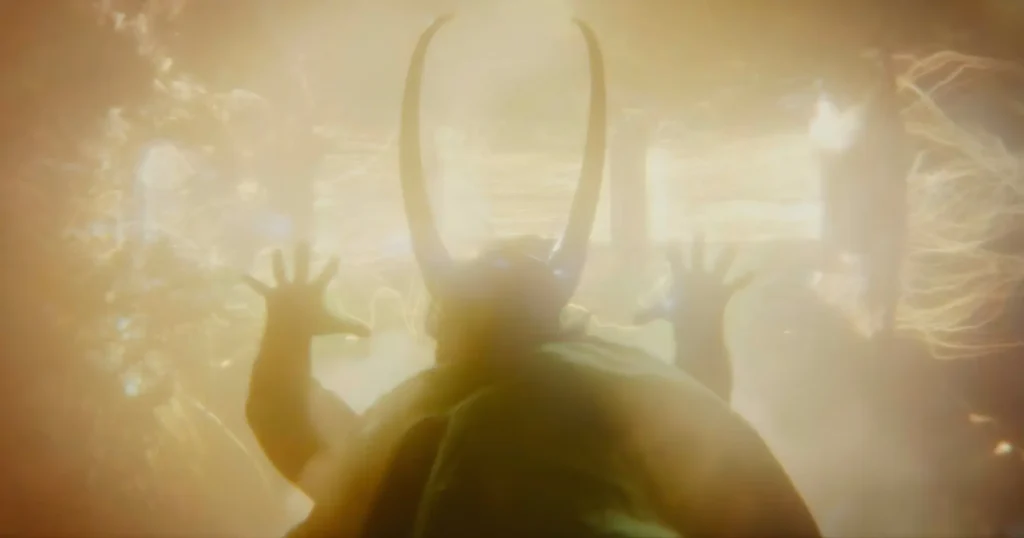
In the Loki Season 2 finale, Tom Hiddleston’s Loki destroys the Temporal Loom himself — physically tearing it apart — and uses his own time-slipping ability to reweave every branching timeline around his own presence at the end of time. He becomes, functionally, a living Temporal Loom. Every timeline in the multiverse now runs through him. He holds them together not through mechanical force but through personal will, sitting alone at Yggdrasill — the World Tree — for what amounts to eternity.
What that means for Avengers: Doomsday is something the MCU hasn’t addressed directly. But Doomsday plot leaks consistently describe Doom destroying the TVA at a pivotal moment in the film. If the TVA falls, Loki’s position becomes catastrophically exposed. He’s not a machine. He can be reached. He can be killed. And if the being holding every timeline together is removed from that position, what the Temporal Loom’s overload was threatening in Season 2 — the collapse of every branching reality simultaneously — becomes not a risk but a certainty.
He Who Remains built a failsafe. Loki replaced it with himself. The question Doomsday may be asking is what happens when the failsafe is a person and someone decides that person needs to die.
The Rulebook Has Always Had Holes — And That’s the Point
Here’s what nobody wants to say plainly: the MCU’s multiverse rules have been breaking since the day they were introduced. Not because Marvel’s writers are careless. Because every single time the franchise establishes a hard rule, a protagonist immediately violates it and faces no structural consequence. That pattern isn’t coincidence. It’s the system doing exactly what He Who Remains designed it to do — except He Who Remains is dead now, and no one’s covering the holes anymore.
Let’s go through them.
In the 2016 Doctor Strange, the Ancient One demonstrates that sling rings can open portals to other dimensions. She steps through one. It works. The implication is clear: dimensional travel via sling ring is available to any sorcerer trained at Kamar-Taj. Six years later, in Doctor Strange in the Multiverse of Madness, the entire plot hinges on Wanda needing to steal America Chavez’s power because she can’t cross between universes on her own. Nobody in that film mentions sling rings. Nobody asks why the shortcut that existed in 2016 is no longer on the table. The MCU quietly retired a rule it had already established and hoped nobody was paying close enough attention to notice.
Some of us were.
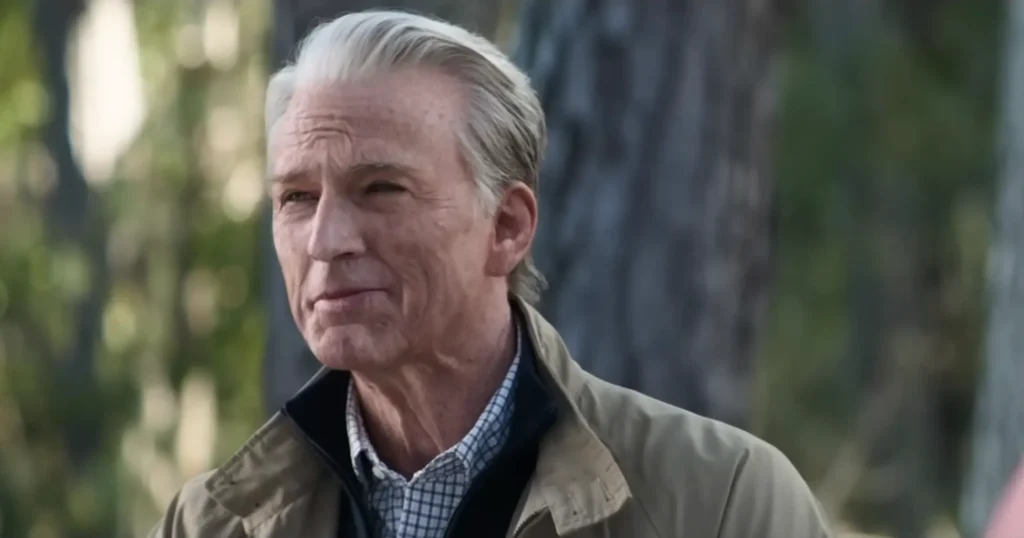
Then there’s Steve Rogers. Avengers: Endgame establishes that the Avengers’ time travel works by branching the timeline — any deviation creates a new reality, not a changed past. Bruce Banner makes this explicit. The Hulk is, in fact, rather smug about it. Steve Rogers then uses this exact time travel technology to return the Infinity Stones — and instead of coming back, lives out a full life in the 1940s timeline with Peggy Carter, returning as an elderly man in the present. By the rules the film itself just established, Steve spent decades as a foreign element in a branching timeline. That should have either triggered a nexus event serious enough to draw TVA attention or created an incursion-level erosion risk. The film has no answer for this. The old man on the bench just sits there, a plot hole with a beautiful ending.
Gamora from 2014 stays in the present-day MCU after Endgame. The TVA, per Loki, is supposed to prune exactly this kind of variant displacement. They apparently didn’t get the memo, or chose not to act, or — and this is the reading I find most interesting — He Who Remains decided it wasn’t worth the escalation and let it slide.
And then there’s Paradox. An official TVA representative who states with complete institutional authority that anchor beings cannot be replaced. Disproved. Same film. Ninety minutes.
Every single one of these is a rule that bends for the right person at the right moment. And the reason they bend is the same in every case: He Who Remains, while alive, was managing exceptions manually. He wasn’t just protecting the Sacred Timeline. He was protecting the —
idea that the Sacred Timeline was coherent — which required him to quietly absorb the contradictions that would otherwise expose it as fiction.
Without him, those managed exceptions are just open wounds. Steve Rogers’ timeline. Gamora’s displacement. Every sling ring that could theoretically cross dimensions but somehow never does when the plot requires a portal to be impossible. These aren’t plot holes in the careless sense. They’re structural failures in a system built on the premise that one man’s will could substitute for actual physical laws. He Who Remains wasn’t maintaining reality. He was maintaining the ‘appearance’ of reality. The real multiverse was always messier, more flexible, and more vulnerable than the Sacred Timeline’s mythology admitted.
Doom, reportedly operating from a timeline destroyed by Steve Rogers’ Endgame interference — the incursion caused by a man who broke the rules and got a beautiful ending while his universe quietly died behind him — would know this better than anyone.
He’s not coming to destroy the multiverse. He’s coming because the multiverse was already broken, and he’s the only one willing to say so out loud.
Doctor Doom isn’t the villain of Avengers: Doomsday. He’s the consequence.
Every incursion the MCU has shown was caused by a hero. Strange Supreme. Sinister Strange. Wanda. And, if the leaked Doomsday origin holds, Steve Rogers — whose decision to live out a perfect life in a branching timeline helped destroy the universe Doom called home. The multiverse’s greatest catastrophes were caused by people with good intentions and too much power acting like the rules applied to everyone except them.
Doom looked at the same broken system every other power player has used for personal ends and reached the same conclusion He Who Remains did — someone has to control this, and it might as well be the person who actually understands it.
He’s wrong about the method. He might not be wrong about the diagnosis. The MCU has been building to an argument about whether order imposed by one will is better than chaos nobody manages. Avengers: Doomsday is where that argument finally gets answered.
Place your bets.
Frequently Asked Questions
What is an incursion in the MCU?
An incursion occurs when the boundary between two universes erodes and the realities physically collide, destroying one or both. In the MCU, incursions are caused by excessive multiversal interference — particularly dream walking and prolonged presence in a universe that isn’t your own. Doctor Strange in the Multiverse of Madness provided the first clear visual example of an incursion in progress.
What is the difference between a nexus event and an absolute point?
A nexus event is a deviation from the Sacred Timeline that can happen — a branch that the TVA polices and prunes. An absolute point is an event the universe itself prevents from being changed, regardless of TVA involvement. In What If…? Season 1, Episode 4, Doctor Strange’s repeated attempts to save Christine Palmer demonstrate absolute points in action: the universe engineers her death every time, through different means.
What is an anchor being in Marvel?
An anchor being is an entity whose existence is so cosmically significant to their universe that their death causes the entire reality to destabilise and eventually collapse. Wolverine was established as Earth-10005’s anchor being in Deadpool & Wolverine. Unlike nexus beings — who warp probability across multiple realities — anchor beings hold a single universe together from within.
What MCU multiverse rules matter most for Avengers: Doomsday?
Incursions and anchor beings are the two mechanics most directly relevant to Avengers: Doomsday. Incursions — universe-destroying collisions triggered by multiversal interference — are the comic-book engine that drove Jonathan Hickman’s Secret Wars storyline, which Doomsday is adapting. Anchor beings matter because Doom reportedly targets them systematically, and because Loki now functions as the anchor being for the entire multiverse following the Temporal Loom’s destruction.
Why didn’t Doctor Strange cause an incursion in Spider-Man: No Way Home?
The MCU hasn’t fully explained this. Strange’s broken spell pulled beings from other universes into Earth-616 and nearly collapsed the barrier between realities — which is mechanically closer to a catastrophic incursion precursor than most events the franchise has shown. The distinction may be that Strange’s spell was contained and reversed before full boundary erosion could occur. Clea’s post-credits appearance in Multiverse of Madness — telling Strange he caused an incursion — suggests the MCU acknowledges the question without having fully answered it.