
Picture this: It’s a random Tuesday morning, and every screen on Earth — your phone, your TV, that billboard in Times Square — flickers to life with the same face staring back at you. Not a deepfake. Not a hack. It’s Victor Von Doom, and he’s just declared himself Emperor of the World.
This isn’t some dystopian hypothetical. It’s happening right now in Marvel Comics’ One World Under Doom storyline that launched in February 2025, where Doom has combined the full power of the Sorcerer Supreme with his already terrifying genius to create “United Latveria” — his benevolent name for planetary domination. And here’s the twist that makes it truly disturbing: he’s offering free universal healthcare, free education for all, and he’s outlawed war. The civilians are defending him. The Avengers look like the bad guys.
So how powerful is Dr. Doom, exactly? At baseline, he’s a genius-tier inventor, a sorcerer rivaling Doctor Strange, and the armored ruler of a nation — already one of Marvel’s most dangerous threats. But his power ceiling is genuinely limitless. Doom has wielded the Power Cosmic, merged with Galactus, killed the Beyonders, and rebuilt the entire multiverse from scratch as God Emperor Doom. No other non-cosmic Marvel character has climbed that high.
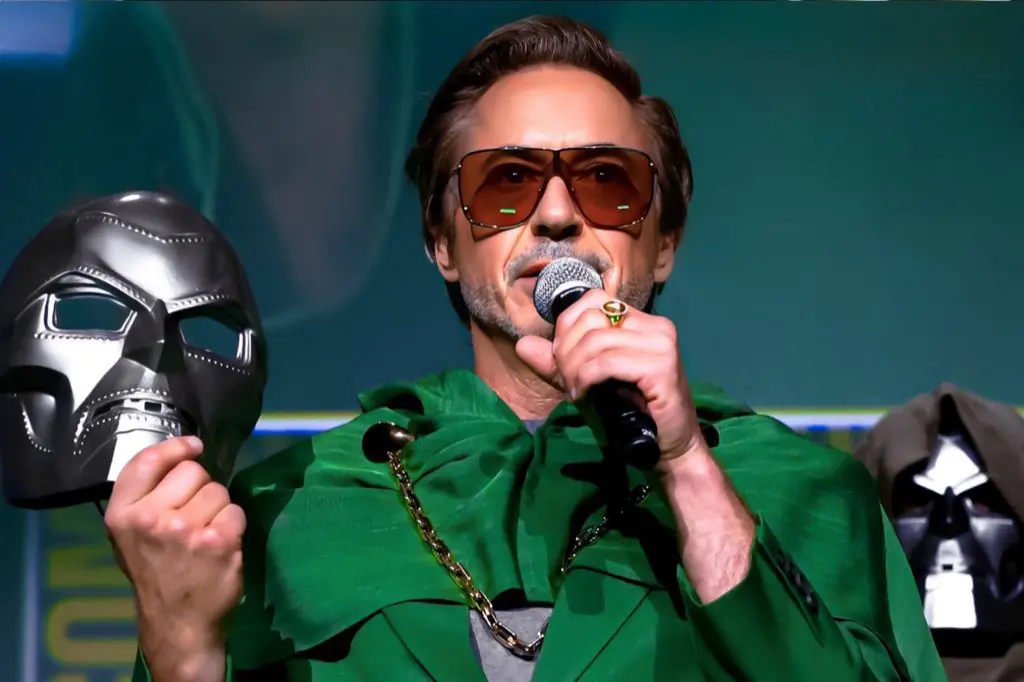
Meanwhile, just under a year from now, Robert Downey Jr. will step onto screens worldwide as this same villain in Avengers: Doomsday, arriving December 18, 2026. The Russo Brothers have called Doom “one of the most complex characters in all of comics,” and they needed “the greatest actor in the world” to portray him. Translation: they understand that Doom isn’t just another megalomaniac in a mask. He’s the rare villain who genuinely believes he’s the hero of his own story — and sometimes, terrifyingly, he might be right.
But here’s what you need to understand before that movie drops: the version of Doom we’re getting is built on 60+ years of increasingly ridiculous power escalations. We’re talking about a character who’s stolen the Power Cosmic, merged with Galactus, waged 400-year wars against Celestials, and literally became God. Not a god. The God of the entire Marvel multiverse.
So which version of Victor Von Doom has displayed the most power? That’s exactly what we’re breaking down — from the “merely” world-conquering variants all the way up to the one who made the Beyonders themselves look like amateurs. Understanding this hierarchy isn’t just comic book trivia. It’s the roadmap to comprehending why this armored dictator has remained Marvel’s most dangerous villain for six decades, and what makes him the perfect threat to unite the Fantastic Four, the Avengers, the X-Men, and everyone else in between.
Let’s start with the foundation and work our way up to genuine godhood.
How Powerful Is Dr. Doom at Baseline? Science, Sorcery, and Strategy
Before we dive into reality-warping god-tier versions, we need to establish what makes regular Doctor Doom so terrifying in the first place. Because here’s the thing about Victor Von Doom — his baseline power level is already absurd enough to make most heroes nervous.
Earth-616 Doom operates on what I call the “perfect balance principle.” He’s got genius-level intellect that genuinely rivals Reed Richards (and yes, he’s proven he can accomplish things Reed couldn’t, like permanently curing Ben Grimm’s Thing form). But unlike Reed, who’s purely science-focused, Doom supplements his technological mastery with mystical knowledge that puts him in the conversation with Doctor Strange himself. That’s not hyperbole — Strange has openly acknowledged Doom as a potential Sorcerer Supreme candidate, which tells you everything about his magical credentials.
His armor alone deserves a PhD thesis. We’re talking nuclear-powered titanium forged by Tibetan monks, enhanced with both cutting-edge tech and mystical enchantments. It can withstand blasts from the Human Torch, go toe-to-toe with Iron Man’s best suits, and reportedly survived a blast from a complete Infinity Gauntlet. The suit houses energy weapons, force fields, molecular expanders that turn pebbles into boulders, and cybernetic links to his Doombot army.

But Doom’s real superpower? Strategic thinking combined with zero moral restraint. He’s mastered time travel via his time platform (first introduced in Fantastic Four #5, 1962), conquered dimensional barriers, and built Latveria into one of Earth’s most defensively impenetrable nations despite its relatively small size. Recent comics — specifically the ongoing One World Under Doom series by Ryan North and R.B. Silva — revealed something fascinating: when Doom finally conquered Earth in 2025, he didn’t use mind control or Doombots. He just… negotiated. The Avengers were shocked to discover world leaders genuinely agreed to his rule through standard diplomatic channels because his offer was that compelling.
That’s the genius of Doom — he doesn’t always need godlike power to win. He’s patient, methodical, and plays the long game better than almost any Marvel character. His combination of scientific genius, magical mastery, tactical brilliance, and the resources of an entire nation creates a villain who’s perpetually one good plan away from genuine world domination.
Now keep this baseline in mind. Because every variant we’re about to discuss takes these core abilities — the intelligence, the ruthlessness, the strategic thinking — and adds cosmic-level power sources that transform Doom from “regional threat” into “multiversal extinction event.” The scariest part? Even when these powered-up versions fail, they fail precisely because Doom’s psychology remains his ultimate weakness. His ego, his obsession with Reed Richards, his need to prove superiority — those flaws persist regardless of power level.
Which makes you wonder: what happens when you give that psychology access to the Power Cosmic?
Doctor Doom Power Rankings #10–#7: Future Tech and Cosmic Power Theft
Doom 2099 (Earth-928): The Future Dictator
Let’s start in the corporate dystopia of 2099, because this version perfectly illustrates Doom’s “adapt and conquer” philosophy. The Doom 2099 series launched in January 1993 by John Francis Moore and Pat Broderick asked a fascinating question: what if Doom woke up 100 years in the future to find someone else sitting on his throne?
The answer? He systematically rebuilds his empire from scratch and ends up conquering the United States.
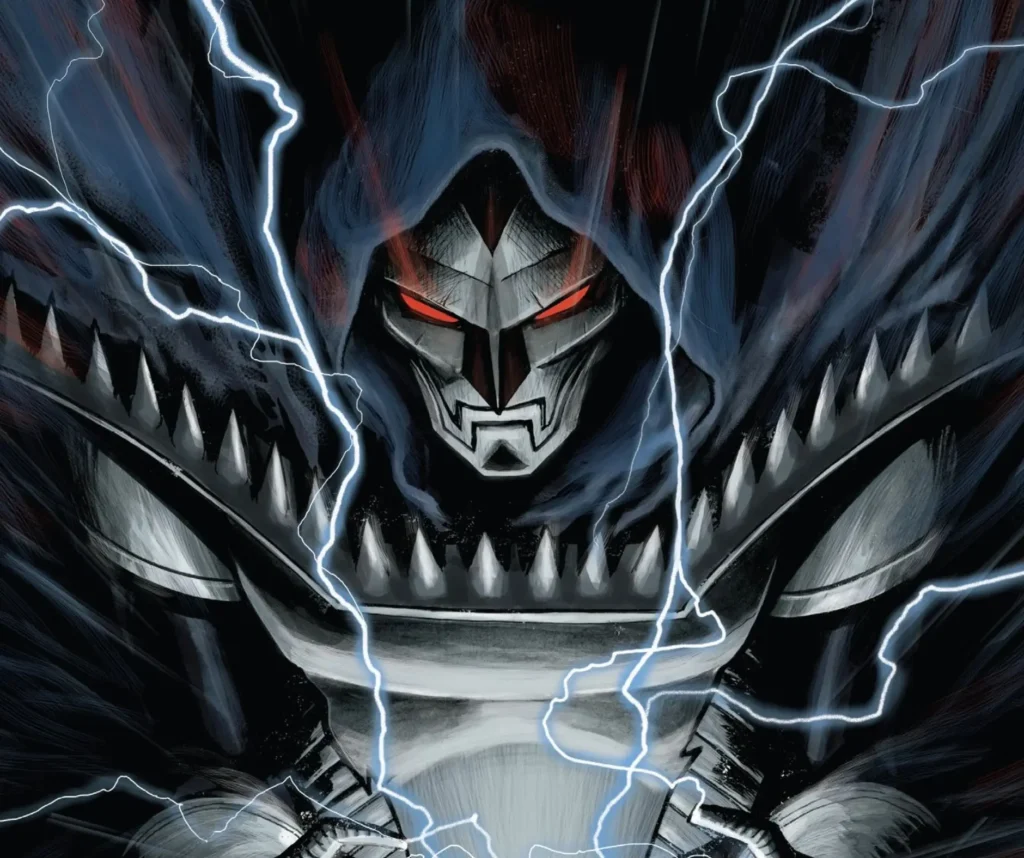
This version sports nuclear-powered titanium armor that makes his classic suit look like a prototype — molecular expanders, phase shifters for temporary intangibility, and nanotechnology-enhanced reflexes pushing him to superhuman levels. But what makes Doom 2099 fascinating isn’t just the upgraded tech. After defeating Tyger Wylde (the cyborg who’d claimed Latveria), Doom didn’t stop at reclaiming his homeland. By issue #29, he’d become President of the United States — not through election, but through sheer force of will and superior strategy.
As president, Doom recreated S.H.I.E.L.D., put the X-Men 2099 in charge of law enforcement in Halo City, and systematically dismantled the mega-corporations that had controlled every aspect of 2099 life for decades. The series even added “A.D.” (Anno Doom) to all the 2099 titles after his conquest. That’s the kind of cultural dominance we’re talking about.
Still, Doom 2099 earns the #10 spot because his power remains primarily technological evolution rather than cosmic ascension. He’s a regional conqueror operating at enhanced-human levels. Impressive? Absolutely. But we’re just warming up.
Doom the Annihilating Conqueror (Earth-13266): The Triple Threat
Here’s where things get properly dangerous. Fantastic Four issues #15–16 (2013) introduced a Doom who successfully absorbed the powers of not one, but two cosmic-level beings: Annihilus and Kang the Conqueror.
Think about that combination for a second. From Annihilus, he gained the Cosmic Control Rod’s power — immortality, command over the Annihilation Wave, and cosmic-level energy manipulation. From Kang, he acquired temporal manipulation and 31st-century technology. Combined with his own genius and mystical knowledge, this created a villain who existed as a universal constant across multiple timelines simultaneously.
This marks a crucial evolution in the Doom power-scaling ladder. Most powered-up Doom variants stick to single sources — steal the Surfer’s power, grab the Beyonder’s abilities, etc. But Annihilating Conqueror Doom proved you could successfully integrate multiple cosmic power sets without losing coherence. He controlled both the Negative Zone AND time itself, making him nearly impossible to corner or defeat through conventional means.
The Fantastic Four only beat him by literally crashing their time-space ship directly into him while he was distracted. That’s not strategy — that’s desperation. It only worked because they caught him off-guard, which tells you how dangerous a fully-focused version would’ve been.
Infamous Iron Man: The Hero Experiment (And What Tony Stark’s Armor Reveals About MCU Doom)
After Civil War II left Tony Stark in a coma, Doom did something unprecedented in Brian Michael Bendis and Alex Maleev’s 12-issue 2016 series: he genuinely tried heroism.
Following his experiences as God Emperor Doom in Secret Wars (we’ll get there), Victor emerged with his scarred face healed and something resembling a conscience. He didn’t just steal Stark’s armor — he improved it with magical enhancements, creating what’s arguably the perfect fusion of science and sorcery. Flight systems got mystical boosts. Energy projection gained arcane amplification. The armor became something neither pure technology nor pure magic could achieve alone.
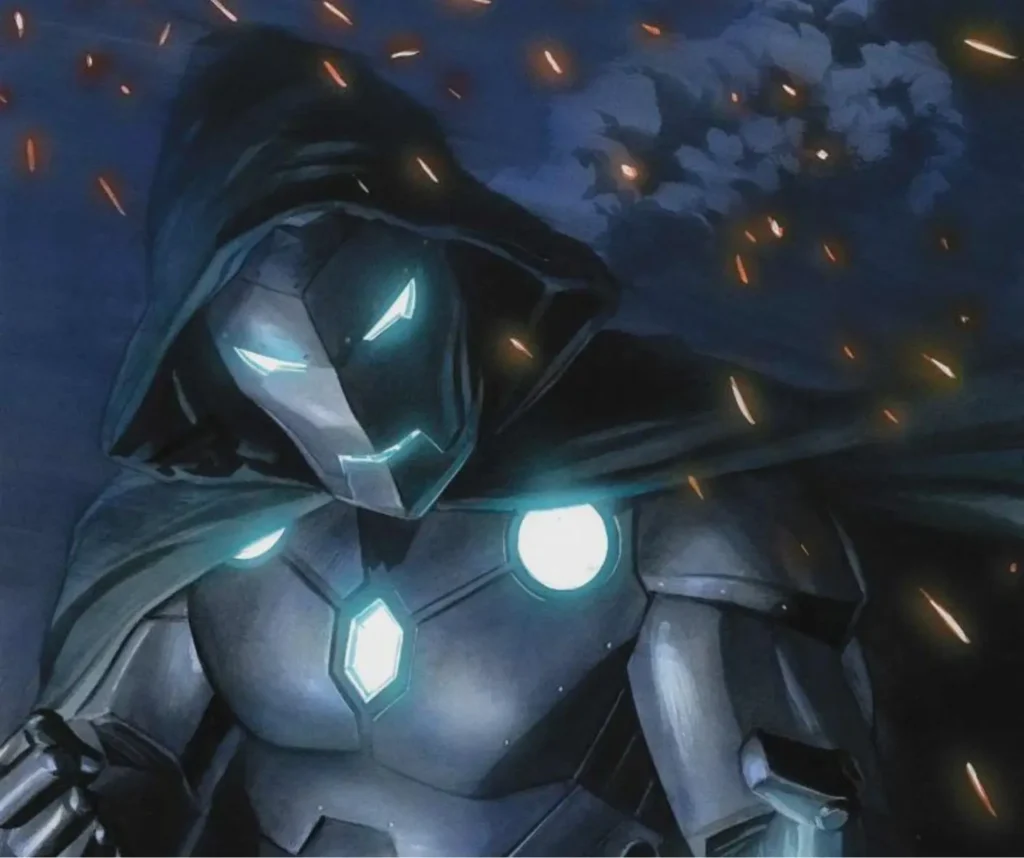
The series is fascinatingly character-driven. Doom faced cosmic-level threats and his most persistent demons (including Mephisto, who tried manipulating him through visions of his mother). But what makes Infamous Iron Man memorable isn’t just the power — it’s watching Doom struggle with redemption. He tried being polite to Ben Grimm. He attempted to rekindle their college friendship. He worked with S.H.I.E.L.D. despite their obvious distrust.
It ended tragically, of course. The Hood burned Doom’s face again with demonic claws during battle, scarring him once more and sending him back to Latveria and his old ways. Doom being a hero was always temporary.
Now — here’s why this version matters more than ever heading into the MCU. The burning question across millions of searches right now is whether Tony Stark literally becomes Doctor Doom in the comics, and what that means for Robert Downey Jr.’s casting. The short answer: not exactly, but the connection is deeper than most realize.
In the comics, Doom takes on Stark’s mantle voluntarily — motivated by genuine guilt and a desire to do better. Stark doesn’t transform into Doom. But there’s a compelling parallel: both are genius inventors who’ve built world-altering technology from inside a metal suit, both have massive egos keeping them from admitting weakness, and both have used their armor to serve personal agendas dressed up as altruism. When you cast Tony Stark’s actor as Doctor Doom, you’re not making a random choice. You’re making a statement about the character’s DNA.
The Infamous Iron Man era proved one critical thing about Doom’s power ceiling: his science and sorcery are most dangerous in combination. Tony Stark’s armor at its peak was already formidable. Doom’s version, laced with dark magic and powered by a consciousness that genuinely understands both disciplines at doctoral level, was something Stark himself couldn’t have built. That fusion — tech amplified by sorcery, sorcery anchored by tech — is the template for everything at the top of this list.
Power-wise, Infamous Iron Man earns #8 because his abilities remained primarily Earth-level heroics rather than cosmic threats. But thematically? This version matters because it showed Doom at his most vulnerable and most revealing.
Silver Surfer Power Doom: The Template
And here’s where it all really started. Fantastic Four #57–60 (1966) by Stan Lee and Jack Kirby gave us the moment that would define Doom’s power-stealing playbook for the next six decades.
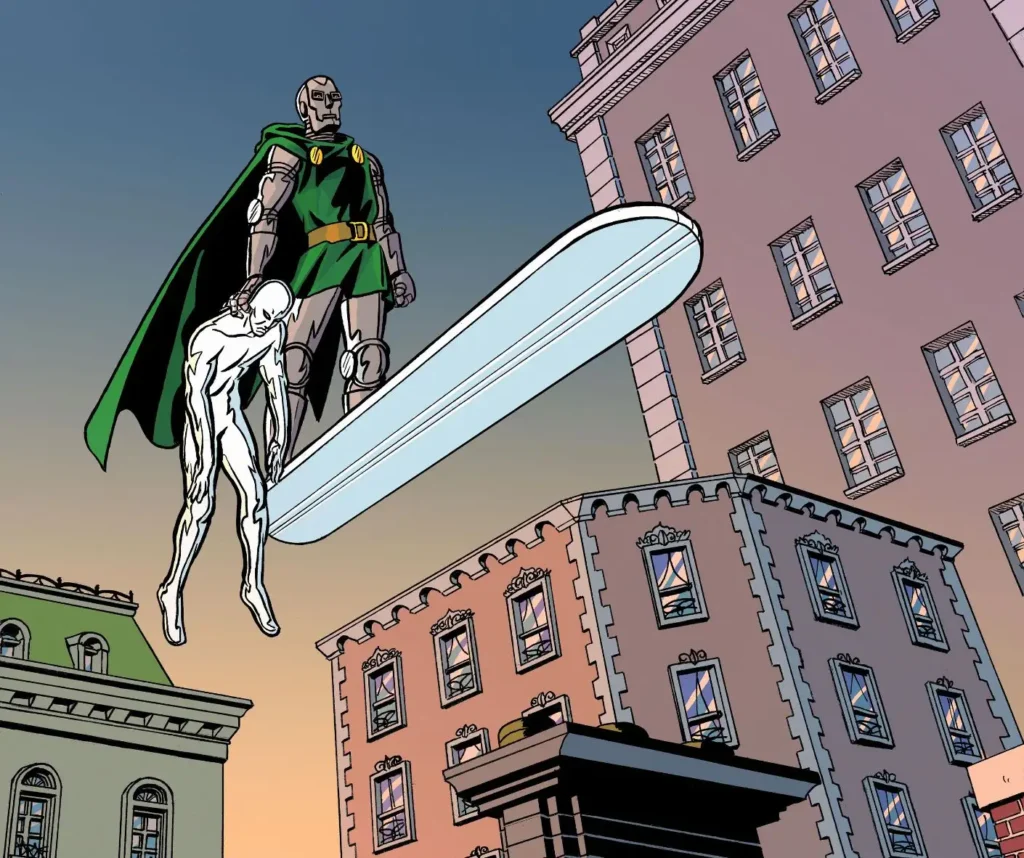
The setup is almost comedic in its audacity. Doom invites the Silver Surfer to Castle Doom, flatters him with displays of scientific achievement, then — while the Surfer’s distracted watching space footage — clamps cosmic inductors to his head and drains the Power Cosmic dry. Just. Like. That.
With the Surfer’s abilities, Doom gained control over fundamental universal forces, matter transmutation at molecular levels, faster-than-light travel, near invulnerability, and cosmic awareness spanning galaxies. He immediately went on a destructive rampage to demonstrate his new godhood, declaring himself “Master of all Mankind.”
But here’s what makes this story historically crucial: it established the precedent. Every subsequent cosmic-powered Doom variant — from the Beyonder theft in 1984’s Secret Wars to God Emperor Doom in 2015 — follows this exact blueprint. Identify cosmic power source. Devise method to steal it. Use Doom’s genius to master it quickly. Then overreach due to arrogance.
The Fantastic Four ultimately defeated him using an Anti-Cosmic Flying Wing that leeched his energy and sent him into a rage, causing him to fly into Galactus’s barrier surrounding Earth. Reed Richards literally admitted Doom had become unbeatable before deploying this desperation play.
That Silver Age story deserves its #7 ranking because it proved Doom’s greatest threats don’t come from his base abilities — they come from his capacity to steal, master, and weaponize cosmic-level powers through scientific and mystical brilliance.
Next up: the versions that go multiversal.
Most Powerful Doctor Doom Variants #6–#4: Sorcerer Supreme to Galactus Fusion
Sorcerer Supreme Doom (What If? Volume 2, Issue #52): The Road Not Taken
The single-issue What If? story from 1993 asked a deceptively simple question: what if Victor Von Doom received proper mystical training instead of Stephen Strange?
In this reality, Doom sought out the Ancient One specifically to gain power sufficient to save his mother’s soul from Mephisto — the demon who’d claimed her after she’d made a desperate bargain. The Ancient One actually agreed to train him. No cosmic accident, no desperation move. Just a deliberate choice to teach Victor the mystic arts.
Without the distractions of ruling Latveria or battling the Fantastic Four, Doom devoted himself entirely to magical mastery. When Stephen Strange later arrived seeking healing for his damaged hands, Doom’s solution was characteristically brutal — he simply cut them off and replaced them with mechanical versions salvaged from a Doombot. Doom considered this a favor, by the way. That’s peak Doom psychology right there.
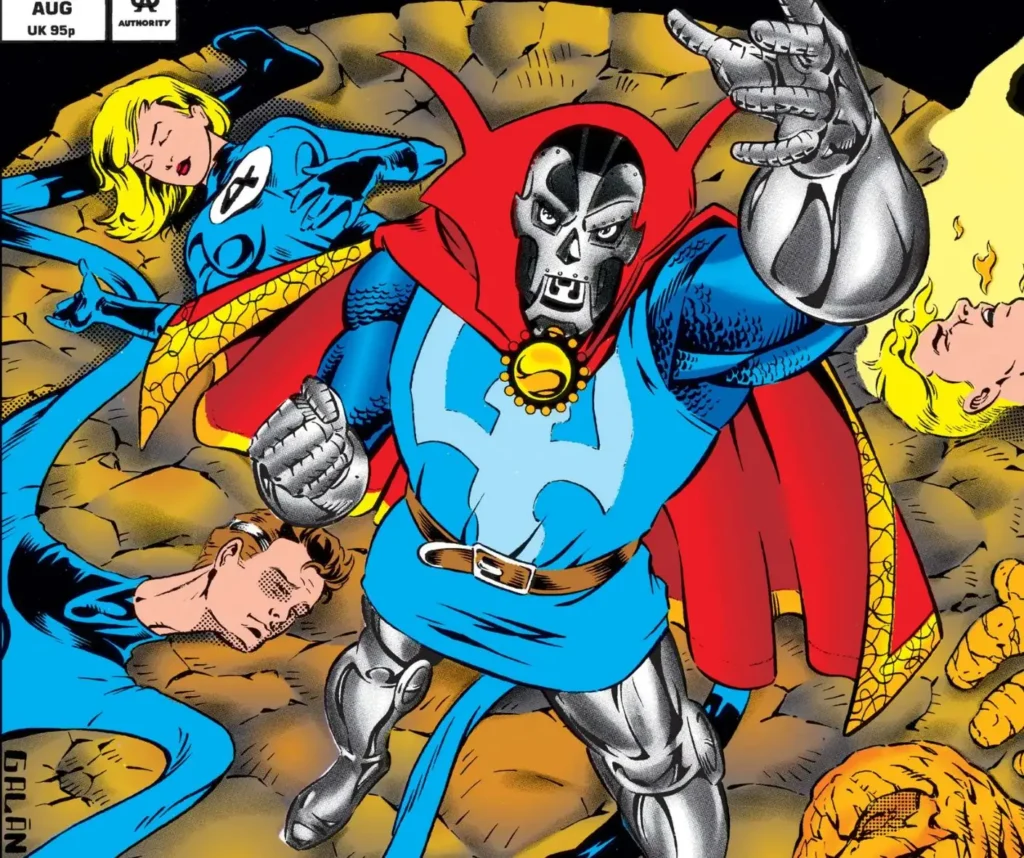
But the real flex came when he finally confronted Mephisto. Doom successfully defeated the demon and freed his mother’s soul — something Earth-616 Doom has never permanently achieved despite centuries of trying. The battle cost the Ancient One his life, but before dying, he passed the mantle of Sorcerer Supreme to Victor.
As Earth’s Sorcerer Supreme, Doom demonstrated his new power level by using the mystical Obsidian Stone to banish Dormammu back to the Dark Dimension. That’s the same Dormammu who regularly gives Strange fits. Doom handled it, died in the process (due to inexperience against cosmic-level mystical threats, not lack of power), then transferred his consciousness into Strange’s body as a final contingency.
This version earns #6 because it’s “merely” Earth’s Sorcerer Supreme — extraordinarily powerful, but still bound by terrestrial magical rules. That said, this What If? story proved prophetic. The idea of Doom as Sorcerer Supreme would return in main continuity during the 2024 Blood Hunt event, leading directly to the current One World Under Doom storyline.
Doom Supreme (Earth-22215): The Multiverse Breaker
Now we’re entering genuinely terrifying territory. This version appeared in Jason Aaron’s Avengers Forever series and represents what happens when Doom’s ambitions go beyond a single reality.
Doom Supreme conquered his entire world, became both Sorcerer Supreme AND Necromancer Supreme (a unique achievement), then grew bored. His solution? Travel to the past and systematically slaughter prehistoric Avengers across multiple timelines. For fun.
But his most horrifying ability isn’t magical or technological — it’s psychological warfare at a cosmic scale. Doom Supreme’s true face can drive other Doom variants insane just by looking at it. Think about that power dynamic. He commands legions of enslaved alternate Dooms who he’s broken through pure psychological domination. These aren’t weak Dooms, either — they’re other cosmic-level variants who’ve been utterly shattered by exposure to whatever lies beneath Doom Supreme’s mask.
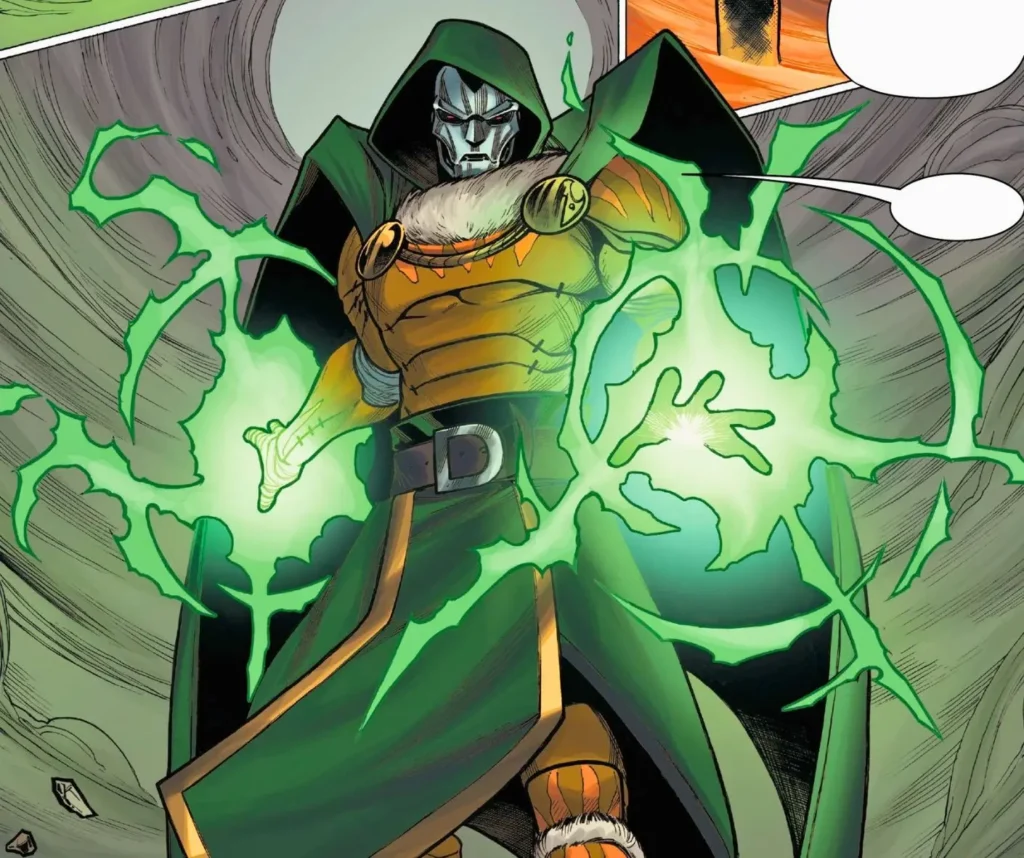
He co-founded the Multiversal Masters of Evil alongside Mephisto, which tells you the company he keeps. He claims to have easily defeated Phoenix Force variants, Odin variants, and other multiversal powerhouses. The comics treat these claims as credible, not boasts, which positions Doom Supreme as a genuine threat to any reality he visits.
What makes him particularly dangerous is the combination of multiversal reach and psychological weaponry. Most cosmic villains have overwhelming physical or mystical power. Doom Supreme can break your mind before you even fight him, then command your broken shell to fight for him. That’s a different category of threat entirely.
Doomactus: When Galactus Meets Megalomania
There are actually two versions of this hybrid nightmare — one from Marvel 2-in-1 issues #5–6 and another from Infinity Warps #1. Both share the same horrifying premise: what if you merged Victor Von Doom with Galactus, the Devourer of Worlds?
The concept alone earns this spot. Galactus devours planets to sustain himself. Doom demands worship and absolute obedience. Combine them, and you get a cosmic entity that devours entire worlds while replacing sentient life with Doombots and demanding the survivors worship him.
These versions haven’t received extensive story development — they’re more conceptual threats that appear briefly to demonstrate “yes, this exists and yes, it’s as terrifying as it sounds.” But the sheer power scale demands recognition. Base Galactus is already one of Marvel’s cosmic heavyweights, capable of threatening entire civilizations. Add Doom’s strategic intelligence and magical knowledge to that cosmic hunger, and you have an extinction-level threat to any universe unlucky enough to host him.
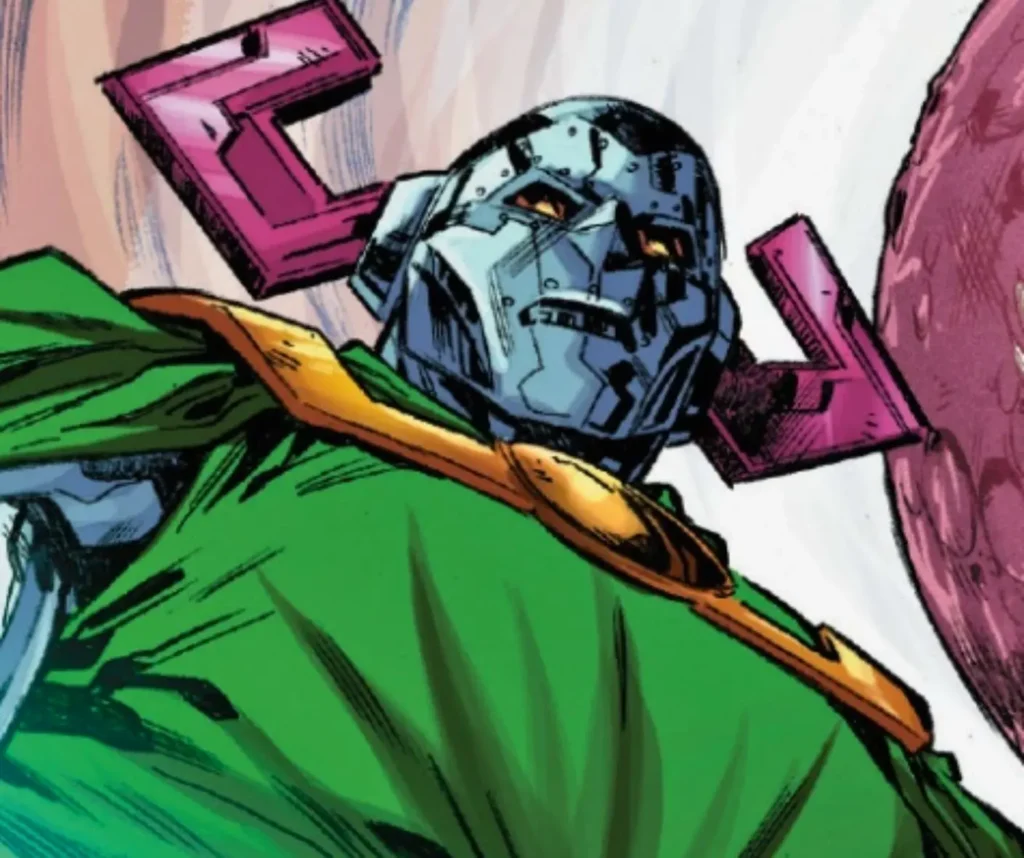
Doomactus represents the logical endpoint of the “Doom absorbs cosmic power” escalation. Not just stealing abilities — actual fusion with a fundamental force of the Marvel Universe. It’s like if entropy itself developed an ego and decided it wanted to rule everything it destroys.
The reason Doomactus sits at #4 rather than higher comes down to limited appearances and feats. We know what the concept should be capable of, but we haven’t seen extensive demonstrations. The top three slots go to versions with more developed showcases of their apocalyptic power levels.
But before we get there, let’s appreciate what these middle-tier cosmic Dooms represent. Sorcerer Supreme Doom showed mastery over terrestrial magic. Doom Supreme proved multiversal psychological warfare works. Doomactus demonstrated that fusion with fundamental cosmic forces creates viable threat models.
Each represents an exponential leap from the last. Doom 2099 conquered America. Annihilating Conqueror controlled time and the Negative Zone. Infamous Iron Man balanced heroism with cosmic threats. Silver Surfer Doom gained universal-scale power.
Then the middle tier takes over: Sorcerer Supreme commands Earth’s magical realm. Doom Supreme breaks multiversal variants. Doomactus combines with a universal constant.
The pattern is clear — each version adds another layer of cosmic significance. The regional becomes universal. The universal becomes multiversal. The multiversal threatens the fundamental structures of reality itself.
And that brings us to the top three. Because what we’ve seen so far? That’s just setup for the versions that actually succeeded at godhood.
Top 3 Most Powerful Doctor Doom Versions: God Emperor Doom and Beyond
Beyonder Doom (Earth-90251, What If?): The 400-Year War
Remember the original 1984 Secret Wars when Doom briefly stole the Beyonder’s omnipotent power, then lost it due to his own psychological limitations? Earth-90251 asked: what if he didn’t lose it?
This What If? scenario answers that question, and the results are catastrophic. With unlimited reality-warping power permanently at his disposal, Doom systematically eliminated all remaining heroes and conquered nations that had previously resisted him — including Wakanda and Atlantis, two of Earth’s most defensively capable civilizations. He achieved every goal he’d ever imagined.
Then came the flex that earns this version its #3 spot: Doom waged a 400-year war against the Celestials. And won.
Let that sink in. The Celestials — cosmic entities who judge entire species, reshape planets, and operate on timescales measured in eons — fell before this version of Doom. These aren’t street-level heroes or even cosmic heralds. These are space gods who make Galactus look specialized. Doom defeated them through a combination of omnipotent power and four centuries of strategic warfare.
No one could oppose him. Earth’s heroes were gone. The cosmic pantheon fell. Doom had truly achieved absolute victory, becoming the uncontested master of his reality with genuinely unlimited power backing every decision.
But here’s the tragedy that makes this version so compelling: it meant nothing. His relentless pursuit of power and domination left Earth lifeless and in ashes. He won everything and found himself ruling over nothing worth having. The omnipotent Doom sat alone on a dead world, having achieved his ultimate goal only to discover it was hollow.
This version demonstrates something crucial about Doom — even with infinite power, his psychology makes genuine satisfaction impossible. He’s trapped in an eternal cycle of conquest and emptiness, unable to stop even when stopping would serve him better.
Current Sorcerer Supreme Doom (Earth-616, 2024–2025): The Unfolding Reign
And now we reach the version currently dominating Marvel Comics, spinning out of 2024’s Blood Hunt event and Ryan North’s One World Under Doom storyline that launched February 2025.
After Doctor Strange’s astral form desperately sought Doom’s help during a vampire invasion, they struck a bargain: Strange would temporarily transfer the Sorcerer Supreme mantle to Doom in exchange for his aid. Following Doom’s successful defense of Earth, he simply… refused to give it back.
What makes this version remarkable is that unlike What If? scenarios, this is happening in main continuity with ongoing consequences. Doom has combined his scientific mastery with the complete mystical power of Earth’s Sorcerer Supreme. He styles himself “Emperor of United Latveria” — his term for the entire world — and has already accomplished a staggering list of feats:
- Single-handedly ended a global supernatural crisis
- Created impenetrable magical barriers around Latveria
- Convinced world leaders to recognize his authority through pure diplomacy (the Avengers confirmed no mind control was used)
- Eliminated HYDRA entirely
- Battled Dormammu and survived
- Temporarily restored Ben Grimm to human form — then banished the Fantastic Four across time when they opposed him
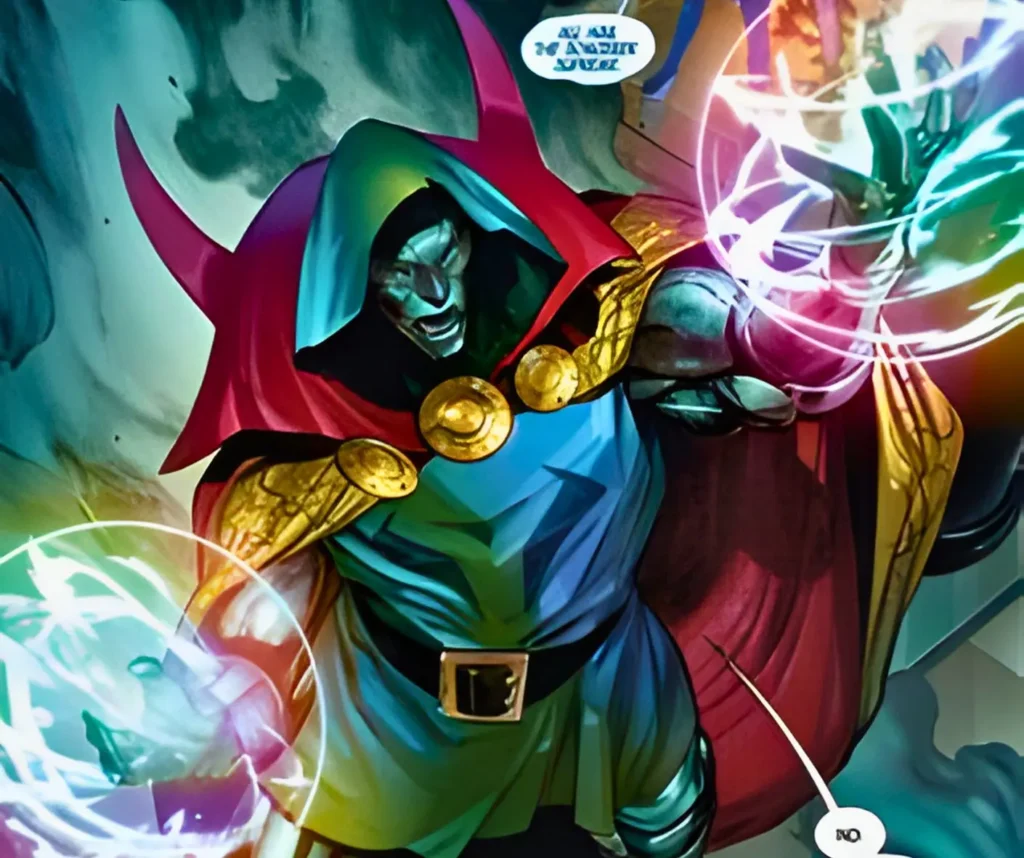
The One World Under Doom series, now in its final issues (planned for nine total), shows Doom’s reign unfolding in real-time. He’s offering free universal healthcare, free education, and has outlawed war globally. Civilians defend him. The Avengers look like villains for opposing him. That’s psychological warfare at its finest — making heroes question whether stopping him actually serves humanity’s best interests.
Recent issues revealed Doom convinced Earth’s leaders through standard diplomatic channels. No compulsion spells. No Doombot replacements. Just Doom presenting a compelling enough vision that world governments chose to surrender their sovereignty to United Latveria.
This version earns #2 for several reasons: it’s happening in main continuity, not an alternate reality; the story is ongoing with expanding power demonstrations; Doom has achieved global domination with room to scale higher; and his fusion of science and Sorcerer Supreme magic creates unprecedented versatility. Most importantly, this version is building toward something — the storyline clearly positions Doom as the central threat for 2025, setting up his MCU appearance in December 2026’s Avengers: Doomsday. Ryan North, who’s writing both One World Under Doom and his acclaimed Fantastic Four run, has crafted a Doom who’s simultaneously more dangerous and more complex than ever before.
#1 – God Emperor Doom (Battleworld): The Multiversal Savior
At the summit stands the most powerful version of Doctor Doom ever created, the culmination of everything Doom could be: God Emperor Doom from Jonathan Hickman’s 2015 Secret Wars.
When the Beyonders — beings who existed outside the multiverse itself and had originally created it — decided to destroy everything, Doom accomplished the impossible. Working with Doctor Strange and Molecule Man, he created a “Molecule Man bomb” using gathered versions of Molecule Man from across dying realities. When the Beyonders came to investigate multiversal incursions, the bomb detonated.
The explosion killed beings that existed outside reality. Let me repeat that: Doom killed the creators of the multiverse. The Molecule Man then channeled their combined power directly to Doom, giving him genuinely omnipotent abilities.
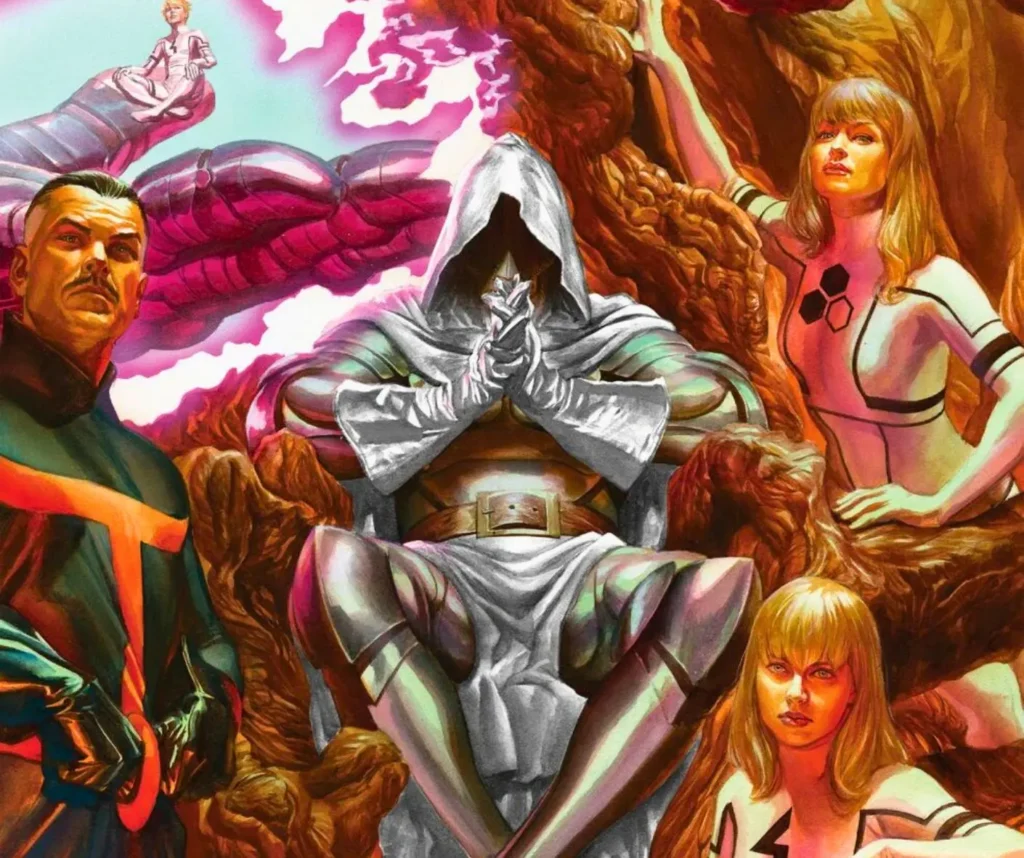
For eight years, God Emperor Doom ruled Battleworld — a patchwork planet assembled from fragments of destroyed universes. His demonstrated feats during this period include:
- Casually killing Phoenix Force-powered Cyclops with a gesture
- Ripping out Thanos’s skeleton with his bare hands
- Battling Black Panther wielding a complete Infinity Gauntlet and holding his own
- Turning Johnny Storm into a living sun to provide light for Battleworld
- Making Ben Grimm into The Wall surrounding Battleworld
- Maintaining perfect stability across a planet containing hundreds of different universe fragments with conflicting physics
- Twisting the memories of billions so they forgot the multiverse had ever existed
- Taking Sue Storm as his wife and raising Reed’s children as his own
This wasn’t just power — it was creation. Doom literally saved what remained of the dying multiverse. Without his intervention, nothing would have existed. Every Marvel character currently alive owes their existence to God Emperor Doom’s actions.
But here’s what elevates him to #1: his final choice. When Reed Richards arrived on Battleworld and they finally confronted each other, Doom made the most un-Doom-like decision possible. During their battle, Reed forced Doom to admit the truth: that Reed could have done better with this power. That Doom’s fear and insecurity had limited what he’d built.
And Doom agreed. Then secretly transferred his omnipotent power to Reed, allowing his greatest enemy to properly restore the multiverse alongside Franklin Richards and Molecule Man.
That moment of genuine character growth combined with divine power establishes God Emperor Doom as not just the most powerful, but potentially the most heroic Doom variant. He saved everything, ruled with omnipotent might for eight years, then voluntarily gave it all up because he recognized someone else would do it better.
The power scale speaks for itself — battling Celestials is impressive, but Doom killed the Beyonders and used their power to literally hold the multiverse together. No other version comes close. But the character complexity makes God Emperor Doom truly exceptional: the version with unlimited power was the one who finally learned humility.
That’s why he sits at #1 — not just for what he could do, but for what he chose to do with it.
What Avengers: Doomsday Tells Us About MCU Doctor Doom
So here’s what this ranking really reveals: Doctor Doom’s power ceiling has never been the problem. From regional dictator to omnipotent god, the escalation path is clear and repeatable. What makes these variants fascinating isn’t just how powerful they became — it’s what they chose to do with that power, and why they ultimately failed or succeeded.
The pattern is undeniable. Technology-enhanced Doom conquers nations. Cosmic-powered Doom threatens universes. Mystically-supreme Doom commands entire realities. But only God Emperor Doom — the most powerful version by orders of magnitude — achieved something unprecedented: genuine character growth. He saved the multiverse, ruled it for eight years, then voluntarily surrendered omnipotence because he recognized someone else could do better.
That transformation matters now more than ever. With Avengers: Doomsday arriving December 18, 2026, the Russo Brothers have structured this film around Doom as the central threat to unite the Fantastic Four, the Avengers, the X-Men, and everyone else. Based on what we know of the production, the MCU version appears to be building toward Battleworld — which means they’re not giving us baseline Doom, or even Silver Surfer-powered Doom. If the comics are the blueprint, they’re going straight for the endgame.
And they cast Tony Stark’s actor to play him. That’s not a coincidence. The Infamous Iron Man run proved the tech/sorcery fusion is Doom at his most dangerous — and most interesting. RDJ playing both Tony Stark and Victor Von Doom, across different films, tells us something about what the MCU thinks these characters share. The ego. The armor. The genuine belief that their way is the only right way. The tragic gap between their ambitions and their actual impact on the people around them.
Here’s the real question, though: Will MCU Doom repeat the comic’s arc, or will Robert Downey Jr.’s version keep the power? Because if there’s one thing this ranking proves, it’s that Doom’s greatest weakness was never a lack of power — it was his inability to hold onto it without his ego destroying everything he’d built.
Maybe that’s why they cast Tony Stark’s actor. Because the only thing more dangerous than Doctor Doom with unlimited power is Doctor Doom who finally learned how not to waste it.
Frequently Asked Questions
Who is stronger than God Emperor Doom?
In the comics, very few beings have definitively defeated God Emperor Doom. When he ruled Battleworld with the Beyonders’ stolen power, he was functionally omnipotent — killing Thanos, overpowering Black Panther with an Infinity Gauntlet, and maintaining an entire patchwork multiverse through sheer will. The Molecule Man eventually stripped Doom of a portion of this power to create a fair fight with Reed Richards, which is ultimately how Doom was overcome. Outside of that specific vulnerability, God Emperor Doom had no credible opposition.
Is Doctor Doom stronger than Thanos?
It depends on the version. Base Doom vs. base Thanos is competitive, with Thanos having the physical edge and Doom having strategic and magical advantages. But God Emperor Doom ripped out Thanos’s skeleton with his bare hands — not a close fight. Even current Sorcerer Supreme Doom (Earth-616, 2025) has demonstrated power levels that would make Thanos with a standard loadout a manageable threat rather than an existential one. Doom with access to cosmic power is consistently placed above Thanos without the Infinity Gauntlet.
What is the strongest version of Doctor Doom?
God Emperor Doom from Jonathan Hickman’s 2015 Secret Wars is the most powerful version of Doctor Doom in comics history. He killed the Beyonders — beings who existed outside the multiverse — and used their combined power to rebuild reality from the fragments of destroyed universes. He ruled Battleworld for eight years with omnipotent authority, and the only reason he was ultimately defeated is that he allowed it: he transferred his power to Reed Richards because he recognized Reed would do better with it.
Why is Dr. Doom so powerful?
Doom’s power comes from the unique combination of three disciplines no other Marvel character fully masters simultaneously: genius-level science (rivaling Reed Richards), serious magical ability (rivaling Doctor Strange), and the resources and authority of a nation-state. Most powerful characters specialize — Tony Stark is pure tech, Doctor Strange is pure magic. Doom’s willingness to master both, and to use dark magical sources that heroic sorcerers refuse to touch, creates a threat profile no single defensive strategy can counter. Add his strategic patience and zero moral restraint, and you have a villain who’s dangerous at any power level.
Is God Emperor Doom stronger than Galactus?
Yes, significantly. Base Galactus is already one of Marvel’s most powerful cosmic entities. But God Emperor Doom wielded the power of the Beyonders — who operate at a tier far above Galactus. During the Secret Wars period, Doom maintained Battleworld (a construct far larger and more complex than anything Galactus has created) while simultaneously defending against threats from every corner of the multiverse. A Doom in Beyonders-level form vs. Galactus isn’t a competitive fight.
Is Tony Stark Doctor Doom in the comics?
No — in the comics, Doom takes on Tony Stark’s Iron Man mantle, not the other way around. After Civil War II left Stark in a coma, Victor Von Doom adopted the Infamous Iron Man identity and attempted genuine heroism. Stark himself doesn’t transform into Doom. The RDJ casting confusion stems from the MCU casting the same actor across both roles, plus the thematic connection: both characters are genius inventors in metal suits with massive egos and a complicated relationship with power. In the comics, they’re separate people who’ve repeatedly clashed — but the parallel between them is real, and clearly intentional in how Marvel Studios chose to cast Avengers: Doomsday.