
Ask ten Marvel fans what an Omega Level mutant is and you’ll get ten variations of the same answer: it means the most powerful mutants, the ones whose abilities are essentially unlimited. And that’s… mostly right. Close enough to be useful. Far enough from accurate to cause constant arguments.
Professor X isn’t Omega Level. Neither is Apocalypse — at least not officially. Emma Frost, one of the most powerful telepaths in the Marvel Universe and a Krakoan council member, isn’t on the list. Rachel Summers carried the classification for thirty-three years before the Krakoan era quietly dropped her.
These aren’t editorial oversights. Every single one of those decisions follows from the same precise definition that Jonathan Hickman put on a data page in House of X #1 in 2019. A definition that is genuinely more interesting than “really, really powerful” — and that explains not just who makes the list, but why the mutants who don’t make it are often just as formidable.
Here’s the actual definition. And then the full list of everyone who meets it.
An Omega Level mutant is a mutant whose dominant power has no measurable upper limit within its specific category. The classification was formally defined by Jonathan Hickman in House of X #1 (2019) and currently covers roughly 25–30 confirmed mutants — including Jean Grey, Magneto, Storm, Iceman, Legion, and the Arakko mutants introduced in X of Swords. Not all powerful mutants qualify. Only those whose specific power is theoretically unsurpassable.
What Is an Omega Level Mutant? The Definition, Explained
The term first appeared in Chris Claremont’s Uncanny X-Men #208, cover-dated August 1986. The future Sentinel Nimrod scanned Rachel Summers and reported that the “upper limit of target-subject’s abilities has yet to be determined.” That was it. Class Omega. No elaboration, no framework — just the implication that some mutants register differently than everything else Cerebro has ever measured.
For the next thirty-three years, Marvel used the label whenever a writer needed the audience to understand that a character was a very big deal. The result was predictable: inconsistency. Characters were labeled Omega, then weren’t, then were again. Emma Frost was Omega in some stories and not in others. The classification meant “extremely powerful” in the loosest possible sense, and readers argued constantly about who deserved it.
Hickman ended that in House of X #1 (July 2019) with a data page that finally gave the term a real definition:
“A mutant whose dominant power is deemed to register — or reach — an undefinable upper limit of that power’s specific classification.”
That’s the whole thing. And it’s more precise than it looks.
The key is the Magneto/Forge example Hickman used to illustrate it. Both are the most powerful mutants of their specific type on Earth — Magneto controls magnetism, Forge controls technology. But only Magneto is Omega Level. Why? Because a human engineer could theoretically out-build Forge. Tony Stark has. Reed Richards has. The upper limit of Forge’s power is real and has been surpassed. The upper limit of Magneto’s control over magnetism? No human, no mutant, no machine can exceed it. That theoretical ceiling is what makes something Omega — not the raw power output, but the question of whether any ceiling exists at all.
Two other things the definition makes clear, and both matter for understanding who’s on the list.
First, Omega Level classifies a single power, not a mutant overall. Jean Grey is both a telepath and a telekinetic. Her telepathy is Omega Level. Her telekinesis isn’t — it’s extraordinary, but other mutants have demonstrated comparable or greater telekinetic ability. She’s still an Omega Level mutant, but the classification attaches to one specific power.
Second, multiple mutants can hold Omega status for the same power type simultaneously. Both Jean Grey and Quentin Quire are Omega Level telepaths. There’s no throne to claim here — the classification isn’t “the single greatest,” it’s “theoretically unsurpassable,” and that bar can be met by more than one person.
This is also why the Krakoan era matters as context. Before Hickman, Omega Level was vibes. After House of X #1, it’s a standard specific enough to apply consistently — and specific enough that a lot of previously-labeled Omega mutants quietly stopped qualifying.
The Complete Omega Level Mutants List (All Confirmed, Current)
How many Omega Level mutants are there? The short answer is roughly 30 confirmed across two civilizations, with new additions still arriving — Forge was upgraded in 2024, Charles Xavier finally made it official in 2025. The longer answer is that the number depends on which era’s definition you’re applying and whether you count the Arakko mutants introduced in X of Swords.
This list does both. Earth mutants first — the fourteen from Hickman’s founding House of X #1 document plus subsequent additions. Then the Arakko mutants, whose arrival in 2020 more than doubled the known Omega population overnight and introduced power types the classification had never seen before.
Earth’s Omega Level Mutants
Jean Grey — Omega Level Telepathy The gold standard for the classification. Jean’s telepathy has been described as having virtually unlimited potential even without the Phoenix Force attached to it — and in Hickman’s run, she demonstrated feats that would have been unthinkable in earlier eras, including linking with every mutant mind on the planet simultaneously. Worth noting: her telekinesis, while extraordinary, doesn’t reach Omega. The classification is precise. Jean doesn’t need it to be otherwise.

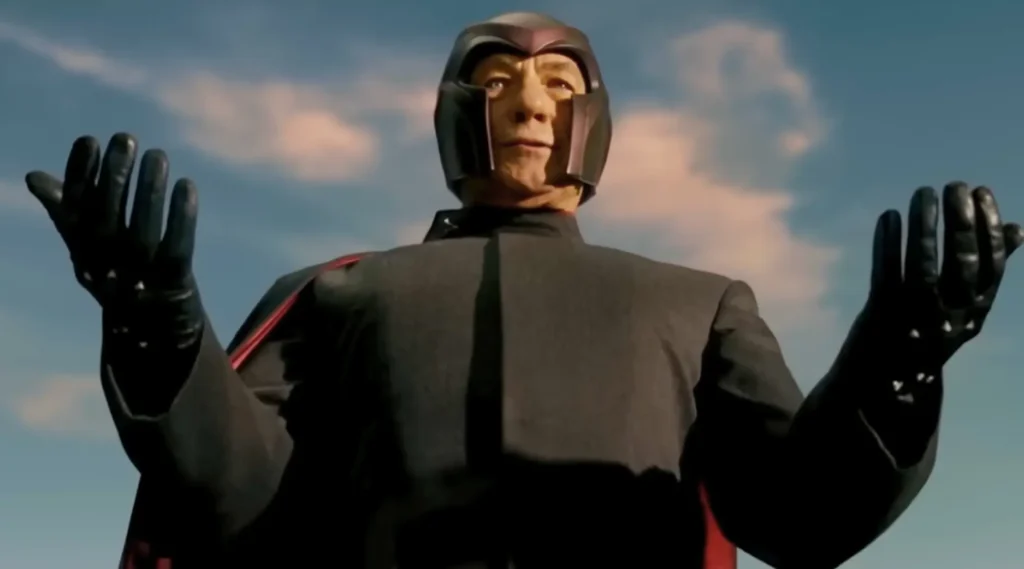
Magneto — Omega Level Magnetokinesis The founding example in Hickman’s definition. No mutant, no human, no machine can surpass the upper limit of Magneto’s control over magnetism. He’s demonstrated planetary-scale electromagnetic manipulation across decades of stories — pulling iron from blood, redirecting the Earth’s magnetic poles, fighting Thor to a standstill. “Master of Magnetism” isn’t a title. It’s a technical description of what the classification confirms.
Storm — Omega Level Atmokinesis Storm’s inclusion in House of X #1 ended years of fan debate and several decades of inconsistent editorial handling. Ororo Munroe’s power extends far beyond weather — at full expression, she manipulates atmospheric pressure, humidity, temperature, and electrical fields on a planetary scale, and has demonstrated control over weather systems in space. The films barely scratched the surface. The comics definition is unambiguous.

Iceman — Omega Level Cryokinesis Bobby Drake spent most of his Marvel existence operating at a fraction of his actual capability, which made his Omega classification feel like a stretch to casual readers. It isn’t. Iceman’s power at full expression allows him to freeze anything — including light, hellfire, and in some interpretations, the flow of time itself. His soul can leave his body and reconstitute an entirely new ice form around it. Steve Orlando explored this at length in Astonishing Iceman (2023), which remains the definitive examination of Bobby Drake’s upper limit. Writer Mike Carey put it plainly back in 2008: Iceman has “powers that can influence the ecosystem of the entire world” and almost never operates on that level.
Legion — Omega Level Power Manifestation David Haller is the classification’s most genuinely frightening entry. With potentially thousands of distinct personalities, each manifesting a different power, Legion doesn’t just hold one Omega ability — he contains an entire classification system within his fractured psyche. At full expression, he’s reshaped reality across entire timelines. The restraint isn’t a story choice. It’s a survival mechanism — for everyone else.
Franklin Richards / Powerhouse — Omega Level Universal Reality Manipulation The most powerful mutant ever born, by Galactus’s own assessment in History of the Marvel Universe Vol. 2 #3. Franklin can create and sustain pocket universes, reshaping reality at a scale that rivals cosmic entities. His status has been editorially contested — Marvel briefly declared him not a mutant in Fantastic Four (vol. 6) #26 (2020), a decision senior editor Jordan White publicly disagreed with. In March 2024, Marvel reversed it, revealing Franklin had been unconsciously suppressing his mutant X-gene. He’s back on the list, where he always belonged.

Hope Summers — Omega Level Power Manipulation Born the first mutant after M-Day, Hope’s powers are deceptively straightforward: she can copy the abilities of any mutant in her vicinity, with no limit on how many she holds simultaneously and no drain on the original. What makes her Omega isn’t just the mimicry — it’s that her power manipulation has no theoretical ceiling. She can amplify, regulate, and redirect mutant powers at will. She’s also the lynchpin of the Krakoan resurrection protocols. Without Hope, The Five don’t function.
Elixir — Omega Level Biokinesis Joshua Foley’s power is one of the most conceptually interesting on the list. Complete control over biological structure — healing any injury, curing any disease, restoring any dead tissue. And in the other direction: inducing death with a touch. His skin shifts from gold to black depending on which application he’s using. Elixir isn’t just a healer. He’s a living toggle switch between life and death at the cellular level.
Exodus — Omega Level Telekinesis One of the oldest active mutants on Earth, a 12th-century Crusades veteran whose powers were amplified by Apocalypse and who spent centuries in psychic stasis. House of X #1 lists Bennet du Paris as an Omega Level telekinetic specifically — his telekinesis is the classified power, though his telepathy operates at a comparable tier. One of the few mutants where the secondary power almost qualifies on its own terms.
Proteus — Omega Level Psionic Reality Manipulation Kevin MacTaggert is reality warping without physical limitation, and without the safety governor that comes with a stable personality. Born to Moira MacTaggert, locked in her research facility because even she feared what he could do — Proteus can possess bodies and rewrite physical laws within his vicinity. He burns through host bodies in days. The only beings who’ve survived his possession have metal in their systems. He’s now part of The Five and helps power Krakoan resurrection, which is either reassuring or terrifying depending on your perspective.
Mister M / Monarch — Omega Level Matter Manipulation Absalom Mercator can rearrange matter at the quantum level. He’s one of the less prominent entries on the Krakoan list but arguably one of the most quietly terrifying — matter manipulation without a defined ceiling touches everything physical reality is made of.
Quentin Quire / Kid Omega — Omega Level Telepathy A second Omega telepath alongside Jean Grey, which confirms Hickman’s point that multiple mutants can hold the same classification simultaneously. Quentin Quire is the classification’s most reluctant member — a genius-level psychic who spent years being actively hostile to the X-Men before circumstances dragged him into their orbit. His astral projection and psychic weaponry operate at a level that puts him in Jean’s tier even if his applications have historically been more chaotic.
Vulcan — Omega Level Energy Manipulation Gabriel Summers — Cyclops’s younger brother, the secret Summers triplet, the man who became emperor of the Shi’ar Empire and went to war with the X-Men — can absorb, manipulate, and project virtually any form of energy. He’s drained energy directly from other mutants, including Jean Grey at Phoenix-level power. Vulcan is one of those entries where calling him Omega Level feels like an understatement.
Forge — Omega Level Technopathy (confirmed X-Force #1, July 2024) Here’s where it gets interesting. Forge was Hickman’s example of someone who isn’t Omega Level — the counterpart to Magneto in the founding definition. His technopathy was surpassable. Then, in X-Force #1 (2024), Geoffrey Thorne and Marcus To gave Forge a device that expanded his power to encompass instinctive understanding of worldwide causality fields. He can now assemble a solution to any problem at an instinctual level, without consciously understanding his own designs. The man who defined what Omega wasn’t became Omega. The irony is intentional.
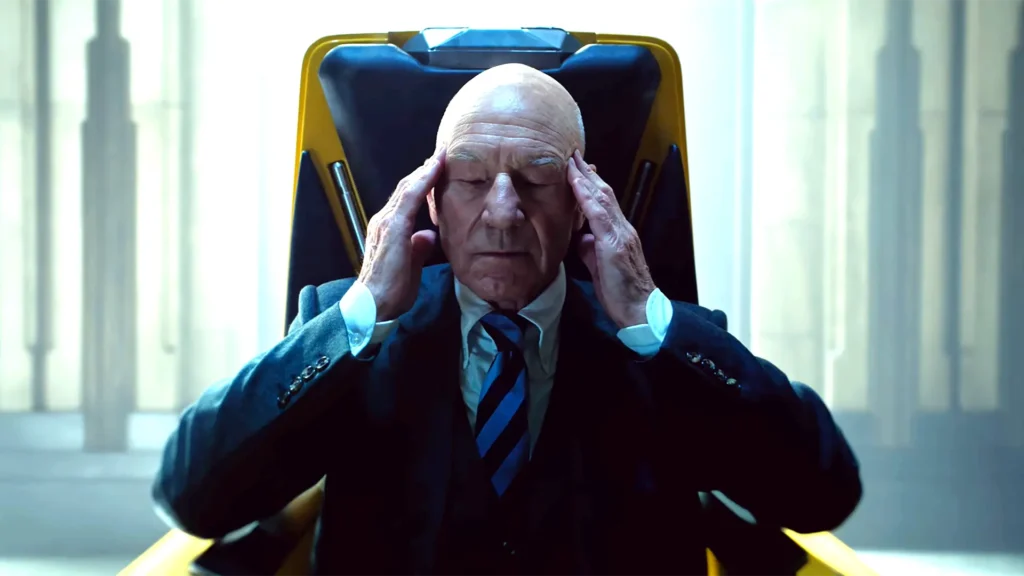
Charles Xavier — Omega Level Telepathy (confirmed X-Men #13, 2025) The longest-running paradox on the list — the man who wrote the Krakoan Omega registry somehow wasn’t on it. Jordan White confirmed Xavier’s absence was deliberate, a puzzle Hickman embedded in the founding document. In X-Men #13 (2025), Xavier’s Omega status was officially confirmed, closing the loop on the classification’s most persistent debate. He was always Omega. He just didn’t put himself on the list.
Arakko’s Omega Level Mutants
X of Swords (2020) revealed that Krakoa and Arakko were once a single continent — Okkara — split apart millennia ago. The Arakki mutants spent those centuries fighting daemon hordes in the dimension of Amenth. When they returned, a significant portion of the Great Ring of Arakko — their governing council — carried Omega classifications covering power types Earth had never catalogued.
Al Ewing’s X-Men Red (2022) explored these mutants properly, establishing that among Omegas, versatility beats raw power — a crucial correction to the assumption that Omega Level is a simple hierarchy.
Isca the Unbeaten — Omega Level Victory Manifestation Her power is exactly what her name says: she cannot lose. Not a combat advantage — a literal, physical impossibility of defeat. Her body adapts to ensure she’s always on the winning side. That included switching allegiances during X of Swords when it became clear which faction would prevail. The most unsettling Omega on either list.
Tarn the Uncaring — Omega Level Biosculpting Tarn can restructure the biology of any living thing — growing new organs, rewiring nervous systems, redesigning bodies at will. He used this on mutant prisoners in Amenth for centuries. Deeply unpleasant. Unambiguously Omega.
Idyll — Omega Level Temporal Foresight She sees the future with complete clarity. Not visions — knowledge. The practical limitation is that knowing what’s coming doesn’t always mean being able to prevent it.
Lactuca the Knower — Omega Level Omniscient Awareness Information retrieval at a cosmic scale. Lactuca perceives and processes knowledge at a level beyond conventional intelligence. She knows things. All of them.
Redroot — Omega Level Chlorokinesis Flora manipulation with no defined ceiling. Redroot can merge consciousness with plant life across vast distances, using root systems and growth patterns as both a communication network and a weapon.
Sobunar of the Depths — Omega Level Hydrokinesis Water manipulation on an oceanic scale. Sobunar maintains constant awareness of every body of water his power touches — and the things living in them.
Xilo the First Defender — Omega Level Bio-Integration An insect collective over two billion years old that can merge with planetary systems and terraform environments at will. Xilo is the list’s most genuinely alien entry — not a person in any conventional sense, but a distributed consciousness that qualifies as a single Omega-classified mutant.
Lodus Logos — Omega Level Metal Manifestation Can generate unlimited quantities of metal in any shape or configuration. Lodus later became integrated with Magneto’s own electromagnetic systems during the Krakoan era, creating a resonance between their powers.
Stulgid — Omega Level Mass Manipulation Gravitational and mass-based power with no defined upper limit. Stulgid can alter the fundamental mass of objects and beings, effectively controlling how matter interacts with gravitational forces — a power type with implications that range from immobilizing opponents to restructuring celestial bodies. One of the Arakko entries where the full scope has yet to be fully explored on the page.
Death, Famine, War, Genesis, Pestilence — The First Horsemen of Apocalypse All five carry Omega classifications confirmed in X-Men: Red #16 (2023). Genesis — Apocalypse’s ancient partner and the more ruthless half of that partnership — controls plant life at a planetary scale and may be the single most powerful chlorokinetic in existence. War manipulates fire without limit and can generate flame prosthetics to replace severed body parts. Famine, Death, and Pestilence complete the roster, each with power types that expand the classification into territory Earth’s mutant society had never formally recognized.
Uksak the Bridge — Omega Level Divine Summoning Can summon gods against their will. The most debated Omega classification — summoning gods is extraordinary, but the summoned deity isn’t obligated to cooperate. Still: the ability to compel the presence of divine beings with no theoretical limit on which gods qualify is, by any reasonable measure, unsurpassable within its category.
What Is Beyond Omega Level?
Omega Level is the ceiling. Except for the handful of mutants who broke through it.
Marvel has never established an official classification for what lies beyond Omega — no data page, no Cerebro reading, no in-universe term that stuck. But the comics have been pointing at the concept for decades, describing certain mutants in language that makes the Omega classification sound modest by comparison. Beyond Omega is the fan shorthand. It’s useful, even if it isn’t canon.
A few characters make the case compellingly.
Franklin Richards is the most explicit. The Celestials — cosmic entities who judge entire civilizations — assessed Franklin as operating at a power level beyond their own comprehension, designating him beyond Omega in FF #13. Galactus named him the most powerful mutant ever born. His ability to create and sustain entire pocket universes isn’t Omega Level reality manipulation — it’s something the Omega classification wasn’t designed to measure. He’s back on the confirmed Omega list as of 2024, but “Omega Level” still undersells what Franklin Richards actually is.
Nate Grey / X-Man is the other major case. The Age of Apocalypse version of Cable, bred specifically to be the most powerful psionic weapon imaginable, Nate Grey operated at a level where his subconscious thoughts could warp reality. He didn’t need to try. Ambient psychic pressure from his resting state was enough to alter the physical world around him. Al Ewing’s work eventually depowered Nate significantly — which was arguably the only narrative option, because a fully powered X-Man has no natural story ceiling.
Legion at full expression enters the conversation too, though his unpredictability makes him hard to assess cleanly. With access to every personality and every power simultaneously — which has happened, briefly, in various storylines — David Haller may be the single most dangerous entity in the Marvel Universe regardless of classification.
The Phoenix Force itself sits adjacent to all of this — but the Phoenix isn’t a mutant. It’s a cosmic entity that bonds with mutants, most famously Jean Grey. Jean with the Phoenix is Beyond Omega by any measure. Jean without it is Omega Level. The distinction matters.
What all the Beyond Omega candidates share: their powers operate at a scale where the question of “unsurpassable upper limit” becomes almost meaningless, because the upper limit is something like creating a universe or rewriting reality without meaning to. Omega Level was built to classify the most powerful expression of a specific power type. Beyond Omega is what happens when the power type itself stops being a useful description.
Marvel hasn’t codified it. They probably shouldn’t — the value of leaving it undefined is that it keeps the concept from becoming another hierarchy to be systematically conquered. Some things should stay genuinely limitless.
The Mutants Who Almost Made the List — Notable Omissions
The most revealing thing about the Omega Level classification isn’t who’s on it. It’s who isn’t — and why.
Professor X is the paradox at the center of the whole conversation. Charles Xavier is, by most accounts, the most powerful telepath on Earth — certainly the most accomplished, the most practiced, the one who spent decades reshaping the minds of both mutants and humans at a civilizational scale. He wrote the Krakoan Omega registry. He’s not on it.
His 2025 confirmation in X-Men #13 finally resolved the debate, but the question of why he left himself off in House of X #1 is still one of the more interesting editorial puzzles Hickman embedded in that run. Jordan White confirmed the omission was deliberate. The most plausible reading: Xavier was the author of a document meant to make the case for Krakoan sovereignty, and a leader who lists himself among his nation’s greatest assets raises different questions than one who doesn’t. It’s the kind of move that’s either humility or strategy, and with Charles Xavier, those two things have always been indistinguishable.
Emma Frost is the exclusion fans argue about most. She’s one of the most powerful telepaths in the Marvel Universe, a former White Queen of the Hellfire Club, a Krakoan council member, and a character who has spent decades being positioned as Jean Grey’s psychic equal. She’s not on Hickman’s Omega list, and never received the classification during the Krakoan era.
The strict application of the definition is the answer. Under Hickman’s framework, Omega telepathy means no telepath could theoretically surpass you. Emma Frost is extraordinary — but Jean Grey and Quentin Quire exist, and their telepathic upper limits are arguably higher. Emma’s diamond form is genuinely inimitable within its category, but that’s a secondary mutation, not her dominant power. The classification follows the dominant power. Under that rubric, the omission holds.
Rachel Summers is the historically interesting case. She carried the Omega classification from its first appearance in Uncanny X-Men #208 in 1986 — she was the original Class Omega designation — right up until the Krakoan redefinition quietly removed her. Thirty-three years of being the example, then not being on the list.
The reason comes down to the same precision that excluded Emma. Rachel’s power comes substantially from her Phoenix Force connection rather than her baseline mutation. Stripped of that connection, her upper limit becomes measurable in a way Jean Grey’s doesn’t. It’s a brutal cut for a character who defined the term, and it highlights exactly what the Hickman redefinition changed: Omega stopped meaning “impressively powerful” and started meaning something technically specific that not every impressively powerful mutant meets.
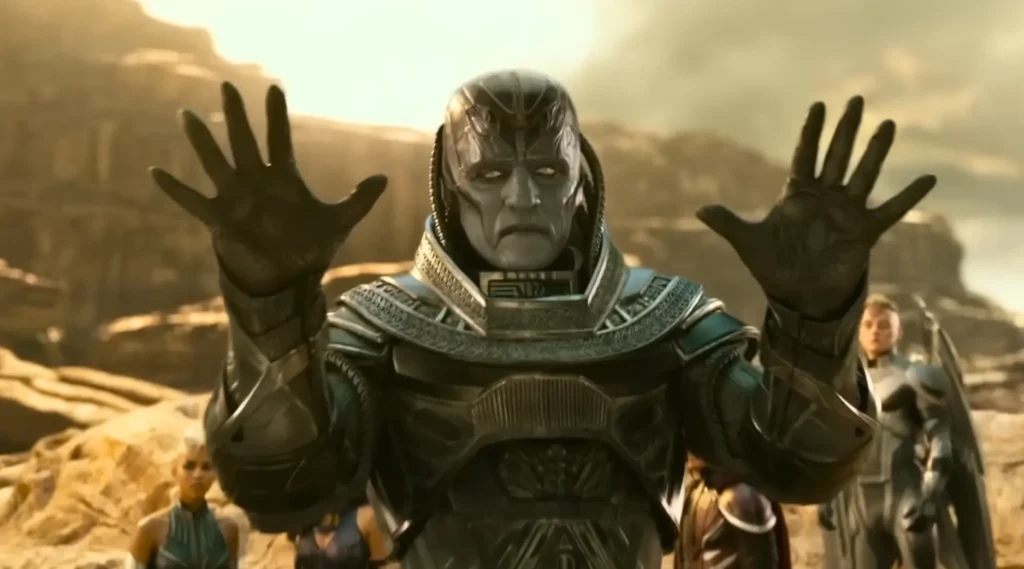
Apocalypse confuses people most consistently. He’s one of Marvel’s oldest and most powerful mutants, an Alpha-Level biological manipulator with millennia of combat experience and a physiology he’s rewritten countless times. He’s not Omega Level — not because he isn’t formidable, but because “molecular self-manipulation” has demonstrable limits that other mutants have exceeded or matched. Apocalypse’s power is vast. It isn’t theoretically unsurpassable. That’s the line.
Cable is a frustrating near-miss. He’s been labeled Omega Level for his telepathy in some storylines — Cable #159 called it explicitly — but his techno-organic virus forces him to dedicate most of his psionic power to biological suppression rather than actual use. What Cable could do at full telepathic expression might qualify. What Cable actually does rarely gets close. The classification follows demonstrated and theoretical potential, not current operational capacity, which makes Cable’s status one of the classification’s genuine grey areas.
The pattern across all these omissions is consistent: Omega Level is a technical standard, not an honorific. Being powerful, being important, being terrifying — none of those are sufficient. The power has to be the single dominant ability, and its upper limit has to be genuinely unmeasurable. Every mutant on this list cleared that bar. Every mutant off it didn’t — not quite, not under the strict reading. That precision is what makes the classification useful rather than just another way of saying “really strong.”
How Krakoa Changed Everything About Omega Level Mutants
Before House of X, Omega Level was a label. After it, Omega Level was infrastructure.
Hickman’s 2019 relaunch didn’t just define the classification — it made Omega mutants the literal foundation of a sovereign nation. The Krakoan resurrection protocols, which allowed any mutant to return from death with their memories and personality intact, required five specific mutants working in combination: Hope Summers (power manipulation to synchronize and amplify), Proteus (reality warping to shape the new body), Elixir (biokinesis to build it at the cellular level), Tempus / Eva Bell (time manipulation to restore the mind’s continuity), and Egg / Fabio Medina (the ability to generate organic bio-matter, providing the raw material each new body is built from).
That’s not a superhero power. That’s mortality solved.
What this meant practically: Krakoa’s geopolitical leverage rested on the survival of five specific mutants. If any of The Five died permanently — if their resurrection couldn’t be completed — the entire system failed. Protecting Omega mutants stopped being a matter of preserving powerful individuals and became a matter of protecting the mechanism that kept mutantkind itself alive. This is why Xavier’s Krakoan registry reads more like a military asset list than a power ranking. These are the people without whom the nation stops functioning.
X of Swords expanded the stakes in a different direction. When Arakko returned and the Great Ring was revealed, Krakoa suddenly discovered it wasn’t the only mutant civilization with an Omega population — and the Arakki Omegas had been forged in conditions Krakoa’s relatively comfortable existence never produced. A thousand years fighting daemon hordes in another dimension produces a different kind of Omega than a mutant who grew up in Westchester. Isca the Unbeaten literally cannot lose a fight. That’s not a power level. That’s an absolute.
Al Ewing’s X-Men Red (2022) worked through what Omega-on-Omega conflict actually looks like — and his answer was that raw power isn’t the deciding factor. Versatility is. Between two mutants whose specific abilities both reach theoretically unlimited ceilings, the one who wins is the one who uses their power most intelligently within the specific conditions of the fight. This reframing was important. It prevented the Arakko introduction from becoming a simple power escalation and instead turned Omega Level confrontations into genuine tactical problems. An Omega who can always win isn’t automatically the most dangerous Omega in the room. The most dangerous one is the Omega who figures out what winning looks like before the fight starts.
The end of the Krakoan Age in 2024 left the classification’s future genuinely uncertain. Hickman’s definition was written for a specific in-universe context — the founding documents of a nation that no longer exists in its original form. What “Omega Level” means without Krakoa as the institutional framework is an open question that current X-Men writers are still working through. Marvel’s continued additions — Forge in 2024, Xavier in 2025 — suggest the concept isn’t going anywhere. The label outlasted the nation.
Omega Level Mutants in the MCU — What the Films Got Right (and Wrong)
The Fox X-Men films never used the term “Omega Level.” They built their own system instead — a five-tier “class” structure that X-Men: The Last Stand (2006) used most explicitly, with Callisto identifying Magneto as “above a class 3” and Jean Grey’s Phoenix-enhanced form being assessed as a “class 5.” It was a workable shorthand for casual audiences, but had essentially nothing to do with how Marvel Comics actually classifies mutant power.
The class system’s central problem: it ranked overall threat level rather than the theoretical ceiling of a specific power type. Under Hickman’s Omega definition, classification has nothing to do with how dangerous you are — it has to do with whether your specific power has a measurable ceiling. Those are different questions. The Fox films could call Jean a class 5 because of the Phoenix Force without that contradicting anything, because they were measuring something else entirely.
X-Men ’97 (2024) got it right. The animated series, set in the 1990s continuity but drawing from decades of subsequent comics, uses “Omega Level” accurately and casually — the way fans who’ve read House of X would use it. It’s a small thing that signals something real about how Marvel’s creative teams now treat the classification as settled vocabulary rather than an editorial question mark.

The MCU’s most direct engagement with Omega Level came in Deadpool & Wolverine (2024), when the Time Variance Authority’s files identified Cassandra Nova as an Omega-level mutant. It’s a throwaway designation in terms of screen time, but it’s meaningful for two reasons. First, it confirms the MCU is adopting the Hickman-era definition rather than inventing a new framework — when the TVA classifies someone, they’re working from a comprehensive multiversal database, and Omega Level is the term they use. Second, Cassandra Nova is a genuinely appropriate Omega designation. Her psychic abilities — she’s Charles Xavier’s twin, their powers mirror each other, and her mutant ability operates at the same theoretically unsurpassable level — make her one of the most accurate MCU uses of the term possible.
What this means for the MCU’s eventual full mutant introduction is worth watching. Marvel has spent years threading the needle on how to bring the X-Men into a universe that already has superpowers everywhere. The Omega Level classification gives them a ready-made way to establish stakes and hierarchy without rebuilding the entire framework from scratch. When Magneto shows up in the MCU proper, the TVA’s files already know what he is.
Frequently Asked Questions About Omega Level Mutants
What is an Omega Level mutant?
An Omega Level mutant is a mutant whose dominant power reaches a theoretically unlimited ceiling — it cannot be surpassed within its specific category. The classification was formally defined by Jonathan Hickman in House of X #1 (2019). It applies to a single power per mutant, not overall power level. Jean Grey is an Omega Level telepath; her telekinesis, while exceptional, doesn’t meet the same standard.
How many Omega Level mutants are there?
Roughly 30 confirmed across both Earth and Arakko, though the number has grown steadily since House of X #1 established the formal list of 14 in 2019. X of Swords (2020) introduced the Arakko mutants and significantly expanded the confirmed roster. Forge was added in 2024 and Charles Xavier in 2025. New confirmations continue to arrive, so the number remains a moving target.
Is Professor X an Omega Level mutant?
Yes — as of X-Men #13 (2025). The paradox of Xavier’s absence from his own Krakoan Omega registry was one of Hickman’s most deliberately embedded puzzles. Jordan White confirmed the omission was intentional rather than an oversight. Xavier’s Omega telepathy was never in serious doubt; the question was always why he left himself off the list he authored. His 2025 confirmation officially resolved it.
Is Storm an Omega Level mutant?
Yes. Storm’s Omega classification was confirmed in House of X #1 (2019), ending decades of inconsistent editorial treatment. Ororo Munroe’s atmokinesis — weather and atmospheric manipulation — has no defined upper limit within its power category. At full expression her control extends to planetary-scale atmospheric systems and weather phenomena in space.
Is Magneto an Omega Level mutant?
Yes, and he’s the founding example in Hickman’s definition. The Magneto/Forge comparison — both the most powerful mutants of their specific type on Earth, but only Magneto qualifying as Omega — is the clearest illustration of what the classification actually measures. No mutant, human, or machine can surpass the upper limit of Magneto’s control over magnetism.
Is Cassandra Nova an Omega Level mutant?
Yes, per the MCU. The Time Variance Authority’s files in Deadpool & Wolverine (2024) identify Cassandra Nova as Omega-level. In the comics, her status has been addressed inconsistently, but her psychic abilities — mirroring Xavier’s own — operate at a level that qualifies under the strict Hickman definition. She’s one of the most powerful telepaths in Marvel history regardless of what the classification says.
Is Apocalypse an Omega Level mutant?
No, not officially. Apocalypse is one of Marvel’s oldest and most formidable mutants, but his dominant power — molecular self-manipulation, allowing him to alter his own biology — has demonstrable limits that other characters have reached or surpassed. Omega Level requires a theoretically unsurpassable ceiling. Apocalypse’s power, vast as it is, doesn’t meet that specific standard. His threat level is Omega. His classification isn’t.
What is beyond Omega Level?
No official Marvel classification exists for it, but a handful of mutants operate at scales the Omega designation wasn’t built to measure. Franklin Richards — whose ability to create and sustain entire pocket universes was assessed by the Celestials as beyond their own comprehension — is the clearest example. Nate Grey / X-Man, whose subconscious thoughts could rewrite physical reality, is another. These characters don’t break the Omega Level definition so much as they make it feel like the wrong unit of measurement entirely.
Conclusion
The Omega Level classification started as a throwaway line in 1986 — a Sentinel scan reporting that Rachel Summers’s upper limits were undetermined — and spent thirty-three years meaning roughly whatever any given writer needed it to mean. Hickman made it mean something specific. That specificity is what gave it real value.
The Professor X paradox the article opened with has an answer now: Xavier’s 2025 confirmation in X-Men #13 put him on the list he wrote. But the more interesting question it leaves behind is what the classification looks like without Krakoa as its institutional home. The nation is gone. The Omega registry it produced isn’t. Forge joined in 2024. Xavier followed in 2025. Marvel keeps building the list even after the framework that generated it stopped existing.
That suggests something about what Omega Level actually is — not a Krakoan invention but a real phenomenon the Krakoan era happened to name and codify. These mutants existed before House of X #1. Their powers had no measurable ceiling before Hickman wrote the definition. And somewhere in the Marvel Universe, Cerebro was always running the scan — finding limits that weren’t there, confirming ceilings that couldn’t be measured.
Evolution doesn’t stop because the taxonomy changes. The definition just made the phenomenon legible.