
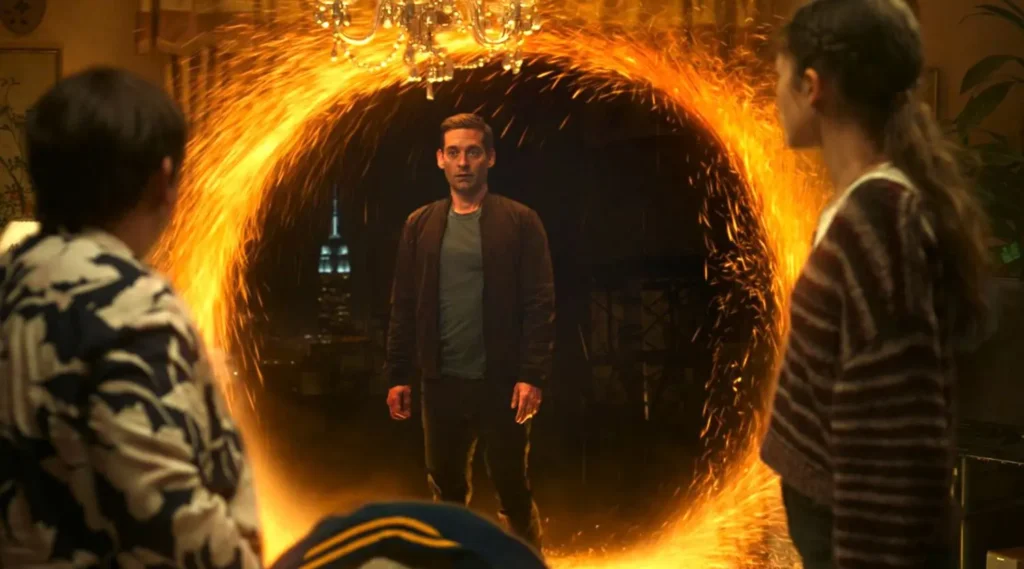
The casting rumor that broke last week might be spoiler culture’s worst nightmare—or its greatest vindication. Reports are circulating that Tobey Maguire’s Spider-Man will have a substantial role in Avengers: Doomsday, the December 2026 crossover event that’s meant to set the stage for Avengers: Secret Wars. Meanwhile, Tom Holland—the MCU’s current Peter Parker—is conspicuously absent from the ensemble. Not sidelined. Not sharing the spotlight. Just… not there.
For a franchise that’s spent the last three phases tangling itself in multiverse knots, this feels like either a fascinating creative choice or a desperate Hail Mary. But here’s what makes this casting particularly intriguing: it’s not just nostalgia. The decision to center Tobey Maguire’s Spider-Man while Holland sits this one out might actually be the smartest narrative move Marvel Studios and Sony Pictures could make—assuming the leaked information holds up.
And if recent set photos are any indication, with Maguire reportedly spotted in motion-capture gear for a new Spider-Man suit design, this isn’t just smoke. It’s a signal fire.
Let’s unpack why the original big-screen Spider-Man might be exactly what the Multiverse Saga needs as it careens toward its conclusion—and why Tom Holland’s absence isn’t the problem some fans think it is.
The Timeline Problem
Now here’s where the timeline gets crucial.
Spider-Man: Brand New Day is currently in production, filming from August through mid-December 2025 for a July 31, 2026 release—five months before Avengers: Doomsday hits theaters. That timing is crucial.
At the end of No Way Home, Peter made the devastating choice to let Doctor Strange’s spell erase him from everyone’s memories to save the multiverse. The film’s final scenes show him starting over: dingy apartment, hand-sewn suit, completely alone. No friends. No Avengers connection. No support system.
Brand New Day picks up from that reset. Producer Amy Pascal described the approach: “He decided he was going to give up being Peter Parker, and focus on being Spider-Man because being Peter Parker was too hard.” This is street-level storytelling—a hero operating in the shadows, unknown and unconnected to the larger superhero infrastructure.
Now here’s the crucial detail: when Doomsday’s multiversal crisis erupts (December 2026 in-universe), Holland’s Peter is still in that isolated state. Nobody can call him because nobody remembers who he is. The Avengers don’t have his contact. S.H.I.E.L.D. doesn’t have his file. The spell that saved the multiverse effectively removed Peter from the board for exactly this scenario.
Which means if the Multiverse needs a Spider-Man for this crisis, it needs one who’s still visible.
That timing matters.
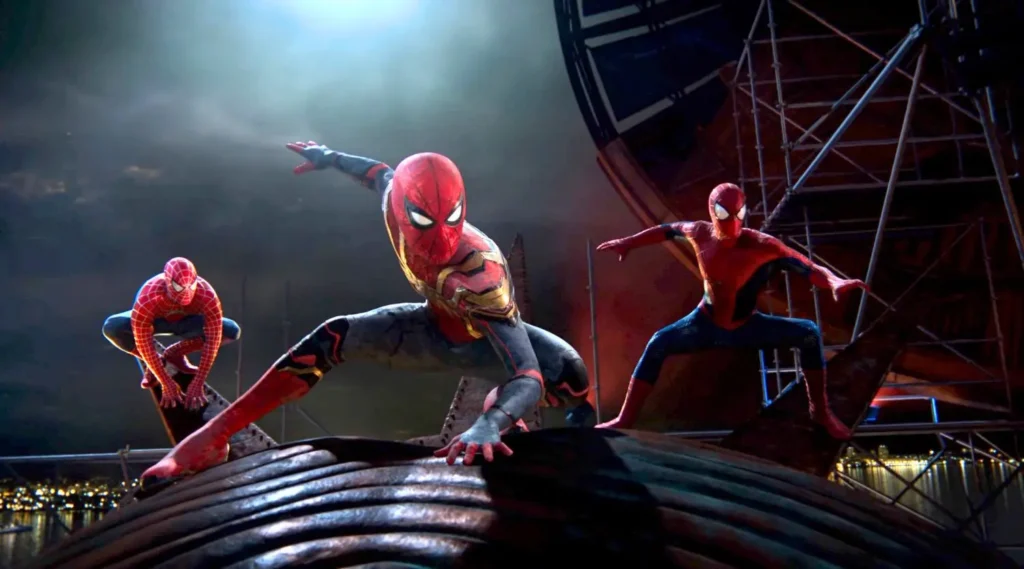
Enter Tobey Maguire—the Spider-Man who taught an entire generation what “with great power comes great responsibility” actually means in practice.
The Thematic Weight of the Original
Which brings us to the real question: why does Maguire’s version carry weight that goes beyond nostalgia?
Because Raimi’s Spider-Man trilogy wasn’t just about spectacle. It was about cost.
The first trilogy—Spider-Man (2002), Spider-Man 2 (2004), and Spider-Man 3 (2007)—built its entire foundation on a simple but brutal premise: being Spider-Man destroys Peter Parker’s life. Not in a temporary, everything-works-out-by-the-credits way. In a permanent, “you will lose everything you love” way. Uncle Ben dies because Peter made a selfish choice. The woman he loves nearly dies multiple times because of his double life. His best friend becomes his enemy because Peter can’t tell him the truth. His reputation gets dragged through the mud. He loses jobs, relationships, and any semblance of a normal existence.
And he keeps going anyway.
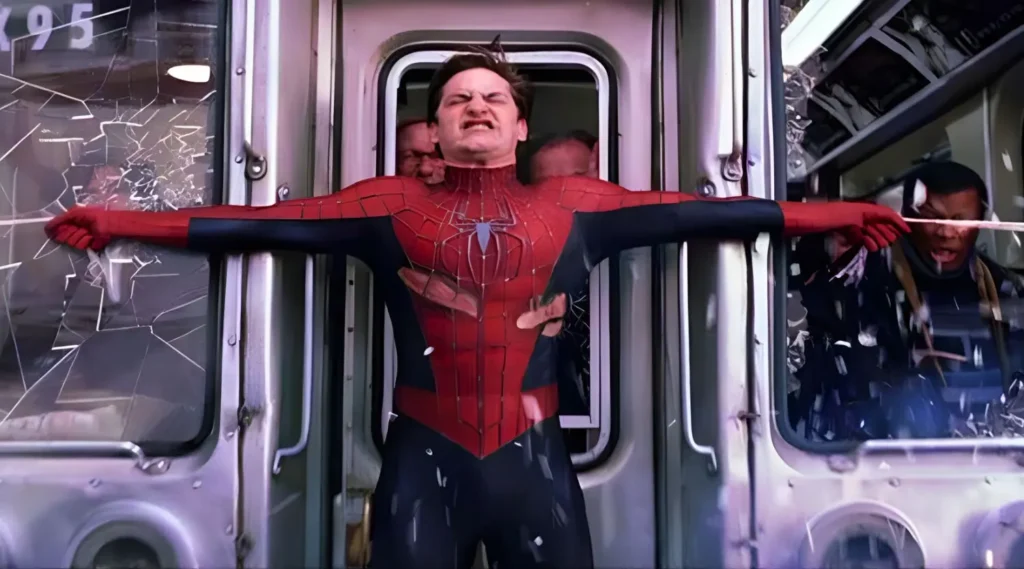
That’s not heroism as aspiration. That’s heroism as sacrifice. The train sequence in Spider-Man 2—where Peter literally stops a runaway train with his body, his mask torn off, carried unconscious by grateful passengers—remains one of the greatest action scenes in superhero cinema precisely because it’s not about Spider-Man winning. It’s about him choosing to keep trying even when his body is failing. When those New Yorkers promise “We won’t tell nobody,” it’s a moment of collective responsibility that mirrors Peter’s individual burden.
The MCU’s Spider-Man, by contrast, has been defined by mentorship and support systems. Tony Stark gave him a suit. Happy Hogan provided guidance. Nick Fury recruited him for missions. Doctor Strange helped clean up his multiverse mess. Tom Holland’s Peter Parker is undeniably compelling, but his arc has been about learning to stand on his own despite having access to incredible resources. That’s a valid coming-of-age story, but it’s a different thematic engine.
Raimi’s Spider-Man never had the luxury of a support network. He figured it out alone, made mistakes alone, and bore the consequences alone. When Doomsday needs a Spider-Man who understands what it means to sacrifice everything—including happiness, love, and personal safety—for the greater good, Tobey Maguire’s version is the one who’s been training for that moment since 2002.
There’s also a meta-narrative element at play. Maguire’s Spider-Man exists in the cultural consciousness as the original—the one who proved superhero films could be emotionally sophisticated, character-driven blockbusters. His return in No Way Home wasn’t just fan service; it was a reminder that the character’s essence isn’t found in tech suits or Stark Industries resources. It’s found in a guy in a homemade costume doing the right thing because nobody else will.
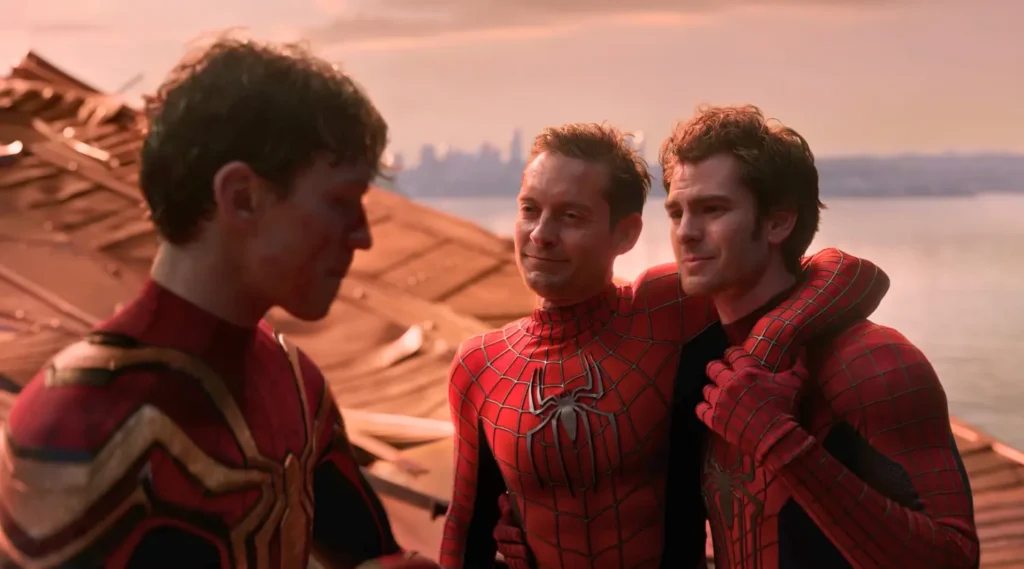
If the Multiverse Saga is about to collapse into Secret Wars, and Doctor Doom is harvesting realities to forge his Battleworld, then having the first cinematic Spider-Man stand as the symbol of why heroes matter? That thematic foundation is why Tobey’s presence in Doomsday matters. But it’s also why Tom Holland’s absence matters just as much—though not for the reasons social media assumes.
The Absence That Speaks Volumes
Let’s cut straight to what’s actually driving Avengers: Doomsday—and it’s not Spider-Man at all.
It’s Robert Downey Jr. returning as Doctor Doom.
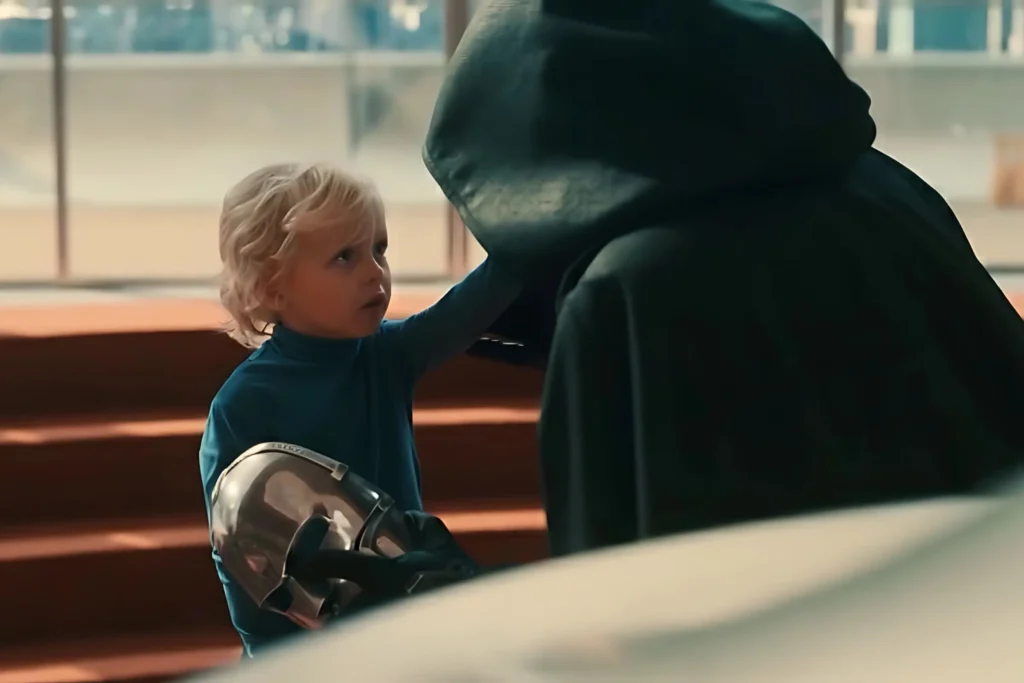
That single piece of casting changes the entire calculus of this film. RDJ’s Tony Stark was the emotional anchor of the Infinity Saga for over a decade. His presence defined what the MCU could be. Now he’s back as the villain, potentially a twisted variant of Tony Stark himself, wearing Doom’s armor instead of Iron Man’s. The psychological warfare alone—watching heroes face someone who looks like their fallen friend but embodies everything Tony Stark fought against—creates dramatic stakes that no amount of Spider-Man nostalgia could match.
Which brings us to the question everyone’s asking: where’s Tom Holland?
The answer is simpler than the discourse suggests. His timeline doesn’t line up. Spider-Man: Brand New Day releases July 2026, five months before Doomsday. That’s not a storytelling problem—it’s storytelling opportunity. At the end of No Way Home, Doctor Strange’s spell erased Peter Parker from everyone’s memory. The Avengers don’t have his number. S.H.I.E.L.D. doesn’t have his file. When the multiversal crisis hits, Holland’s Peter is exactly where that spell left him: anonymous, street-level, focused on his neighborhood.
He’s not avoiding the fight. He doesn’t know about it.
But here’s what changes everything.
That absence actually strengthens the narrative: it creates space for Tobey Maguire’s Spider-Man to carry genuine weight rather than splitting focus. If both Spider-Men were present, Tobey becomes the nostalgic cameo while Tom handles the heavy lifting. With Tom absent, Tobey isn’t sharing the spotlight—he is the spotlight. His presence becomes essential, not supplementary.
More importantly, it protects Holland’s Spider-Man from becoming just another face in a crowded ensemble. Brand New Day is about Peter rebuilding his identity at ground level—that’s powerful character work that doesn’t need to compete with multiversal apocalypse. When he returns for team-ups (presumably Secret Wars), it’ll be as a fully realized version of himself.
The real genius? Understanding that Doomsday doesn’t need to be about Spider-Man to benefit from having a Spider-Man—specifically, one whose thematic weight complements rather than competes with RDJ’s Doom.
The Multiverse Gambit (And Why Doom Changes Everything)
Here’s what makes the multiverse angle genuinely compelling rather than just another gimmick: Anthony and Joe Russo are directing.
The Russo Brothers helmed Infinity War and Endgame—the only two MCU films that successfully juggled dozens of characters while maintaining emotional coherence. They understand how to stage these enormous multiversal conflicts while keeping them anchored in character—they proved it by making Infinity War’s snap about Thanos’s twisted grief and Endgame’s time heist about the Avengers confronting their failures. They know spectacle means nothing without emotional stakes.
Robert Downey Jr. returning as Doctor Doom gives them those stakes in spades. If Doom is indeed a variant of Tony Stark—corrupted, twisted, wearing the mantle of Marvel’s greatest villain—then every hero who knew Tony Stark now faces a psychological minefield. Do you fight someone wearing your dead friend’s face? Do you try to save him? Can you bring yourself to do what’s necessary if he’s beyond redemption?
That’s where Tobey Maguire’s Spider-Man slots in perfectly. Unlike the current MCU heroes, he doesn’t have Tony Stark baggage. He can look at Doctor Doom as a threat, not a tragedy. He can make the hard calls without emotional paralysis. And if the rumors about Secret Wars following the Battleworld storyline from the comics hold true, Spider-Man’s role becomes even more critical.
In the 2015 Secret Wars event, Doctor Doom essentially becomes God Emperor of a patchwork reality made from fragments of dying universes. Heroes from different timelines are forced to navigate this fractured Battleworld, their memories incomplete, their loyalties tested. The conflict isn’t just about defeating Doom—it’s about what happens when someone with absolute power has to be stopped by people who once trusted him.
Stakes have never been higher.
If Doctor Doom is harvesting realities and Tobey’s Spider-Man represents the responsibility ethic that Doom has abandoned, you’ve got a thematic collision that transcends “let’s get the old Spider-Man back for nostalgia.” You’ve got a fundamental debate about power, responsibility, and the cost of heroism embodied by two actors who defined the MCU’s beginning and its current crisis.
The Russos know how to build to those moments. They know how to make spectacle serve character rather than overwhelm it. And if they’re positioning Maguire’s Spider-Man as the moral counterpoint to RDJ’s Doom, we’re looking at something far more sophisticated than “multiverse cameo bingo.”
What This Means for Spider-Man’s Future(s)
Here’s where things get genuinely fascinating from a franchise perspective—and where Sony and Marvel’s business interests might finally align with what fans actually want.
Kevin Feige has explicitly stated that Secret Wars will function as a “reset” rather than a full reboot, maintaining continuity while opening doors for new storytelling possibilities and character introductions. The implications for Spider-Man—or rather, Spider-Men—are pretty staggering. If Tobey Maguire’s version becomes central to Doomsday and carries weight into Secret Wars, we’re looking at a multiverse landscape that could preserve these legacy timelines as legitimate, ongoing narrative spaces.
Think about it like the “Elseworlds” model that’s worked so well for DC. The Matt Reeves Batman films exist separately from whatever Brave and the Bold does in the main DCU. Nobody’s confused by it. Feige has already acknowledged that recasting iconic roles after actors like Robert Downey Jr. created definitive interpretations is challenging, but not impossible, comparing it to the James Bond franchise. The multiverse framework gives Marvel and Sony something arguably better: they don’t need to replace Tobey Maguire’s Spider-Man. They can let him continue existing in his own timeline.
Which brings us to the elephant-sized opportunity in the room: Sam Raimi’s Spider-Man 4.
The appetite for this film has never really gone away. Dylan Baker, who played Dr. Curt Connors in Spider-Man 2 and 3, has repeatedly expressed disappointment that he never got to transform into the Lizard, revealing that Raimi had a script ready to shoot for Spider-Man 4 that would have finally unleashed the character. Baker stated he would return “in a New York minute” if Raimi wanted to make Spider-Man 4, praising the director’s versatility across horror and superhero genres.
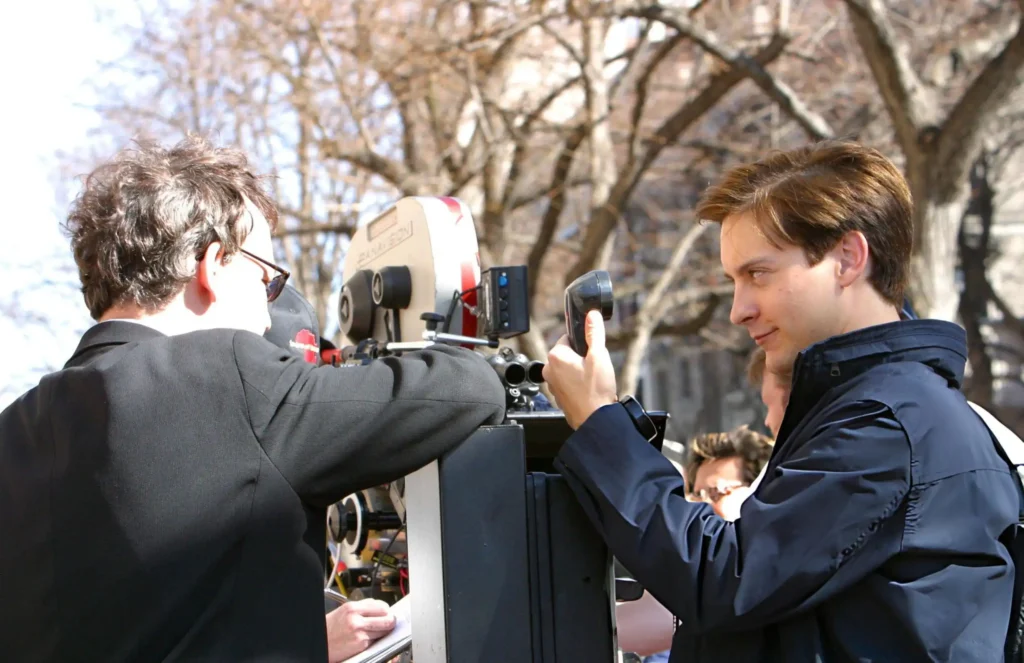
The canceled Spider-Man 4 was set to feature John Malkovich as Vulture and Anne Hathaway as Felicia Hardy/Black Cat alongside Baker’s Lizard transformation—an embarrassment of riches in terms of untapped villain potential. And here’s what makes it perfect for this particular moment: these aren’t world-ending threats. They’re street-level, personal, character-driven conflicts—exactly the kind of storytelling that would distinguish a Raimi continuation from the cosmic multiversal stakes of the MCU proper.
The Lizard works because it’s tragic. Curt Connors is Peter’s mentor, his friend. Watching him become a monster, trying to save him while stopping him—that’s quintessential Spider-Man drama. Add the Vulture as a second-act complication or Black Cat as a morally ambiguous wildcard, and you’ve got a film that feels complete unto itself while honoring the tone and themes Raimi established.
Now, the business case.
Recent reports indicate Sony and Marvel have been negotiating a new deal that would ease restrictions on character usage, with Sony now required to inform Marvel about which Spider-Man villains it plans to use in non-MCU projects. The revised agreement reportedly includes a 30-day VOD window before Marvel can use those characters, potentially allowing variants of characters like Venom or Kraven in the MCU.
This is where a Raimi Spider-Man 4 positioned as standalone “Elseworlds” content makes perfect sense for both parties. Sony gets:
- A Spider-Man film they fully control and profit from
- Built-in audience goodwill from nostalgia and fan demand
- No narrative constraints from MCU continuity
- The ability to mine their Spider-Man IP without stepping on Marvel’s toes
Marvel gets:
- Tom Holland preserved as the MCU Spider-Man going forward
- Room to continue Holland’s new trilogy, with Spider-Man: Brand New Day filming now and set for July 2026 release
- Multiverse validation without multiverse fatigue
- A clear differentiation between timeline-specific stories and Sacred Timeline events
It’s actually kind of elegant. Sony has struggled with its Spider-Man Universe spin-offs like Morbius and Madame Web, but they’ve always known how to handle the core character. Giving Raimi the space to complete his vision—on his terms, with his cast, in his continuity—lets Sony play to their strengths while Marvel focuses on integrating the Fantastic Four and X-Men into the post-Secret Wars landscape.
Which brings us to the trickiest part: what happens to multiverse storytelling after Secret Wars?
Feige has suggested that Phase Six will be “the most focused phase” after using Phases Four and Five to “experiment” and “expand—too much,” with Secret Wars meant to close certain storylines while launching new ones. Reports indicate the next saga will likely be a “Mutant Saga” focusing heavily on the X-Men, with Feige explicitly stating that Secret Wars “leads us into a new age of mutants.
Translation: they’re probably done with heavy multiverse mechanics for a while.
But here’s the thing—they don’t need ongoing multiverse narratives to justify a Raimi Spider-Man 4. The setup’s already done. If Tobey’s Spider-Man plays a crucial role in Doomsday and Secret Wars, his timeline is canonically established. After that, you can just… tell stories there. No incursions needed. No universe-hopping required. Just Peter Parker in his world, dealing with his problems.
It’s the difference between using the multiverse as a storytelling engine versus acknowledging the multiverse as cosmological reality. Post-Secret Wars, the MCU can shift fully back to Earth-616 while occasionally checking in on other timelines when it serves the story. A Raimi Spider-Man 4 wouldn’t be “multiverse content”—it’d be a self-contained narrative that happens to exist in a universe we already know.
And honestly? There’s something valuable about completion.
It’s not about endless expansion.
A Raimi Spider-Man 4 represents the opposite philosophy: close the loop. Finish the story. Give the fans and the filmmaker the ending that was robbed from them fifteen years ago. It’s finite by design, which paradoxically makes it more appealing. You’re not committing to Spider-Verse 2.0 or setting up six more projects—you’re delivering one excellent film that stands on its own merits.
Marvel has already scheduled release dates extending through 2028, suggesting they’re planning well beyond Secret Wars despite the reset. But within that planning, there’s room for different storytelling models. The MCU proper can focus on its supernatural corner with Blade and the Midnight Sons, its mutant integration, its Young Avengers, whatever comes next. Meanwhile, Sony occasionally delivers standalone Spider-Man stories in other timelines—Raimi’s, maybe eventually Webb’s, who knows.
It’s not about endless expansion. It’s about smart curation. Knowing when to tell a complete story and move on. Knowing when legacy matters more than novelty.
If Secret Wars positions Tobey Maguire’s Spider-Man as the hero who helped save the multiverse, letting him return home to face the Lizard, the Vulture, and finally get his happy ending? That’s not franchise bloat. That’s poetic closure.
And it leaves Tom Holland free to define what Spider-Man means for the next generation—which, let’s be honest, is exactly where Sony and Marvel’s priorities should be.
Conclusion
What started as industry whispers has crystallized into something far more substantial. Just days ago, reports emerged that Tobey Maguire was spotted wearing a motion-capture suit on the Avengers: Doomsday set because his new Spider-Man costume wasn’t ready yet—confirmation that he’s not just making a cameo, but receiving the full cinematic treatment reserved for major players.
This isn’t nostalgia bait. It’s narrative architecture.
The decision to potentially center Doomsday around Maguire’s Spider-Man represents Marvel and Sony recognizing that the multiverse’s greatest value isn’t spectacle—it’s completion. Tom Holland’s absence from the Avengers film creates space for the original web-slinger to step forward at precisely the moment his thematic weight matters most. Reports suggest he’ll appear with a short beard reminiscent of Ultimate Spider-Man, signaling a Peter Parker who’s aged, weathered multiversal chaos, and emerged ready to shoulder responsibility one more time.
The implications extend beyond a single film. If Secret Wars resets the MCU while preserving timeline integrity, we’re looking at a franchise model that values endings as much as expansion—where Sam Raimi’s Spider-Man 4 can exist as a standalone triumph, where Holland’s Spider-Man can define a new era unencumbered by constant multiverse crossovers, and where the industry learns that sometimes the boldest creative choice is knowing when a story deserves its final chapter.
When Avengers: Doomsday arrives December 18, 2026, we’ll discover whether Marvel has truly learned to use its multiverse not as a gimmick, but as a gift—the chance to honor what came before while building what comes next.
After all, great power has always come with great responsibility. The question is: which Spider-Man will remind us what that really means?