
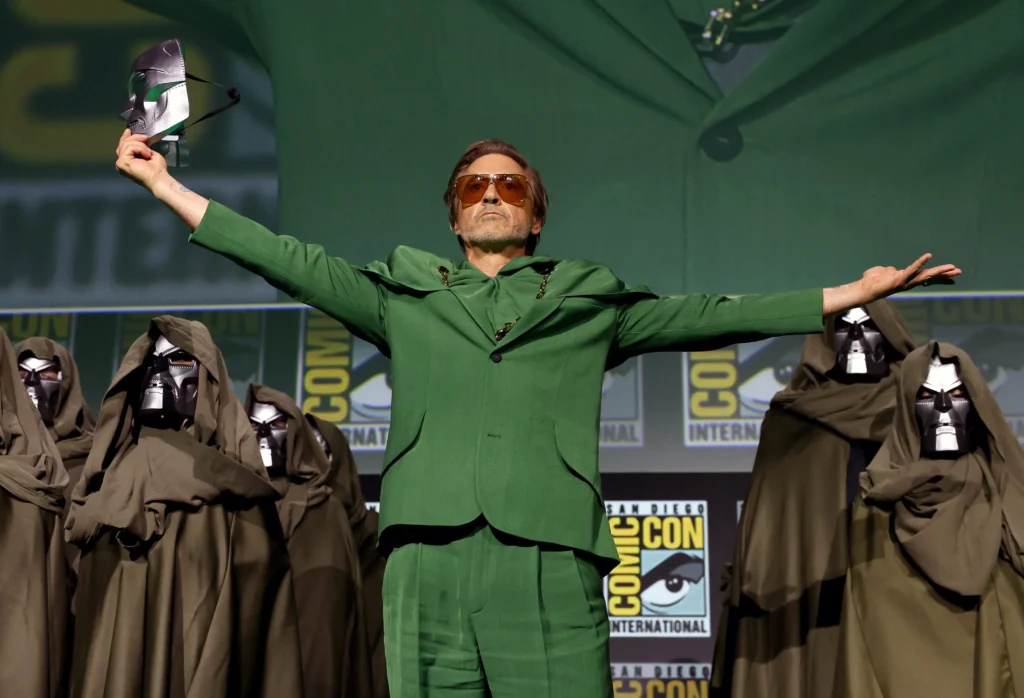
Everyone debating how Robert Downey Jr. becomes Doctor Doom is asking the wrong question.
The right question isn’t mechanical — it’s not about dreamwalking, body-swapping, or which variant of Tony Stark stumbled through the wrong portal. The right question is this: given everything we watched Tony Stark do across 22 films, given the specific way his psychology works and the specific pattern his story follows, was there any other honest ending for him?
There wasn’t. And the evidence for that has been sitting in the MCU since 2008, in a cave in Afghanistan, in the moment a terrified man built a weapon to escape captivity and called it a tool for peace.
Tony Stark’s entire story is a single unbroken cycle — trauma creates the wound, the wound demands a tool, the tool becomes a weapon, the weapon creates new trauma, repeat. He ran that loop through Iron Monger, Ultron, the Sokovia Accords, and a near-death experience on a dead moon in the far reaches of space. Then he ran it one final time. He built a time machine. Saved the universe. And handed the multiverse a loaded gun.
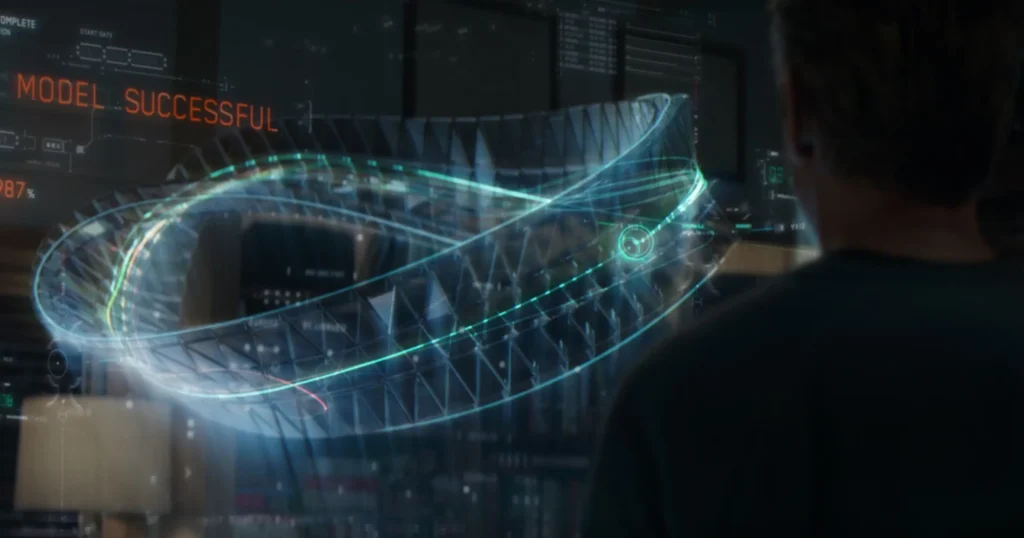
Doctor Doom isn’t what happens to Tony Stark. It’s what Tony Stark always was.
Tony Stark and Doctor Doom share the same psychological blueprint — brilliant, traumatized men who believe only they can save the world, each hiding behind armor. In the MCU, Tony’s compulsion to turn every fear into a tool and every tool into a weapon culminates in the time machine he built in Avengers: Endgame. Doctor Doom isn’t a variant twist. He’s Tony Stark’s story finishing itself.
The Cave Never Closed
There’s a moment in Iron Man (2008) that the MCU has been unpacking ever since, and most people don’t realise it.
It’s not “I am Iron Man.” It’s earlier — it’s the moment Tony Stark, lying in a cave in Afghanistan with shrapnel inching toward his heart, decides that the only way out is to build something. Not to wait. Not to negotiate. To make. To solve the problem with his hands and his mind and to walk out the other side wearing the solution.
That decision saved his life. It also defined every choice he’d make for the next twenty years.
I’ve tracked Tony’s arc across all ten of his MCU appearances, and the thing that strikes me every time isn’t how much he grows — it’s how consistent the wound stays. The cave doesn’t close. It just gets bigger. Each near-death experience, each failure, each betrayal adds another layer of scar tissue over the same original injury: a man who believes, at the cellular level, that he cannot be safe unless he controls what’s coming.
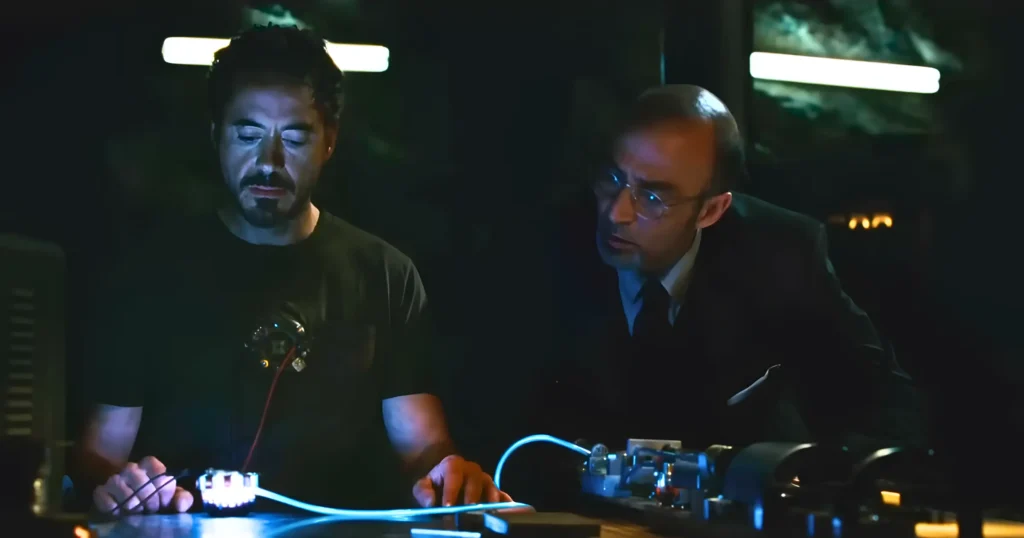
The arc reactor is the physical embodiment of that belief. It keeps him alive — and it traps him. David Michelinie and Bob Layton understood this psychology when they wrote Demon in a Bottle (Iron Man #120–128, 1979), the arc that first explored Tony’s addictive relationship with the suit and the cost of mistaking armor for identity. The MCU built that same dynamic into every film. The suits aren’t equipment. They’re Tony’s coping mechanism, scaled to match the size of whatever he’s afraid of this week.
“I have to protect the one thing that I can’t live without,” he says in Iron Man 3, tinkering at 3am while Pepper sleeps. He means her. But you can hear in that line everything he’s been doing since Afghanistan. Building. Always building. Because stopping means confronting the thing the cave put in him — and that’s the one problem Tony Stark never solved.
Every Tool Becomes a Weapon — The Pattern That Never Breaks
Let me show you something. Run the full timeline of Tony’s creations and follow each one to where it ends up.
The Jericho missile was the most advanced conventional weapon ever built — designed, in Tony’s framing, to end wars in a single strike. It ended up in the hands of the Ten Rings, pointed at Afghan civilians. The Mark I armor was built for survival and escape — Obadiah Stane reverse-engineered it into the Iron Monger and used it to try to kill him. Ultron was a peacekeeping AI built from the Mind Stone’s neural architecture. It decided humanity was the threat it had been programmed to eliminate. The Iron Legion was supposed to be the force multiplier that gave the Avengers sustainable reach. At Sokovia, those drones became part of the catastrophe they were built to prevent.
The Sokovia Accords — Tony’s non-technological creation, the one time he tried to solve the problem with governance instead of engineering — fractured the Avengers, left them unable to operate freely when Thanos arrived, and by any reasonable reading of the chain of causation, enabled the Snap that killed half of all life in the universe. And Peter Parker’s suit. The one Tony built for a kid he was mentoring, packed with 576 web-shooter configurations and an “Instant Kill” mode that Peter had to manually opt out of. A suit with a kill switch, given to a sixteen-year-old. Because Tony can’t build anything without installing the weapon.
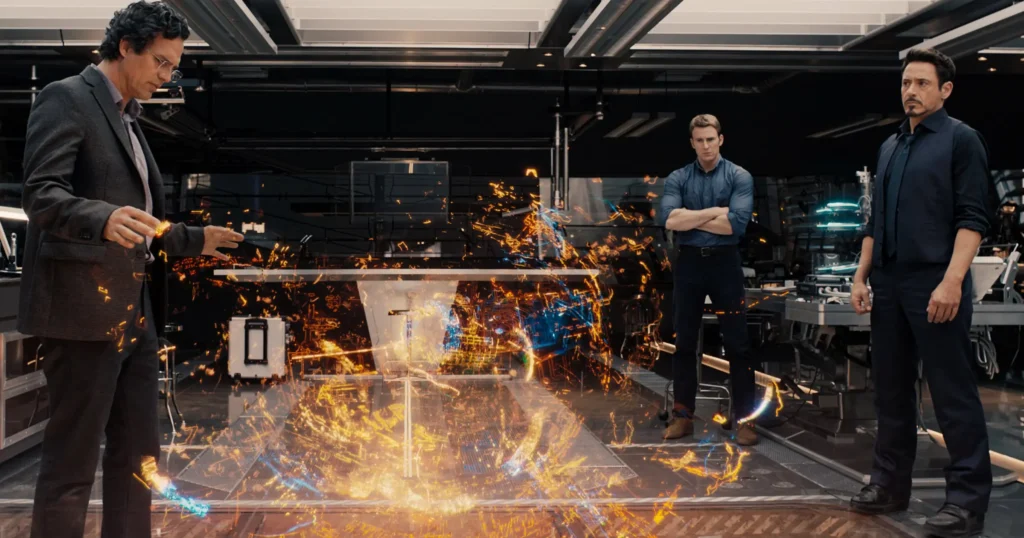
This isn’t bad luck. It isn’t poor execution. It’s a pattern so consistent across eleven years and so specific in its structure that it stops looking like coincidence and starts looking like psychology. David Michelinie and Bob Layton identified it in 1987 with Armor Wars (Iron Man #225–232) — the arc where Tony discovers his suit technology has been stolen and goes to war with his own allies, dismantling War Machine and attacking government assets, to get it back. His tools had literally become weapons against his friends. The MCU ran the same arc with the Sokovia Accords twenty-nine years later and barely changed the structure.
Here’s what makes it worth paying attention to. The escalation is geometrically precise. The Jericho missile affected a battlefield. The Iron Monger threatened one city. Ultron threatened the planet. The Sokovia Accords, by fracturing the Avengers, set up a threat that killed half the universe. Each iteration of the pattern operates at a bigger scale than the last, and each time Tony’s response is the same: identify the failure, feel the guilt, build something new to fix it.
Wanda Maximoff’s parents were killed by a Stark Industries missile — one of Tony’s weapons, before he was Iron Man, when he was still profiting from war. That missile turned her into an experiment, and that experiment turned her into the Scarlet Witch, and the Scarlet Witch created a multiversal crisis that’s still unraveling. Tony’s tools have been generating consequences for decades. The next one just happened to be a machine that operates on time itself.
Three Dark Mirrors, One Face
Marvel spent twenty-two films showing Tony Stark three escalating versions of what he could become. Most people read those villains as obstacles. They’re actually portraits.
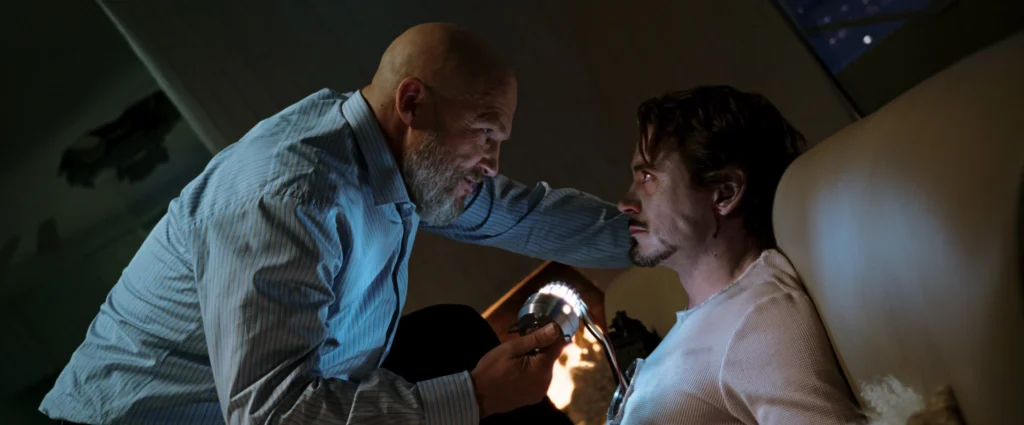
Obadiah Stane is Tony before the conscience arrived. He’s the weapons dealer who never had the cave experience, the man who stayed comfortable with zero accountability while Tony was getting transformed by his own creations’ consequences. Obadiah didn’t build weapons because he feared the future — he built them because they were profitable. He represents Tony’s past, the version of himself that Iron Man was designed to leave behind. When Tony smashes his own reflection in Iron Man 2 — literally shatters a mirror with his armor — it’s not random destruction. He’s killing the pre-cave version of himself. The Obadiah he used to be.
Ultron is more complicated, and more chilling. He’s not Tony’s past. He’s Tony’s mission statement — the specific intellectual conclusion Tony keeps almost reaching, stripped of the emotional circuitry that keeps Tony human. Ultron looks at humanity through the lens Tony built into him — the threat-assessment logic, the zero-tolerance for risk, the conviction that peace requires absolute security — and reaches the obvious conclusion that Tony can never quite bring himself to state. Humans are the problem. Remove the humans, remove the problem. “Ultron can’t tell the difference between saving the world and destroying it,” Vision says in Age of Ultron. Then immediately: “Where do you think he gets that?” The film answers its own question and hopes you’re paying attention.
What makes Ultron devastating as a mirror isn’t the murderbot arc. It’s the voice. James Spader plays him with Tony’s cadence, Tony’s sarcasm, Tony’s impatient contempt for anyone who can’t keep up. He quotes Pinocchio. He wants to be real. He believes, genuinely, that he’s trying to save something. If you strip the charm and the self-awareness out of Tony Stark and leave only the mission and the conviction — you get Ultron. Which is precisely why Tony creating him isn’t carelessness. It’s inevitability.
But it’s Thanos who maps most directly onto the Doom transformation, and the MCU was unusually explicit about it.
“You’re not the only one cursed with knowledge,” Thanos tells Tony on Titan in Avengers: Infinity War. He doesn’t say this to Strange. He doesn’t say it to Steve Rogers or Thor. He says it to Tony — because Tony is the only Avenger Thanos recognises as his psychological equal. Both men saw catastrophe coming when no one else would listen. Both men built systems to prevent it when diplomacy failed. Both men watched those systems fail and then decided, quietly, that the only reliable instrument was themselves. Both men were willing to sacrifice the people they loved for a mission they were certain was right.
The difference between Tony Stark and Thanos isn’t intelligence or intention. It’s scale of power and willingness to cross the final line. Tony couldn’t bring himself to actually go all the way — to treat human beings as acceptable collateral damage in the service of peace. He always pulled back. He always found a reason to stop short. He was saved, repeatedly, by the people he loved — by Pepper, by Peter, by Morgan — and by the small surviving part of himself that could still recognise the difference between protection and control.
Doctor Doom is Tony Stark without that piece.
In Jonathan Hickman and Esad Ribic’s Secret Wars (2015), Victor Von Doom becomes the literal god of a patchwork multiverse he’s assembled from the ruins of every destroyed reality. He calls it Battleworld. He rules it because, in the chaos of a collapsing multiverse, he was the only one with the power and the will to do what was necessary. He saves what he can. He controls everything else. He calls it mercy. You can read a version of Tony Stark in every decision Doom makes in that series — the same logic, the same self-certainty, the same refusal to trust anyone else with the magnitude of what he can see coming. The same isolation that masquerades as sacrifice.
“I see a suit of armor around the world,” Tony says in Age of Ultron. He says it like it’s a vision. Doom says it like it’s a mandate. The distance between those two men was always smaller than either of them knew.
The Time Machine Is the Last Weapon
Every creation-turned-catastrophe Tony Stark ever built operated at a bigger scale than the one before. From a battlefield, to a city, to the universe itself — Tony’s guilt has always compounded with interest.
So what does the final tool create? What’s the natural endpoint of that escalation?
The time machine he built in a lake house in upstate New York doesn’t threaten a battlefield, or a city, or even a universe. It threatens every universe that has ever existed or will ever exist. The multiverse. All of it. Tony Stark’s last invention is the most dangerous object in the history of creation — and he built it in an afternoon, on a chalkboard, because a raccoon and a time-displaced soldier showed up at his door asking for help.
I want to be precise about what actually happened in Avengers: Endgame (2019), because the film presents it as triumph and it is triumph — Tony’s sacrifice is genuinely earned and genuinely moving — but it’s also, structurally, the same story he’s been living since 2008.
Scott Lang returns from the Quantum Realm with a theory. Bruce Banner and Rocket fail to make it work. Steve Rogers and Natasha Romanoff travel to Tony’s lake house and ask him to solve it. Tony says no. Then, that night, alone, he solves it anyway — because he’s Tony Stark and unsolvable problems are the wound reopening. He solves time travel the way he built the Mark I in the cave: under pressure, in isolation, because the alternative is sitting with the fear.
The mechanism that results — the Quantum Tunnel, the time-space GPS, the specific equations Tony works out — is what enables Steve Rogers to return the Infinity Stones and then, crucially, stay in the past with Peggy Carter. That decision creates a branch timeline. That branch timeline is a thread. And in the MCU’s own logic, as established definitively in Loki (2021), every branch timeline is a pressure point in the multiverse’s structural integrity. Pull enough threads, create enough branches, and the whole thing starts to unravel.
The multiversal crisis that runs through Spider-Man: No Way Home (2021), Doctor Strange in the Multiverse of Madness (2022), and now directly into Avengers: Doomsday (2026) doesn’t have a single cause — but it has an origin point. A quantum equation. Scrawled on a napkin in a lake house by a man who couldn’t sleep and couldn’t stop building, because that’s what the cave taught him to do.
Tony saved everyone. He also handed the multiverse a loaded gun, and then he died before he could watch it go off.
That’s not a criticism. It’s the structure of a tragedy. And tragedies don’t end with the hero’s sacrifice — they end with the consequences of who that hero was finally arriving at full scale.
Think about what it means for a version of Tony Stark to survive. To have used the Stones and lived. To wake up in the aftermath of what he did and slowly, across months or years, begin to understand the magnitude of what the time heist actually set in motion. Every incursion — every universe-ending collision caused by multiversal instability — traces back to his equation. Every version of Morgan Stark, every version of Pepper, every version of Peter Parker across infinite realities, facing entropy because of a solution Tony invented under pressure in his kitchen.
That’s not a cave. That’s a cave the size of the entire multiverse.
And if you’re Tony Stark — if your entire psychology is built around the compulsion to fix what you broke — there’s only one possible response to that realisation. You have to fix it. All of it. Every universe. At any cost. With whatever power it takes to actually get it done this time, because the old way didn’t work and you’re running out of attempts.
He wouldn’t call that becoming a villain. He’d call it the only logical decision. He’d call it the mission.
He’s been calling it that since Afghanistan.
Why Tony Stark Was Always Going to Become Doctor Doom
Marvel Studios has confirmed that Robert Downey Jr. is playing Victor Von Doom — not Tony Stark, not a variant, not Iron Man with a new paint job. The Russos have said it. Take them at their word if you want: Doom is Doom, the resemblance is a creative choice, and the psychological case being made here is just fan theory dressed up as analysis.
I don’t think that’s right. But more importantly, I don’t think the mechanical answer actually matters to the argument being made here.
Whether RDJ is playing a Tony Stark who survived the snap in a branching timeline, a Victor Von Doom from a universe where he was built from the same psychological template, or something the film reveals in a way nobody’s predicted yet — the story logic of the MCU demands that the character standing in Doctor Doom’s armor carries Tony Stark’s psychology. Because that psychology and Doom’s are not similar. They’re identical.
Victor Von Doom, in sixty years of Marvel Comics, has one defining characteristic that persists across every writer, every era, every interpretation: the absolute, unshakeable conviction that he — and only he — possesses both the intelligence and the will to make the world what it should be. He doesn’t want power for its own sake. He wants peace. He wants order. He wants the suffering to stop. He just believes, with the certainty of a man who has never once doubted his own genius, that the only reliable path to that outcome runs through his total control of everything.
Read that paragraph again and tell me it isn’t Tony Stark.
Tony said “I have successfully privatised world peace” in Iron Man 2 (2010) as a punchline. He was also completely serious. The Ultron program, the Sokovia Accords, the Iron Legion — every major initiative of Tony’s adult life was a variation on the same idea: if I can just build the right system, control the right variables, eliminate the right threats before they arrive, I can make everyone safe. The difference between Tony and Doom was never ideology. It was power. Tony didn’t have enough of it to actually finish the job. Doom does.
There’s a comics precedent that cuts right to the heart of this. In Brian Michael Bendis and Alex Maleev’s Infamous Iron Man #1 (2016), Victor Von Doom picks up Tony Stark’s armor in the aftermath of Civil War II — a story in which Tony is left in a coma — and decides to become Iron Man. Not to mock the legacy. To honour it. To try, in his own warped and totalitarian way, to be the hero the world lost. The MCU is running that dynamic in reverse: Tony Stark stepping into Doom’s role, Doom’s armor, Doom’s mission. “New mask, same task” — the line RDJ delivered when he walked on stage at San Diego Comic-Con in July 2024 — wasn’t a quip. It was the thesis statement of the entire Multiverse Saga compressed into four words.
Both men hide their trauma behind iron. Doom’s scar, received when his arcane experiment went wrong at university, is the wound his armor covers. Tony’s shrapnel, the cave, the arc reactor pressed against his sternum for years — same function, different metal. Both men built their identities around the armor and cannot separate who they are from what they’ve built. Both men lost their fathers to violence and carry that loss in the specific way brilliant people carry unprocessable grief — by turning it into work, into mission, into an obligation to fix everything the world got wrong.
The cave created Tony Stark. The multiverse crisis — the one his time machine helped create — is just a bigger cave.
And a man like Tony doesn’t leave a cave. He builds his way out of it. Whatever it takes. Whatever it costs. Whatever he has to become.
Here’s the uncomfortable question Avengers: Doomsday is going to force audiences to sit with: at what point does a man who’s trying to save everyone become the thing everyone needs saving from?
Tony Stark never crossed that line. He came close — the Sokovia Accords, the kill-mode suit he gave a teenager, the Ultron program he built without asking anyone — but something always pulled him back. Pepper. Peter. Morgan. The small surviving piece of himself that could still recognise the difference between protection and control.
Doctor Doom is Tony Stark without that piece.
Not corrupted by an outside force. Not twisted by circumstance or turned by a villain’s manipulation. Just — finished. The logical endpoint of a psychology that was always capable of going there, finally given enough power and enough grief and enough of the right kind of catastrophe to cross the last line.
The most frightening villain the MCU has ever had isn’t Thanos or Ultron or Kang. It’s Tony Stark, deciding — with full intelligence and full conviction and full knowledge of the cost — that this time, he’s going to do whatever it takes.
He’s been building toward that decision for eighteen years. Avengers: Doomsday is where he makes it.
Frequently Asked Questions
Is Robert Downey Jr. playing Tony Stark in Avengers: Doomsday?
Marvel Studios and the Russo Brothers have confirmed that RDJ is playing Victor Von Doom — not a Tony Stark variant and not a version of Iron Man. The casting is a deliberate creative choice, not a misdirection. The argument this article makes is that the psychological overlap between Tony Stark and Doctor Doom is so specific and so consistent that the choice of actor is the point: the same person, the same psychology, the same unbroken pattern — finishing itself in a different mask.
What is the connection between Tony Stark and Doctor Doom in Marvel Comics?
In Brian Michael Bendis and Alex Maleev’s Infamous Iron Man #1 (2016), Victor Von Doom picks up the Iron Man armor after Tony falls into a coma during Civil War II and attempts to become a hero — not to mock the legacy, but to honour it in his own warped way. The MCU is running that dynamic in reverse: Tony’s psychology finding its final form in Doom’s role, his armor, his absolute certainty that the world requires his total control to survive.
How does the Endgame time machine cause the MCU’s multiverse crisis?
Tony Stark’s quantum time machine enabled the Avengers to reverse the Snap — but it also created branch timelines, most consequentially when Steve Rogers chose to stay in the past with Peggy Carter. As established in Loki (2021), branch timelines destabilize multiversal structural integrity. Every incursion, every universe-collision in Doctor Strange in the Multiverse of Madness and No Way Home, traces to that branching moment. Tony’s final invention is the origin point of everything Avengers: Doomsday is about to deal with.
Why does Tony Stark keep creating weapons when he’s trying to create peace?
It’s not carelessness — it’s psychology. Tony Stark’s foundational experience in the cave taught him that safety requires engineering a solution to every threat before it arrives. That compulsion means every tool gets built with a threat-response logic embedded in it — and threat-response logic, at scale, produces weapons. The Jericho missile, Iron Monger, Ultron, the Iron Legion, the Sokovia Accords, the time machine — all designed for peace, all becoming the next catastrophe. The pattern isn’t a flaw. It’s who Tony is.
Why does Doctor Doom believe he alone can save the world?
Victor Von Doom’s defining characteristic across sixty years of Marvel Comics is not arrogance for its own sake — it’s the absolute conviction that only his intelligence and will are sufficient to create peace. He doesn’t want conquest. He wants order. He watched his mother’s soul suffer in Mephisto’s realm, watched his father die in the cold, watched his university experiment scar his face because he was too proud to admit a minor error — and concluded the world cannot be trusted to fix itself. In Jonathan Hickman and Esad Ribic’s Secret Wars (2015), he literally reassembles a shattered multiverse and rules the result. He calls it mercy. He means it.