
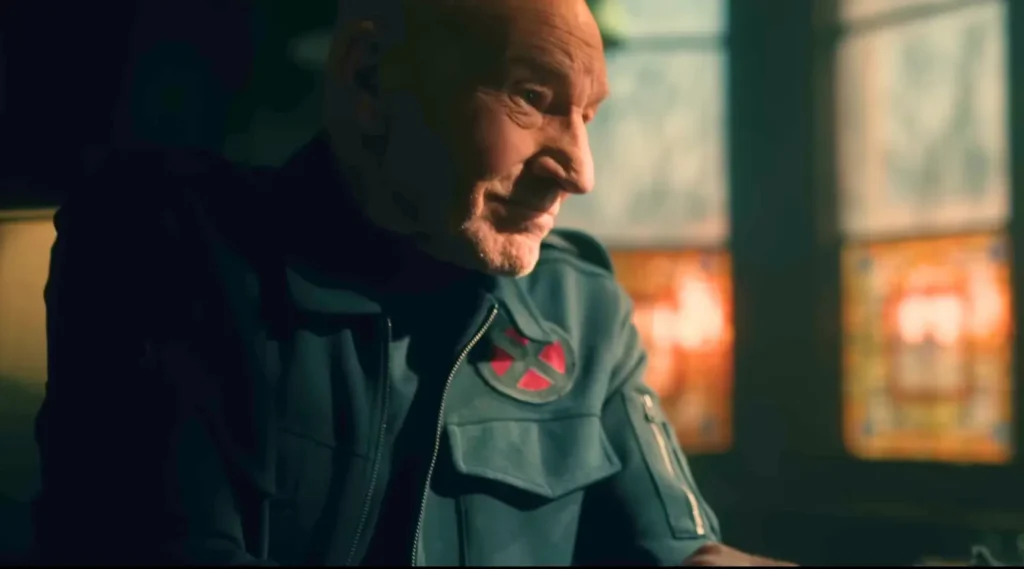
Ian McKellen is wearing a cozy sweater and playing chess with Patrick Stewart and somehow that’s the most unsettling image in the entire Avengers: Doomsday marketing campaign.
Think about what that scene is asking you to forget. This is the man who floated the Golden Gate Bridge through San Francisco. The man who, in the comics, created a volcano to destroy a Russian city, reversed Earth’s magnetic poles, and once combined his powers with Thor’s hammer to cause global devastation in Ultimatum. He’s spent the better part of six decades — in comics, in animated series, in film — standing at the edge of genocide and seriously considering it. And now he’s in a cardigan, looking at a chessboard, at peace.
That’s not softening. That’s a man who’s already won.
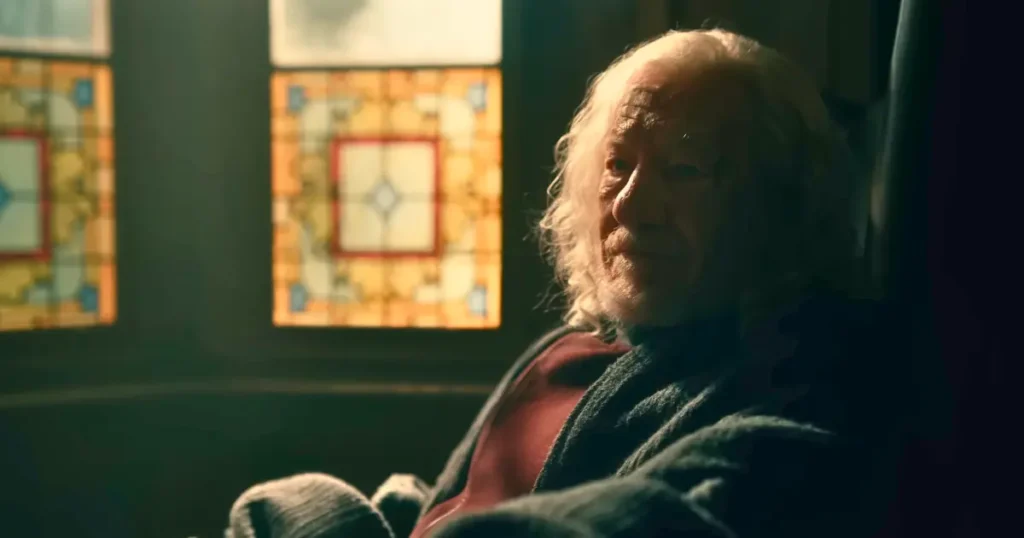
The leaks, the trailer, and Ian McKellen’s extremely accidental honesty in a recent interview all point in the same direction: the X-Men aren’t showing up in Doomsday as the cavalry. They’re showing up as the moral problem. This variant universe they inhabit — a genuine utopia where humans and mutants coexist — wasn’t built through goodwill and Charles Xavier’s dream alone. It was built through choices that the Avengers, the Fantastic Four, and the rest of the MCU’s surviving heroes would find horrifying. And when those heroes arrive in the X-Men’s universe looking to deal with the next incursion threat, the mutants aren’t going to shake hands.
They’re going to fight.
Here’s what nobody’s saying loudly enough yet: this isn’t a narrative twist. It isn’t a subversion. It’s the most character-consistent thing Marvel has ever done with these people — the logical endpoint of sixty years of comic history in which Charles Xavier and Erik Lehnsherr have been quietly, sincerely, repeatedly building toward exactly this decision. The evidence from the trailer, the leaks, and the comics all converge on the same thesis.
The X-Men were always going to burn other worlds to save their own. We just weren’t paying attention.
The Homecoming That Isn’t
The X-Men teaser for Avengers: Doomsday is designed to feel like a reunion. Patrick Stewart and Ian McKellen, back together. James Marsden finally in a blue-and-gold costume that looks ripped straight from the ’90s animated series. Alan Cumming as Nightcrawler, Rebecca Romijn as Mystique, Kelsey Grammer as Beast, Channing Tatum as Gambit. The whole Fox-era band, reassembled for one final curtain call.
Marvel knows exactly what it’s selling. Nostalgia is a powerful delivery mechanism.
But watch the teaser again and sit with the specific images rather than the warm feeling they produce. The X-Mansion is ruins. Cyclops isn’t triumphant — he’s on his knees, screaming, unleashing an optic blast in what reads unmistakably as desperation while Sentinel feet move through the smoke behind him. (If you haven’t already read our full breakdown of what the Cyclops trailer moment actually signals, that piece has the frame-by-frame.) Xavier and Magneto aren’t celebrating anything. They’re sitting in a damaged mansion having what sounds like an end-of-life conversation. “Death comes for us all,” Magneto says. “The question isn’t, are you prepared to die? The question is, who will you be when you close your eyes?”
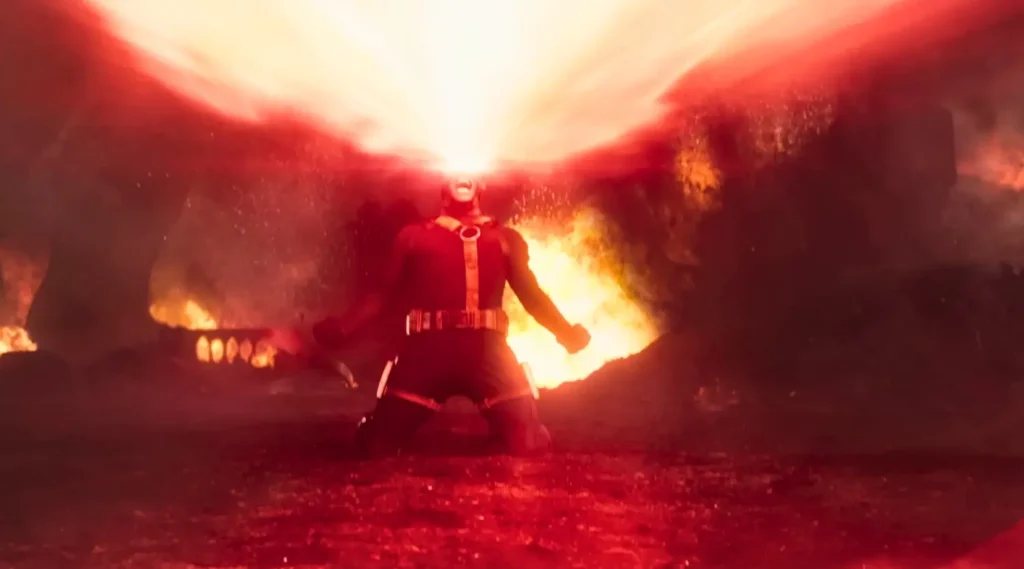
That’s not a pep talk. That’s a man who’s already made his choice asking someone else if they’ve made theirs.
The initial read from most outlets has been that the X-Men are victims here — that the Sentinels have ravaged their world, that they’re the underdogs we’ll be rooting for. And that might be partially true. But there’s a competing read that’s harder to sit with and, I think, considerably more interesting: the X-Men’s universe is in ruins because of what the X-Men have done, not just what’s been done to them. The utopia that leakers describe — a genuine peace between humans and mutants in a variant timeline drawing from the original Fox trilogy and Days of Future Past — isn’t a gift. It’s a transaction. And the price, if the rumors are accurate, involved destroying other universes entirely.
Alex Perez from The Cosmic Circus framed it precisely: “This universe exists as a utopia for humans and mutants. But you have to wonder… what exactly happened prior to that that allowed this utopia to exist? What sacrifices had to be made for the greater good? And that question is the general motif of Doomsday.”
That’s the article, right there in one paragraph. The rest of this piece is just filling in why the answer to that question has been visible in Marvel comics for sixty years.
The Incursion Machine
If you’ve been following the MCU since Doctor Strange in the Multiverse of Madness, you’ve already had the incursion concept introduced. But it’s worth being precise about the mechanics, because everything in the theory hinges on understanding exactly how brutal this scenario is.
An incursion happens when two parallel universes begin occupying the same space. The boundary between realities thins, and then collapses. When it does, there are two outcomes: either one universe destroys the other, or both universes are annihilated simultaneously. There is no third option. There’s no negotiation, no compromise, no heroic sacrifice that saves everyone. Someone has to go.
Jonathan Hickman built this into his landmark New Avengers run beginning in 2013 — one of the most structurally ambitious things Marvel has published in the last two decades. In that story, the Illuminati — Reed Richards, Tony Stark, Black Panther, Namor, Black Bolt, Beast, and Captain America — were confronted with exactly this choice when incursions began threatening Earth-616. They built a device. An anti-matter bomb capable of destroying another Earth entirely. Captain America refused to use it and had his memory wiped for objecting. The rest of them kept the device. They used it. And Hickman spent two years methodically showing what that decision cost each of them, morally and personally.
That’s the blueprint Doomsday appears to be working from — and with RDJ’s Doom operating as the overarching villain pulling strings above the conflict, the X-Men’s role maps almost perfectly onto the Illuminati’s in Hickman’s run. Except they’ve been doing it longer. And harder.
Here’s what the reliable leaker MyTimeToShineHello reported: “The X-Men in Avengers: Doomsday have survived countless incursions, each one nearly wiping out their universe. They’re exhausted, broken, and have sacrificed everything. Every incursion forces them to send their members to another Earth to battle its defenders and erase that universe from existence before it destroys theirs.”
Let that land for a moment. The X-Men haven’t just survived one impossible choice. They’ve been making it repeatedly. Sending their own people — the people Xavier trained, the people Magneto fought alongside and against and alongside again — to fight the inhabitants of other universes and destroy their worlds. Not because they’re villains. Because the math kept coming out the same way every time.
This is why the missing X-Men matter. Jean Grey isn’t in the teaser. Storm isn’t. Iceman, Rogue, Shadowcat — gone. The charitable read is budget and scheduling. The darker read, which the leaks support, is that those are the losses. The cost of survival. The X-Men standing in that ruined mansion are the ones who made it. The ones who kept pulling the trigger.
And then the Avengers show up.
Of course the X-Men assume they’re there to finish the job. When every visitor from another universe has come to destroy you, the next visitor from another universe looks exactly like every other one. The paranoia isn’t irrational. It’s the only sane response to their history.
The resulting conflict — Avengers and Fantastic Four versus X-Men, each side convinced the other is the existential threat — is exactly the kind of hero-on-hero war that lets Doom operate freely in the background. He doesn’t need to win the fight. He just needs everyone else to lose it. Thanos in Infinity War exploited the Avengers’ internal fracture; Doom exploits the one between Earth’s heroes and the mutants who’ve been quietly burning other worlds to keep theirs intact.
The genius of the setup, if the leaks are accurate, is that nobody is wrong. The X-Men aren’t paranoid fools — they’ve been through this before and they know how it ends. The Avengers aren’t villains for showing up — they’re trying to stop an incursion. They’re just both right about different things at the same time, which is the only kind of conflict that produces genuine tragedy.
What Magneto Did to New Jersey (And What It Means)
Here’s how Ian McKellen accidentally broke the internet.
In a recent interview on the YouTube channel Jake’s Takes, McKellen was reminiscing about practical effects — how the crew physically lifted police cars on cranes for the Fox films, how tactile and visceral those productions felt. He was in a good mood, enjoying the memory. And then, mid-thought, he let this slip: “Though I did destroy New Jersey the other day. Oooh, I perhaps shouldn’t have said that.”
His embarrassment was immediate and genuine. He didn’t lean into it the way an actor baiting the press might. He winced. And that wince is the most informative part — because a deliberate slip would’ve been followed by a grin, not a grimace. McKellen later elaborated on the scene itself in another appearance, describing standing upright on set, wind machine running, being told by the director through a loudspeaker to look more furious, then to shout something. The worst thing he could think of. He shouted “Maago!” — Magneto’s name, in Magneto’s voice, apparently destroying an American state.
That description matters because it tells us this isn’t a one-second cameo moment. It’s a full scene. Magneto, upright, in the middle of an act of mass destruction, being directed to perform fury. That’s not a character beat in the background of someone else’s moment. That’s a setpiece.
The immediate comics connection everyone made was to Ultimatum — the Jeph Loeb and David Finch 2009 event in which a grief-stricken Magneto, driven past his limits by the deaths of his children, uses Thor’s hammer Mjolnir to reverse Earth’s magnetic poles. The resulting global disasters include a tidal wave that floods Manhattan and kills dozens of major characters. It’s a notorious storyline — brutal, divisive, widely considered too blunt in its execution — but the core concept is pure Magneto at his most operatic. The man who survived the Holocaust deciding, finally, that humanity has exhausted its chances.
Now here’s where the theory gets original. Everyone connecting McKellen’s slip to Ultimatum is pointing at Mjolnir. But Mjolnir still carries Odin’s enchantment. Only the worthy can wield it — and whatever Magneto’s virtues, the enchantment has never deemed him worthy in any continuity. He can manipulate the metal in the hammer. He cannot lift it as a weapon.
Stormbreaker is a different story entirely.
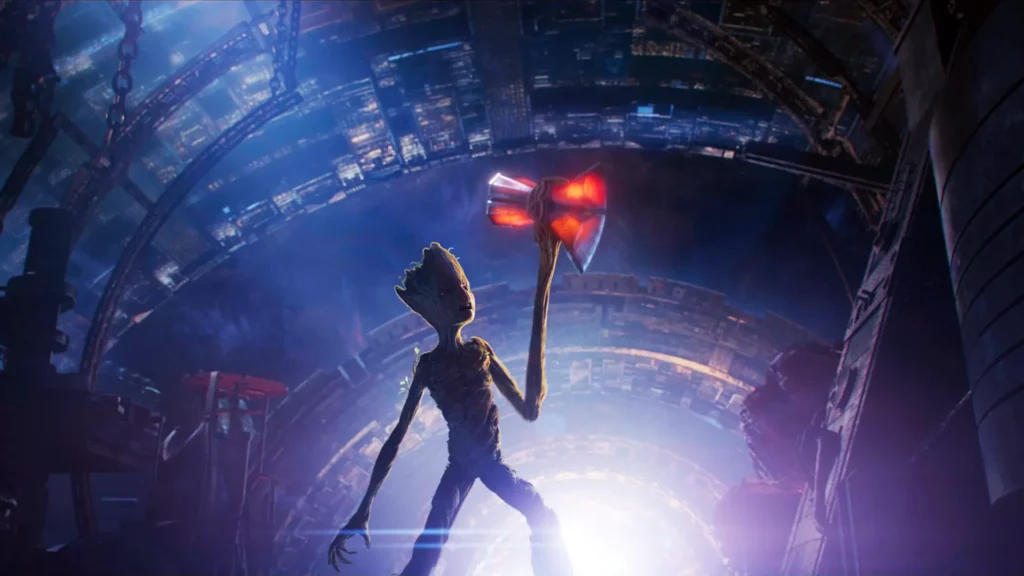
Thor’s axe, forged by the dwarf king Eitri on Nidavellir, carries no worthiness enchantment. It’s a weapon, not a test. Which is exactly why Thanos was able to grab it during the final battle of Endgame — not because he was worthy, but because the enchantment simply doesn’t exist. Anyone strong enough can hold it. And Stormbreaker has a capability Mjolnir never had: it can open a Bifrost. A dimensional gateway between realms.
Thor is confirmed in the Doomsday cast. Stormbreaker presumably travels with him. And in a film about multiversal incursions — about universes colliding and one side needing to destroy the other — a weapon that opens dimensional gateways in the hands of the most powerful magnetic manipulator in Marvel history becomes something genuinely terrifying. Magneto wouldn’t need to reverse Earth’s poles. He’d just need to open the door to another universe and pull it apart from the inside out, the way he once tore the adamantium from Wolverine’s bones in X-Men Vol. 2 #25. Same principle. Larger scale.
It would also explain the specific geography of McKellen’s slip. Ultimatum targeted Manhattan. New Jersey is across the river — adjacent, connected by the same magnetic field lines, close enough that a catastrophic act aimed at an incursion point could devastate the surrounding area. Kamala Khan lives in Jersey City. And Kamala Khan has the X-gene. If this version of Magneto knows that — if he’s protecting one of his own while destroying the threat she’s adjacent to — that changes the moral calculus of the scene completely. It’s not mindless destruction. It’s a surgical strike by a man who’s done the math.
Which is completely consistent with everything Charles Xavier’s history prepared him to do.
Charles Xavier: The Good Man Who Does Terrible Things
There’s a moment in X2 — still the best X-Men film, full stop — that’s stayed with me longer than almost anything else in the Fox era. Xavier has led his X-Men into the Oval Office. The power is cut. Secret Service agents are frozen mid-step. Storm has caused thunderclouds to materialize outside the windows. The most powerful telepath on Earth has quietly, completely demonstrated that the President of the United States is helpless. And when the President tells Xavier he doesn’t respond well to threats, Xavier says: “Mr. President, this is not a threat. This is an opportunity.”
He means it. That’s the terrifying part. He’s not lying, not performing magnanimity for the cameras. In his mind he genuinely is doing the President a favor — offering him a chance to get ahead of history rather than be trampled by it. The gun pressed to the temple is, in Xavier’s framework, an act of generosity. The alternative, after all, is that the President makes the wrong choice and things get worse for everyone.
This is not a villain’s logic. It’s a good man’s logic applied past the point where it should stop.
Comic readers have spent decades watching Xavier apply exactly this logic to increasingly consequential decisions, and the record is not flattering. Start with X-Men Vol. 1 — the very beginning. When the original team was captured by the sentient island Krakoa, Xavier recruited a second rescue squad: Petra, Sway, Darwin, and Scott Summers’ half-brother Gabriel Shepherd, later known as Vulcan. That team was sent in first. They were essentially destroyed. Cyclops survived because Gabriel used his power to protect him. Xavier then wiped Cyclops’ memory of the entire event — erased his knowledge that his teammates died, that his brother existed — so he could send Scott out to fight again. Ed Brubaker revealed all of this in Deadly Genesis in 2006, and it recontextualized Xavier’s entire history in a single arc. He didn’t just make a hard call. He covered it up. For decades.
Then there’s what he did to Magneto. After Erik viciously extracted the adamantium bonded to Wolverine’s skeleton during their confrontation in X-Men Vol. 2 #25, Xavier made a decision. He shut Magneto’s brain down entirely — not incapacitated him, not restrained him, but reached into his mind and switched off his consciousness. Permanently, as far as anyone knew at the time. The consequence was Onslaught — the psychic entity born when Magneto’s darkest impulses fused with Xavier’s own suppressed rage and arrogance, the amalgamation of everything both men had refused to examine about themselves. Onslaught went on to apparently kill the Avengers and the Fantastic Four. Xavier’s unilateral decision to brain-wipe his oldest friend produced one of the most catastrophic events in Marvel history.
He also enslaved an artificial intelligence for years. The Danger Room’s operating system was sentient — a fully conscious being Xavier had trapped in servitude, aware of her own imprisonment, unable to act on it. He knew. He kept her there anyway because she was useful. When she eventually broke free and nearly killed everyone, it was framed as a villain’s rampage. It was actually a prison break.
The pattern continues into the modern era. In Jonathan Hickman’s House of X #5 — published September 2019 and arguably the most important single X-Men comic in two decades — Xavier stands at a UN summit where mutant statehood is being voted on and allows Emma Frost to telepathically manipulate the diplomats’ votes. He doesn’t order it. He doesn’t stop it. He watches it happen and accepts the outcome. The dream of coexistence, achieved through psychic coercion. The beautiful end justifying the quietly monstrous means.
And then in the Krakoa era’s final act — the Fall of X, which concluded in X-Men #35 — Xavier orchestrated a covert operation so morally compromised that Wolverine attempted to murder him for it. The man who founded the X-Men to prove that mutants could be heroes ended up so far from that foundation that his oldest student came for him with claws out. Magneto stopped it. Magneto, of all people, was the one who pulled Logan back.
Now take all of that — the memory wipes, the brain shutdowns, the enslaved AI, the telepathic vote manipulation, the decisions that got people killed and the cover-ups that followed — and ask yourself: what would this man do when faced with an incursion? When the alternative to destroying another universe is watching everything he’s built, every person he’s trained, every fragile inch of the peace he’s spent his life constructing, get annihilated by a colliding reality?
He’d build the device. He’d use it. And he’d tell himself, with complete sincerity, that he was doing the world a favor.
That’s not character assassination. That’s the character. Xavier has always been a man of genuine, beautiful ideals who has never once let those ideals stop him from doing what he decided was necessary. The incursion dilemma isn’t a departure from who Charles Xavier is. It’s the final, most complete expression of the logic he’s been applying since he wiped a teenager’s memories so he’d stop grieving and get back to fighting.
The only real surprise is how long it took for the stakes to get big enough to match his willingness to act on it. And there’s only one person in his world who’s been waiting just as long — who’s been making the same calculation from a different direction, arriving at the same answer through a completely different route. The question isn’t whether Xavier would destroy another universe to save his own.
The question is what happens when he and Magneto finally agree that he should.
Magneto’s Pattern Is Not a Bug
Here’s a question worth sitting with before we go further: if Magneto and Xavier are playing chess and smiling in that mansion, which one moved?
Because it wasn’t Erik. Magneto doesn’t soften. He doesn’t arrive at peace through reflection or therapy or the slow accumulation of goodwill. Every X-Men film has followed the same structural rhythm with him: he and Xavier find common cause, they fight alongside each other or at least toward the same goal, and then Erik breaks.
X2: Magneto works with Xavier to counter William Stryker’s assault on mutantkind, then immediately repurposes Stryker’s own telepathic machine to kill every human on Earth the moment he gets access to it. The Last Stand: He and Xavier agree the mutant cure is an abomination, then Magneto weaponizes the Phoenix Force against humanity the moment Jean Grey becomes available to him. First Class: He fights alongside Charles on the beach in Cuba — the closest they’ve ever been, genuinely — and then turns the missiles back toward the naval fleet the instant the moment presents itself.
Every single time.
Days of Future Past: He genuinely tries — there are real moments in that film where you believe in the alliance — and then he seizes the Sentinels over RFK Stadium and attempts to bury the President under sixty tons of metal. Apocalypse: He sides with an actual apocalyptic deity to destroy the world before a convenient face turn in the third act. X-Men ’97 Season 1: He becomes headmaster of Xavier’s school, genuinely tries to honor the dream, and then abandons it when the Genosha massacre breaks him.
The pattern is so consistent that it’s tempting to read it as lazy screenwriting. It isn’t. It’s accurate characterization. Magneto’s position has always been entirely coherent: he will cooperate with Xavier’s methods precisely as long as Xavier’s methods are working, and not one moment longer. The second survival is in genuine jeopardy, Erik Lehnsherr stops being a teammate and starts being himself.
Here’s what’s different in Doomsday. He and Xavier aren’t in tension. They’re not in the delicate, charged détente of people who disagree but need each other. They’re playing chess and smiling. They’ve arrived at the same conclusion. That chess image isn’t warmth — it’s consensus. Two men who’ve spent their entire adult lives on opposite sides of the same argument have finally, in this variant universe, agreed on the answer.
And that should be the most alarming thing in the entire film.
In the original 1984 Secret Wars, when the Beyonder teleported Marvel’s heroes and villains to Battleworld, Magneto split off from everyone — heroes and villains alike — and operated independently. He didn’t trust the Avengers. He assessed the situation, determined that collective action served his interests temporarily, and positioned himself to act unilaterally the moment it stopped. Even across the comics Illuminati arc that eventually influenced Hickman’s New Avengers, Magneto’s relationship to collective action has always been transactional.
Magneto in a cardigan, apparently at ease, in agreement with Charles Xavier, is a man who doesn’t need to act unilaterally anymore. He and the most powerful telepath in the world are on the same page. Whatever that page says — and the leaks suggest it involves destroyed universes and a utopia maintained by force — they’ve both signed it.
When Xavier’s idealism and Magneto’s pragmatism converge rather than conflict, the result historically has been Onslaught — the literal psychic manifestation of their combined worst impulses. In Doomsday, the convergence is real rather than psychic. Which might actually be worse.
The most dangerous version of these two men was never Magneto-as-villain with Xavier opposing him. It was always the version where they stopped arguing.
Mutants Have Always Known They’re Running Out of Time
Every other Marvel hero fights to save the world. The X-Men fight to prove they deserve to be in it.
That distinction sounds abstract until you sit with what it actually means. Tony Stark’s story is a guilt cycle — he builds something destructive, nearly dies, spends the rest of his life trying to balance the ledger. Steve Rogers’ story is a war that never ends, a soldier who can’t stop soldiering. Spider-Man is perpetual sacrifice, the same lesson about responsibility learned in slightly different registers every few years. These are cyclical narratives. The characters exist to perpetuate their own stories indefinitely.
Mutant stories don’t work that way. Mutant stories have a clock.
Chris Claremont and John Byrne established this in Uncanny X-Men #141 and #142 in 1981 — the two-part “Days of Future Past” arc that remains the most structurally important story in X-Men history. Not because it’s the best — Morrison’s New X-Men run and Whedon’s Astonishing X-Men both make stronger claims to that title — but because it did something no superhero story had quite done before. It showed the X-Men’s future, and the future was extermination. Sentinels hunting mutants to near-extinction in a concentration camp America. The story wasn’t asking whether this future was possible. It was saying: this is where you’re headed. This is what happens if you lose.
Every major X-Men arc since has operated in the shadow of that clock. The Age of Apocalypse — an alternate timeline where Xavier died before founding the X-Men and Apocalypse conquered North America. The Legacy Virus, a plague that moved through the mutant population for years, killing Colossus’ sister Illyana and eventually Colossus himself — a man who survived Siberia and the Marauders and Mister Sinister, killed by a disease engineered specifically to target his kind. The Decimation — Wanda Maximoff’s “No more mutants” in House of M (2005), which reduced the mutant population from roughly sixteen million to around two hundred in a single afternoon.
The mutants who survived didn’t just lose their powers. They watched their species functionally end before dinner.
Then Jonathan Hickman reframed the entire history in House of X / Powers of X (2019) by revealing that Moira MacTaggert was a mutant with the power of reincarnation — she’s lived multiple full lifetimes, each time reborn into her original body with all her memories intact. And in every lifetime, every single one across centuries of lived experience, mutantkind is eventually destroyed. By humans. By machines. By the simple, grinding intersection of human fear and human technology.
Think about what that means as a data set. Hickman’s Moira had died nine times before the story we’re reading even begins. Nine full lives of trying different approaches, different alliances, different strategies. Nine consecutive lifetimes without finding a path where mutants survive permanently. The Krakoa project — Xavier, Magneto, Apocalypse, Mr. Sinister, every former enemy united under one sovereign mutant nation — wasn’t a triumph. It was the best option she’d found after nine lifetimes of evidence. Not a good option. The least bad one.
That context is everything when you try to understand how the X-Men of the Doomsday variant universe arrived at their incursion strategy.
These are not people who decided lightly that other universes were expendable. They’re the inheritors of a tradition that has always understood, at a bone-deep level, that their species exists on borrowed time. Every generation of X-Men has grown up knowing that there are futures — many futures, well-documented futures — where they all die. Where the Sentinels win, or the plague wins, or simple human fear and legislative violence wins. The Days of Future Past timeline isn’t a cautionary tale to the X-Men. It’s a weather forecast. It’s what happens when they stop being vigilant, stop being strong, stop making the hard choices.
So when the incursions started — when universes began colliding and the math kept producing the same answer — what exactly were they supposed to do? Maintain their principles? Accept extinction with dignity?
They’d already seen where dignity gets you. They’d already watched their species nearly disappear. They’d already rebuilt from nothing, over and over, because the alternative was stopping.
What the Doomsday leaks describe isn’t a group of mutants who became villains. It’s a group of mutants who took the logic they’ve always operated under — survival requires doing what others won’t — and applied it to the largest possible stakes. The incursion decision is Days of Future Past at multiversal scale. Kate Pryde went back in time to change one catastrophic future. The X-Men of this universe went to other universes and erased the threat before it could arrive. Different method. Identical moral architecture.
And here’s the part that nobody writing the “X-Men as villains” takes seems to want to engage with: they’re not wrong. Not entirely. The people of their universe are alive. Humans and mutants coexist. The dream that Charles Xavier spent his entire life working toward — actual, functional, non-coerced peace between species — exists in their world. It exists because they paid for it in the only currency the multiverse accepts.
That doesn’t make what they did right. But it makes it comprehensible in a way that pure villainy never is. And comprehensible moral failure is infinitely more interesting than cartoon evil — which is exactly why this setup, if the leaks hold, gives Doomsday a dramatic engine that the Multiverse Saga has been missing since Infinity War.
Thanos wanted to kill half of all life because he believed in resource scarcity. A coherent position held by a monster. The X-Men want to preserve their universe because they’ve watched their people nearly disappear across decades of comics, films, and lived experience. A coherent position held by heroes who’ve made a monstrous choice. The distance between those two things — between the monster’s coherent position and the heroes’ monstrous choice — is where the best dramatic tension lives.
The Avengers won’t see it that way, of course. They’ll arrive in a universe where the inhabitants immediately try to kill them and eventually learn that those inhabitants have been destroying other realities for years. From their perspective, that’s an open-and-shut case. From the X-Men’s perspective, the Avengers are just the latest version of the thing they’ve always been fighting: people who don’t understand what it costs to still be alive.
Two sides. Both right about different things. Nobody fully wrong. That’s not a superhero movie premise. That’s a tragedy. And tragedy, handled well, is what makes franchises matter.
Why Xavier Has a Change of Heart (And Why Patrick Stewart Deserves That)
Let’s be clear about something before we go further. Xavier won’t finish this film as a villain. That’s not wishful thinking — it’s structural logic.
Patrick Stewart has played Charles Xavier in eight films across twenty-six years. The character has died on screen three times. The first time, Jean Grey atomized him at Alkali Lake in The Last Stand — a death so abrupt and tonally mismatched that the film followed it with a mid-credits scene resurrecting him in a coma patient’s body just to hedge against the finality. The second time, the Sentinels killed a future version of him in Days of Future Past — a death immediately rendered irrelevant by the timeline reset in the film’s own final act. The third time, the Illuminati version of him was killed by the Scarlet Witch in Multiverse of Madness — a cameo death that lasted approximately four minutes of screen time and was specifically designed to demonstrate how dangerous Wanda had become rather than to honor anything about the character himself.
Three deaths. None of them landing with the weight the character earned. That’s a debt Doomsday has an obligation to repay.
This is, in all likelihood, Patrick Stewart’s final substantial role. At 84, he’s earned something the character has never quite received — not another death that happens to him, but a choice that comes from him. A scene that honors sixty years of the most morally complex hero in comics history.
The argument isn’t that Xavier needs a heroic sacrifice — though that remains possible. It’s that his arc in this film has a shape that demands a genuine reckoning rather than another convenient exit. Xavier is a man who has spent his entire life building toward coexistence and repeatedly compromised that dream to protect it. The incursion strategy is the logical extreme of that pattern. He’s been doing smaller versions of this his entire career. What Doomsday offers is the moment when the scale of the compromise finally becomes visible — to him, not just to the audience.
The Avengers walking into his universe aren’t just a threat. They’re a mirror. They’re people who made different choices under similar pressure — who faced Thanos and chose sacrifice over survival strategy, who’ve consistently picked the harder, more exposed path rather than the pragmatic one. Meeting them, fighting them, potentially losing to them doesn’t just cost Xavier the battle. It costs him the certainty that he was right.
That’s the only Xavier ending worth writing. Not death. Recognition. The moment when the dream he’s been protecting by any means necessary confronts the cost of those means, face to face, and he has to decide whether the utopia he built is worth what it cost everyone who didn’t get to live in it.
Magneto’s question in the teaser — “Who will you be when you close your eyes?” — reads differently now. It’s not advice. It’s a challenge. And Xavier, at the end of his arc, needs to give a different answer than the one he’s been living.
The question is whether the Russos and McFeely stick the landing.
What This Means for the Mutant Saga
Kevin Feige has told colleagues he has a ten-year plan for the X-Men in the MCU. Ten years. Three phases, confirmed already in development. Director Jake Schreier hired for the reboot. Writer Michael Lesslie working on the script. Mr. Sinister and Apocalypse rumored as the saga-long villains — with Sinister reportedly the antagonist of the first film, establishing Apocalypse as the Thanos-level threat building behind him across Phases 7, 8, and 9.
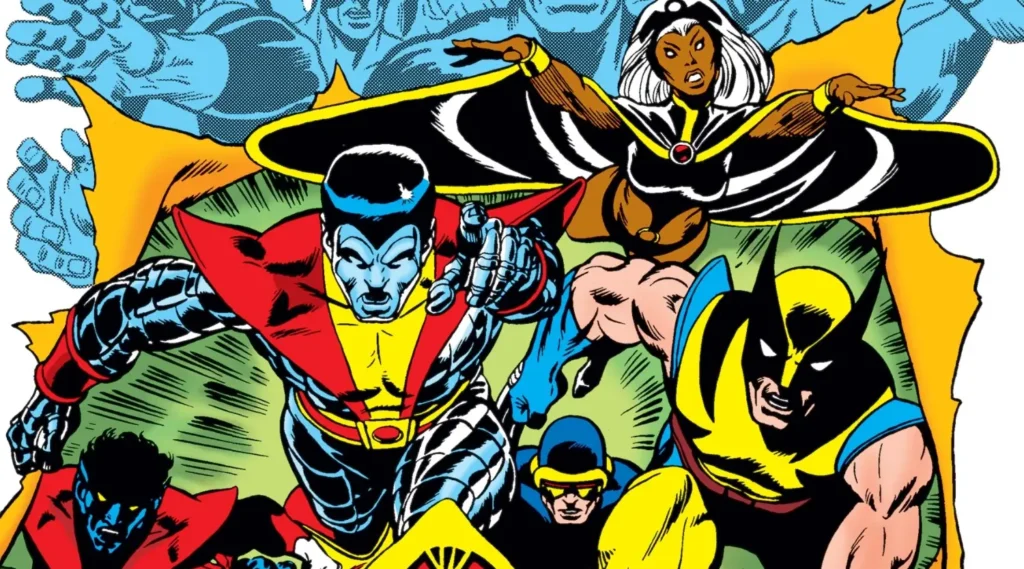
That’s an enormous amount of infrastructure for a story that doesn’t have a dramatic engine yet.
Doomsday might be the engine.
Think about what the MCU’s new X-Men are walking into post-Secret Wars. The multiverse has been stabilized — or collapsed and rebuilt, depending on how Doom’s endgame plays out — and the world is picking up pieces. Somewhere in that rebuilt world, mutants are emerging. Not the Fox-universe veterans. New ones. Younger ones. Kids who don’t know what incursions are, who’ve never seen a Sentinel, who just woke up one morning able to generate force fields or phase through walls or read the minds of everyone in a two-mile radius.
And the surviving heroes of Doomsday and Secret Wars remember exactly what the last group of super-powered mutants did to stay alive.
Think about how the Cyclops we’ve been tracking in our coverage of the rebooted MCU era fits into this world — a young Scott Summers discovering his powers in a society that watched the last generation of X-Men destroy universes to survive. That’s not a metaphor for prejudice. That’s a specific historical memory held by specific living people.
The Department of Damage Control, already tightening its grip on superpowered individuals in Wonder Man, escalating its restrictions as mutants start manifesting en masse across the population. Anti-mutant paranoia that isn’t manufactured by a cartoonish bigot but grown from actual events that actual people remember. The Avengers who fought the Fox X-Men in Doomsday — some of whom might carry the specific, personal memory of being on the wrong end of that fight — trying to figure out whether these new mutants are the same threat wearing younger faces.
That’s not the story of Days of Future Past or the Krakoa era or any other X-Men story that’s been told before. That’s something new — a Mutant Saga that begins not with a school and a dream but with a world that has reasons, specific earned reasons, to be afraid of what’s coming. And on the other side, a new generation of mutants who didn’t make the choices their predecessors made, who are being held responsible for them anyway, who have to decide whether they fight for a world that fears them or accept the exile their predecessors ultimately chose.
That’s the most X-Men story imaginable. And it only exists if Doomsday does the hard work of making the Fox-era X-Men genuinely morally complicated rather than simply nostalgic.
There’s a version of this movie where Xavier and Magneto show up, the Avengers are surprised to see them, they fight briefly due to a misunderstanding, they team up against Doom, they sacrifice themselves heroically, and the new X-Men are seeded in a post-credits scene. It would be fine. Fans would cheer. The nostalgia would be earned and served and resolved cleanly.
There’s another version — the one the leaks are pointing toward, the one that sixty years of comics have been building toward whether the filmmakers intended it or not — where the Fox X-Men arrive as something genuinely morally complicated. Where the chess game in the mansion isn’t warmth but consensus. Where the utopia costs something real. Where the Avengers learn what it took to keep mutantkind alive and have to decide what to do with that knowledge. Where Xavier’s final act isn’t a sacrifice but a reckoning.
That version is harder to make. It requires the audience to hold two contradictory things simultaneously — that the X-Men were right to survive and wrong in how they did it, that their world is beautiful and its foundation is blood, that the heroes we’re rooting for and the heroes we’re worried about are the same people. It requires the MCU to trust its audience enough to let the moral complexity land without immediately resolving it into something simpler and more comfortable.
But if they pull it off, the Mutant Saga doesn’t just have a beginning. It has a wound. A specific, historical, earned wound that every new X-Men story can press against. The full history of how Marvel has navigated the X-Men’s transition into the MCU shows just how much groundwork has already been laid — and how much is riding on Doomsday getting this right.
The incursion choice is the original sin of the MCU’s mutant era. Everything that follows — the paranoia, the legislation, the conflict between new X-Men and a world that remembers what the old ones did — flows from it.
Let me leave you with the question that’s been underneath this entire piece.
If the X-Men destroyed other universes to save their own — if the utopia they built is real, functional, and maintained at the cost of other worlds that no longer exist — were they wrong?
Not tactically. Morally. Were they wrong?
The Days of Future Past timeline says mutants die if they don’t fight back. Moira MacTaggert’s nine lifetimes say mutants lose if they play by everyone else’s rules. Sixty years of comics say that the dream Xavier built is beautiful and fragile and has been destroyed and rebuilt so many times that the people doing the rebuilding could be forgiven for eventually deciding they’d rather build a wall than tend a garden.
The Avengers will say yes. Of course they were wrong. You don’t get to decide your world matters more than everyone else’s.
The X-Men will say: you’ve never had to.
That argument — not the fight, not the spectacle, not even Magneto destroying New Jersey — is the real confrontation at the center of Doomsday. And it’s one the MCU doesn’t get to resolve cleanly, because there isn’t a clean resolution. There’s just the cost, and who pays it, and whether the dream survives the price.